
Eye
Eyewash systems are used as emergency response equipment in industrial plants, laboratories, and technical work areas where there is a risk of eye exposure to chemicals, dust, particulates, or irritating liquids. Selection should be based on hazard location, required access time, availability of a water supply, inlet pressure, ambient temperature, and the ability to perform routine testing and maintenance.
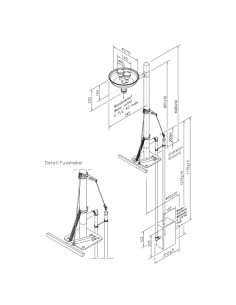
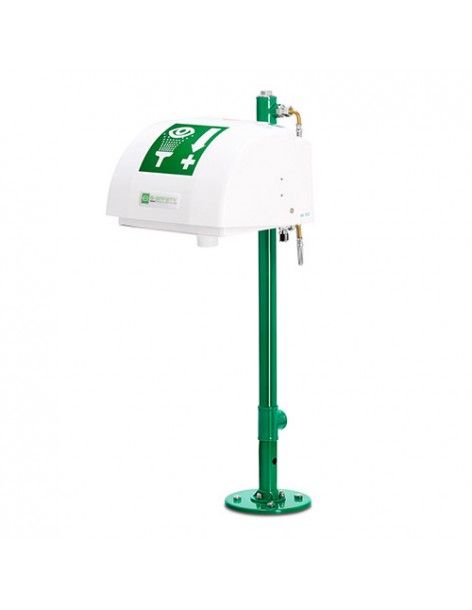
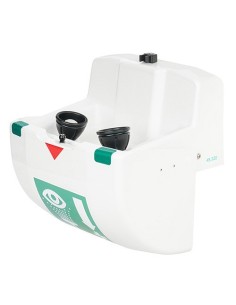
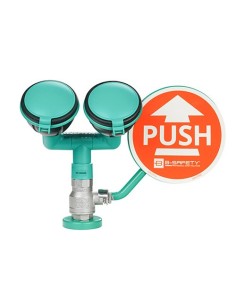
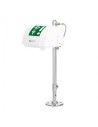
The category includes B-Safety eyewash units in floor-mounted, wall-mounted, and hand-held configurations, as well as eye/face wash assemblies, versions with stainless steel bowl or protective lid, systems with two 45° spray heads, self-draining designs, heated and frost-protected versions, and tank-fed stations. The ClassicLine and PremiumLine series address different installation constraints, from fixed first-aid points to portable or self-contained stations without permanent water connection.
Fixed units connected to the water network typically operate at 2.5–5 bar with a flow rate of 14 l/min, using an integrated flow regulator to maintain a stable spray pattern despite supply pressure variation. Referenced compliance includes EN 15154-2:2006 and ANSI Z358.1-2014; some versions also carry DIN-DVGW certification and safety marking in accordance with EN ISO 7010 / ASR A1.3.
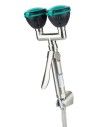
Hand-held units are used where directed flushing is required or where access is needed at a workbench, laboratory position, or confined installation area. For example, the PremiumLine BR 719 030 incorporates two spray heads, stainless steel wetted parts, a 1.5 m flexible hose, 14 l/min flow rate, 2.5–5 bar operating pressure, and an integrated backflow prevention device for protection of the potable water network.
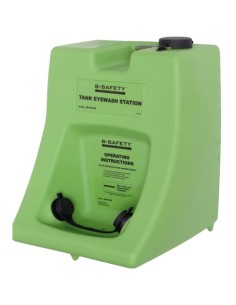
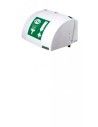
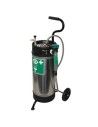
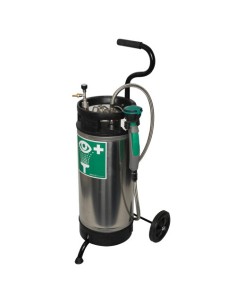
Tank-fed stations are used where no piped water supply is available at the hazard point. The heated ClassicLine BR 955 005 includes a 60 l tank, approximately 15 min flushing duration, self-regulating trace heating tape rated at 20 W/m, and 230 V / 50 Hz power supply, with reference to EN 15154-4:2009 and ANSI Z358.1-2014. For this type of unit, periodic replacement or treatment of the flushing fluid is required to limit microbiological growth or chemical contamination.