
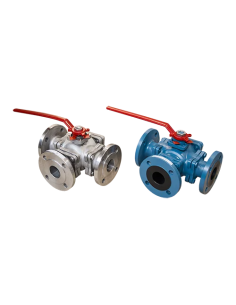
T-Bore
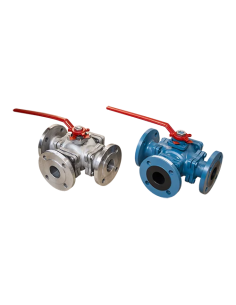
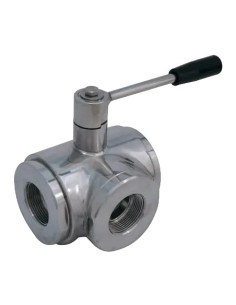
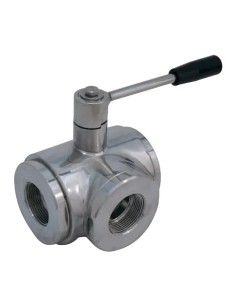
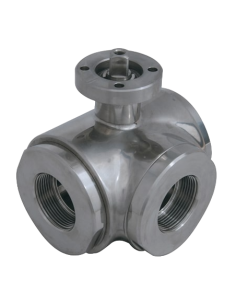
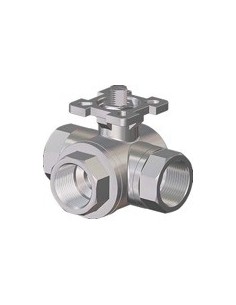
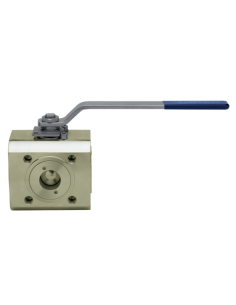
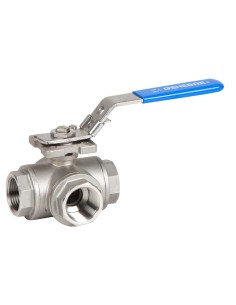
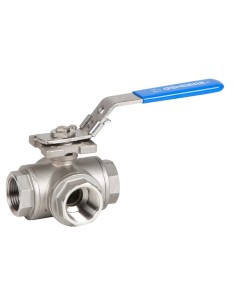
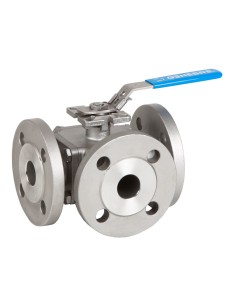
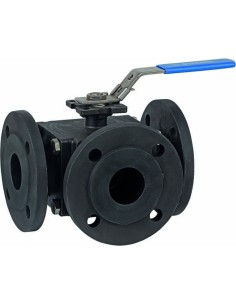
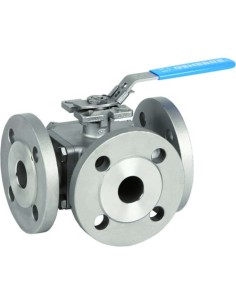
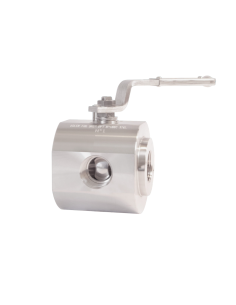
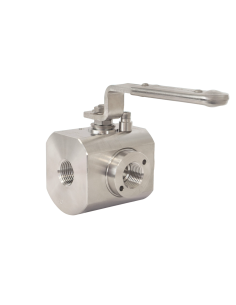
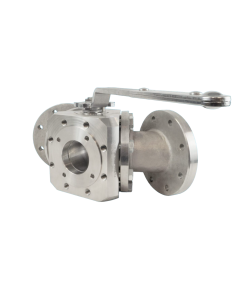
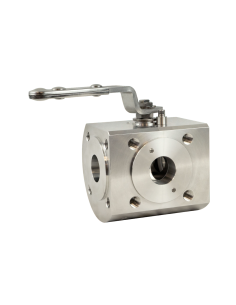
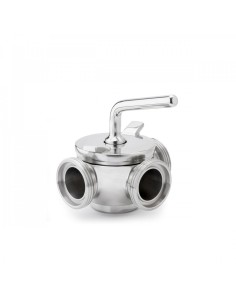
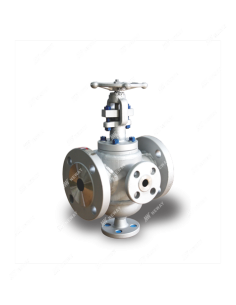
3-way T-port ball valves are used in industrial piping systems where the service requires flow diversion, mixing, bypass duty, or simultaneous communication between multiple lines. Unlike an L-port configuration, a T-bore can provide combined flow paths depending on ball orientation and on the handle or actuator indexing. Selection should therefore not be based only on valve size and pressure rating, but also on the required flow pattern at each operating position.
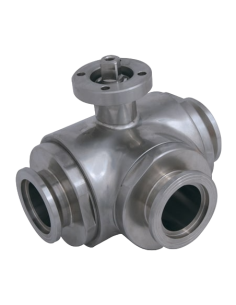
The range includes DIN and ANSI executions with pressure ratings PN 10, PN 16, PN 25, PN 40, PN 63, PN 64, PN 100, and ASME Class 150/300. Available end connections include threaded, flanged, wafer, split-body flanged, butt weld, and sanitary or utility-specific connections such as clamp, Garolla, Victaulic, ISO 228-1, DIN 11851, and SMS. This allows configuration for industrial utilities, chemical service, hygienic systems, and general process networks.
Body materials include carbon steel and stainless steel grades such as 1.0619, 1.4307, 1.4404, 1.4408, ASTM A105/A105N, ASTM A351 CF8M, and ASTM A479 Type 304/316/316L. Seat materials including PTFE, RPTFE, virgin PTFE, modified PTFE, and PTFE filled with 15% glass fiber are selected according to operating temperature, chemical compatibility, shut-off requirement, and operating torque. Final material selection should consider media composition, pressure-temperature limits, thermal cycling, and leakage class requirements.
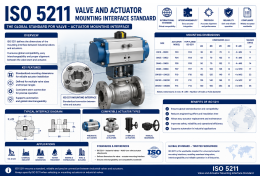
For automated service, ISO mounting interface, quarter-turn travel, position indication, fail-safe logic, and the risk of cavity pressure entrapment should be checked during specification. T-port valves should not be treated as simple isolation valves; the internal flow diagram must be verified before installation, particularly in bypass lines, mixing loops, CIP/SIP systems, manifolds, and networks handling water, air, oil, steam condensate, or chemical liquids. Maintenance planning should also account for seat wear, seal compatibility, dead-leg sensitivity, and the consequences of leakage between ports in intermediate positions.