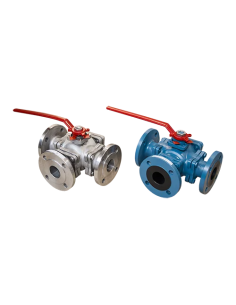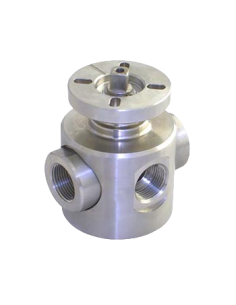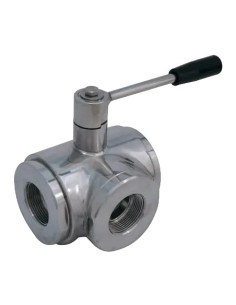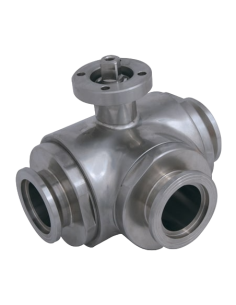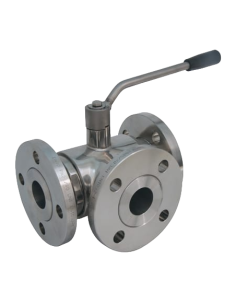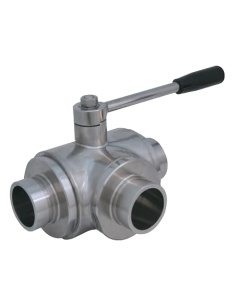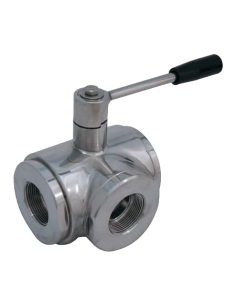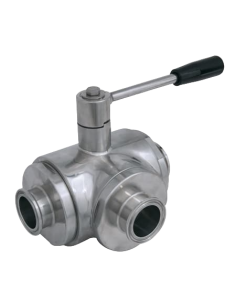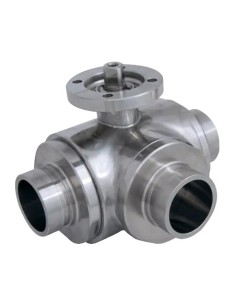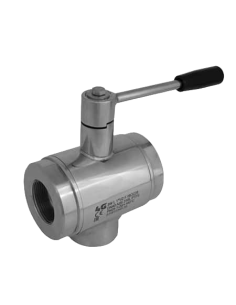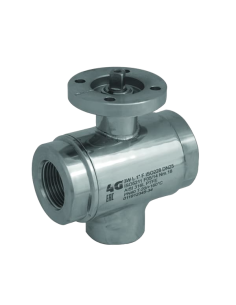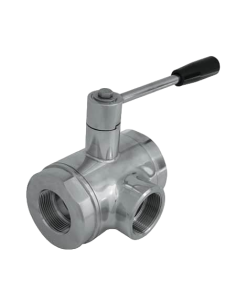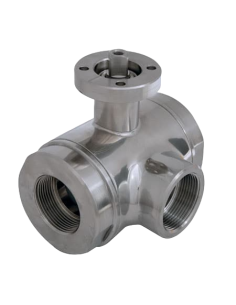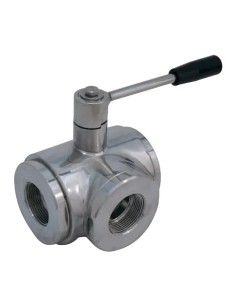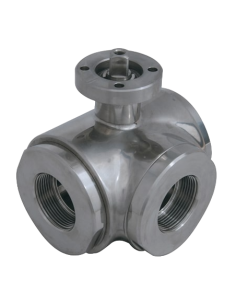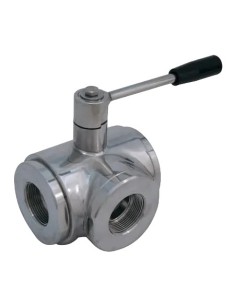

3-Way
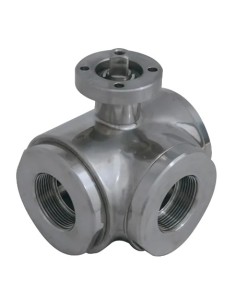
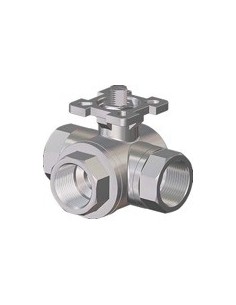
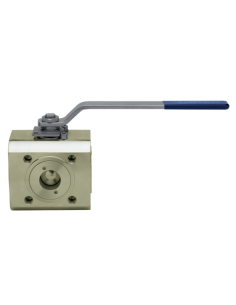
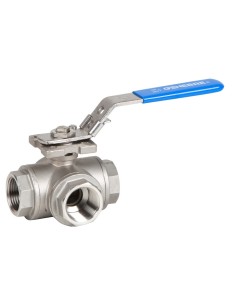
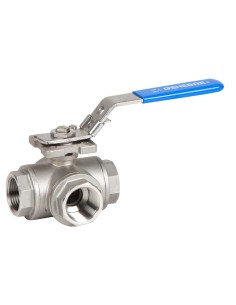
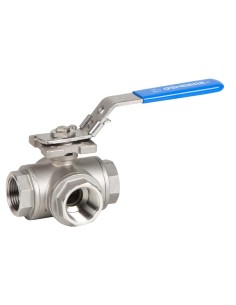
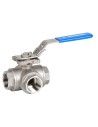
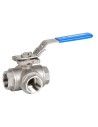
3-way ball valves are used for flow diversion, distribution, or mixing in industrial liquid and gas systems where one valve must manage three connections. The primary selection is between L-port and T-port ball patterns. An L-port configuration is typically used to switch flow between two lines while isolating the third. A T-port configuration allows distribution, bypass, or mixing duties, depending on ball drilling geometry and handle or actuator position.
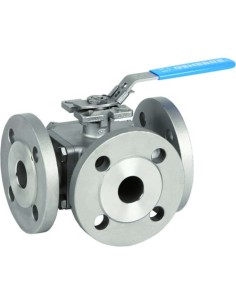
This category includes DIN and ANSI designs, with pressure ratings from PN 10 to PN 250 and ASME Class 150/300, depending on valve type and construction. Available end connections include BSP, NPT, ISO 228-1, flanged ends, wafer-pattern flanged bodies, split flanged ends, butt weld, clamp, Garolla, Victaulic, DIN 11851, and SMS. Body materials include carbon steel and stainless steel grades such as 1.0619, 1.4307, 1.4404, 1.4408, ASTM A105/A105N, and ASTM A351 CF8M. Seat materials include PTFE, RPTFE, virgin or modified PTFE, glass-filled PTFE, and PTFE with stainless reinforcement.
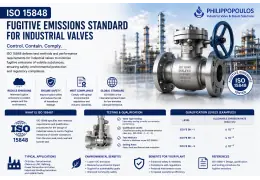
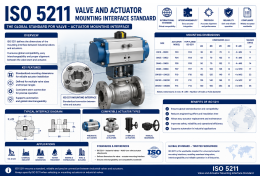
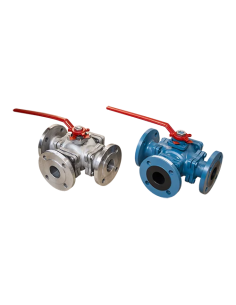
For heavy-duty industrial service, multiport split-body full-bore designs are available with flanged connections, blowout-proof stem, antistatic device, cavity pressure balancing, and live-loaded packing. References may include PED, MSS SP-55, NACE MR0175 / ISO 15156, NACE MR0103 / ISO 17945, and ATEX. High-pressure L-port versions are available in AISI 316L up to PN 250, with ISO 5211 / DIN 3337 actuator mounting, female ISO 228 threads, and temperature limits up to -20°C to +200°C depending on seal materials. T-port reduced-bore versions are also used, for example in AISI 316, PN 63, with PTFE+GF seats, Viton O-rings, ISO 5211 mounting, and temperature range -25°C to +180°C.
Valve selection should be based on the required flow scheme: common inlet, return changeover, bypass, or mixing service. Differential pressure, operating temperature, seat and seal compatibility with the medium, and required operating torque should be checked. In automated service, actuator interface standard, fail-safe position, visual position indication, and the possibility of pressure entrapment in the ball cavity should also be considered.