
Inverted Bucket
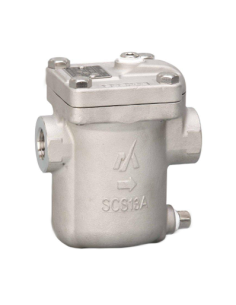
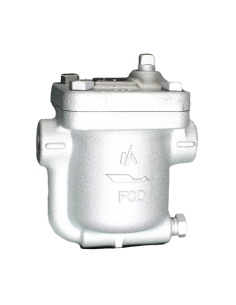
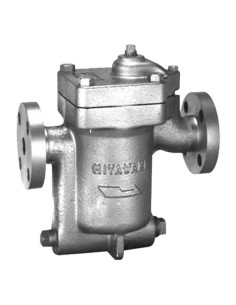
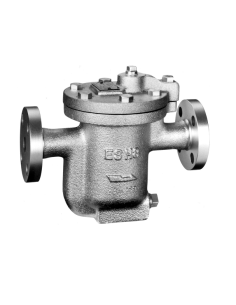
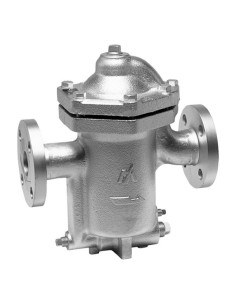
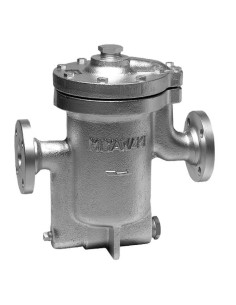
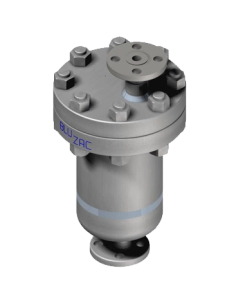
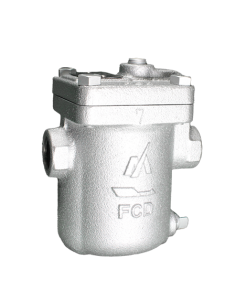
Inverted bucket steam traps are used in saturated steam systems to remove condensate from distribution lines, drip legs, strainers, unit heaters, HVAC equipment, cleaning and coating processes, food plants, pharmaceutical utilities, and general process installations. Their operating principle is based on the density difference between steam and condensate: when condensate enters, the bucket loses buoyancy and the discharge valve opens; when steam reaches the trap body, the bucket rises and closes the discharge port.
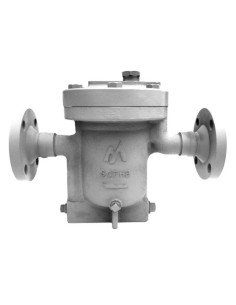
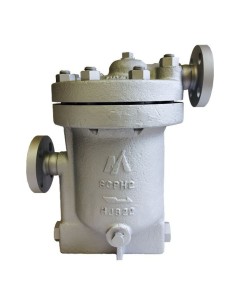
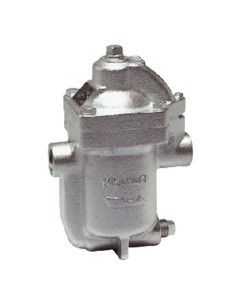
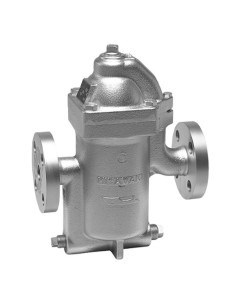
This category mainly includes Miyawaki ES, ESU, ESH, and ER series traps, using SCCV construction, stainless steel internal components, horizontal or vertical installation depending on model, and auto blow-off operation. A small vent at the top of the bucket assists removal of air and other non-condensable gases, reducing air binding and steam locking. Selected series can operate in condensate recovery service with backpressure resistance up to approximately 90% of upstream pressure.
Trap selection should be based on condensate load, differential pressure, return line pressure, operating temperature, required tightness against live steam loss, installation orientation, and whether in-line maintenance is required. The inverted bucket type is typically selected where a mechanical discharge cycle is acceptable, load variation is expected, and resistance to water hammer or thermal shock is required. For heat exchangers operating at very low differential pressure, or where continuous discharge without condensate backup is necessary, a float trap should also be evaluated.
Available versions include DIN, ANSI, and JIS designs, with pressure classes such as PN16, PN40, PN63, PN100, ANSI/JPI 150 to 1500 lb, and JIS 10K to 63K. Depending on series, operating limits extend to 6.4 MPa and 425 °C. End connections include BSP, NPT, flanged, and socket weld. Body materials include cast iron, ductile iron, cast steel, stainless steel, and stainless cast steel such as SCS13A.