



Safety Valves & Rapture Discs
Safety valves and rupture discs are used to protect pressurized equipment in steam, water, air, technical gas, process liquid, and chemically compatible fluid systems. Selection should be based on set pressure, required relieving capacity, service medium, operating temperature, built-up and superimposed back pressure, allowable overpressure, permissible seat leakage, and the discharge arrangement.
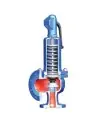
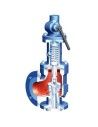
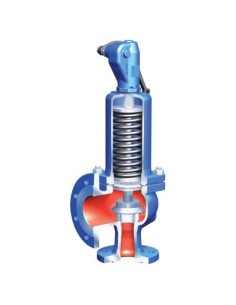
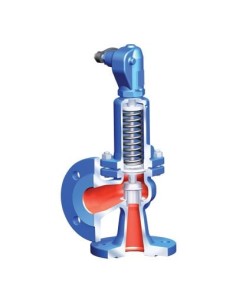
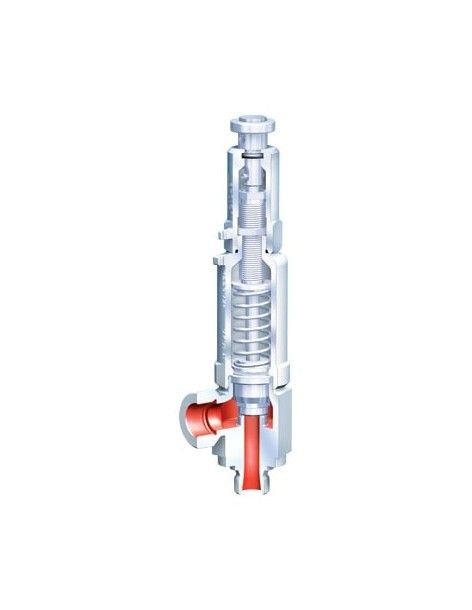
The category includes direct spring-loaded safety valves manufactured to DIN, ASME, and API 526 requirements, with flanged or threaded connections and body materials such as cast iron, cast steel, stainless steel, brass/DZR, and PVC, depending on service conditions. ARI SAFE series valves cover full-lift and conventional designs, with approvals to DIN EN ISO 4126-1, AD2000-A2, TRD 421, and TÜV. Available pressure ratings include PN16 to PN40, with maximum service temperatures up to 450°C depending on body and trim materials.
For installations designed to ASME/API practice, SAFE SN ANSI and SAFE REYCO versions are used for steam, air, gases, and liquid service, with pressure classes from 150 to 2500 lbs and ASME B16.5 flanges. Standard material options include SA216 WCB/WCC, SA217 WC6, and SA351 CF8M, with either metal or soft seat sealing and optional stainless steel bellows for back pressure compensation and isolation of spring chambers from the process fluid.
Open discharge safety valves vent directly to atmosphere and are applied where the process medium and installation location permit atmospheric release. Closed discharge designs are used where relieved fluid must be routed to a safe location, vent header, flare, or return line. In such cases, discharge piping back pressure must be included in the sizing and selection calculation.
Rupture discs provide passive overpressure protection with immediate response and are used on vessels, piping, and process systems where near-zero leakage prior to burst is required, or as secondary protection in combination with a safety valve. Maintenance requirements include verification of set pressure, inspection of seat and disc condition, spring and bellows condition, test lever function where fitted, discharge line integrity, and documented recertification in accordance with plant procedures and applicable codes.
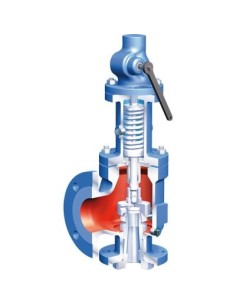
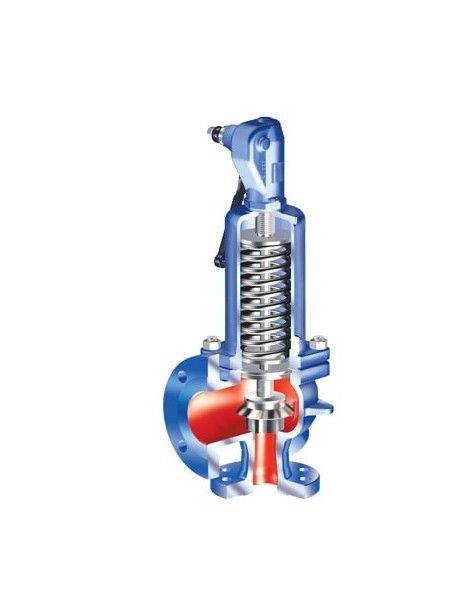
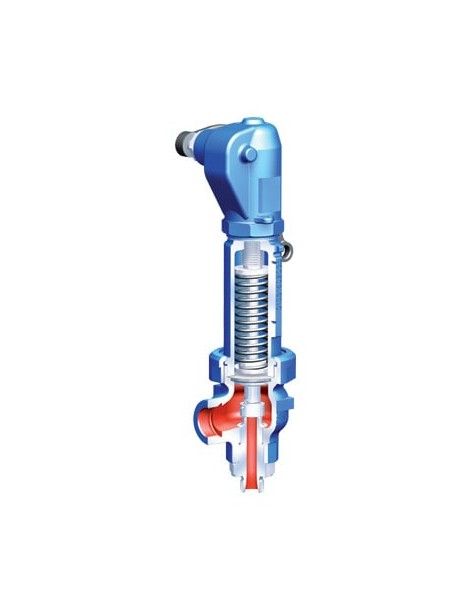
Free Discharge
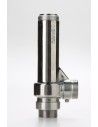
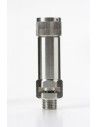
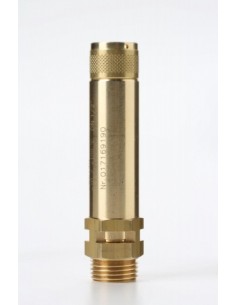
Safety Valves Free Discharge - B12 | Nuova
Free Discharge
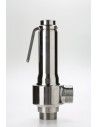
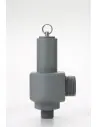
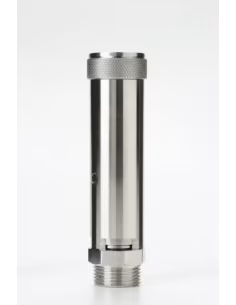
Safety Valves Free Discharge - B20 | Nuova
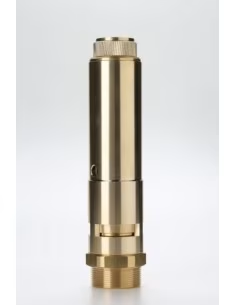
Free Discharge
Safety Valves Free Discharge - B38 | Nuova
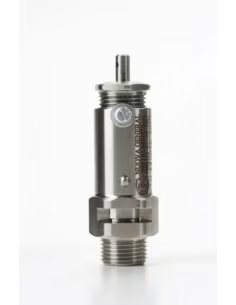
Free Discharge