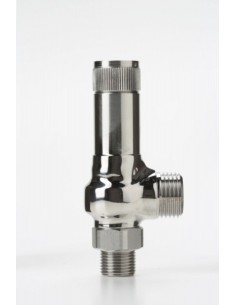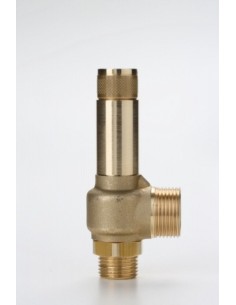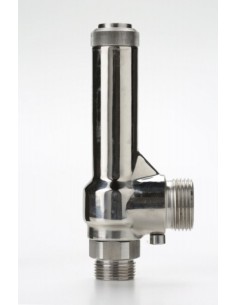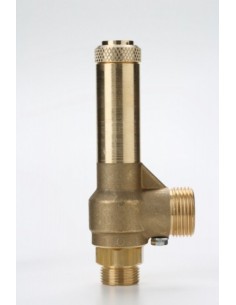

Piped Discharge
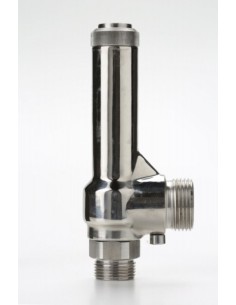
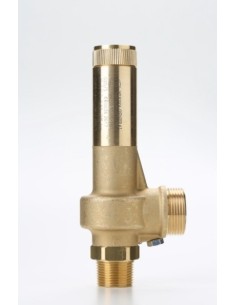
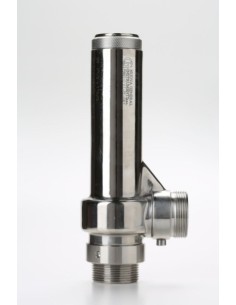
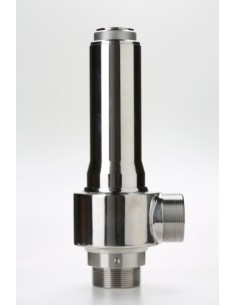
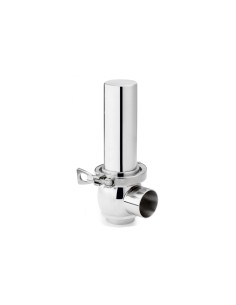
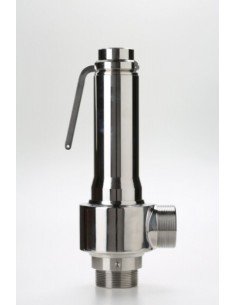
In-line safety relief valves are used to protect piping systems and equipment from overpressure where the relieved fluid must be routed through a discharge line to a safe location, vent header, collection manifold, or closed recovery system. They are applied on steam, water, gases, compressed air, and process liquids where discharge to atmosphere is not acceptable due to temperature, noise, environmental constraints, or installation requirements. This category includes Nuova safety valves type B38/L, D7/C, D10/C, and G10 to G40, as well as Tassalini pressure relief valves.
Valve selection is based on set pressure, required relieving capacity, nozzle area, reduced flow coefficient, service fluid, operating temperature, outlet back pressure, body material, and seat design. For piped discharge installations, the pressure loss in the inlet line, constant or variable built-up back pressure in the outlet line, drainage of the discharge piping, thermal expansion, and external mechanical loads must all be checked so that no excessive stress is transmitted to the valve body. For Nuova valves, nozzle areas range from 38.47 mm² for type D7/C up to 1256 mm² for type G40, with set pressure ranges up to 60 bar depending on model and certification.
Available constructions include brass, mixed brass-stainless steel design, and stainless steel. Seat materials include NBR, EPDM, Viton, Silicone, PTFE, Kalrez, and metal seat execution, selected according to temperature limits, leakage requirements, and media compatibility. Connections include ISO 228, EN 10226, NPT, Tri-Clamp, DIN 405 / DIN 11851, PN16 to PN40 flanges, and ANSI Class 150 / 300, with different inlet and outlet sizes where required for proper discharge into downstream piping. Listed approvals include CE/UKCA, EAC, ATEX/UKEX, ASME Section XIII / CRN, and SELO-TSG. Tassalini relief valves are manufactured in AISI 304L or AISI 316L, with pressure setting ranges of 0 to 5 bar or up to 12 bar using disc springs on request.