
Latest posts

 
Sort by:
  • Heat Exchanger Thermal Rating: From Nameplate Capacity to Actual Steam Load
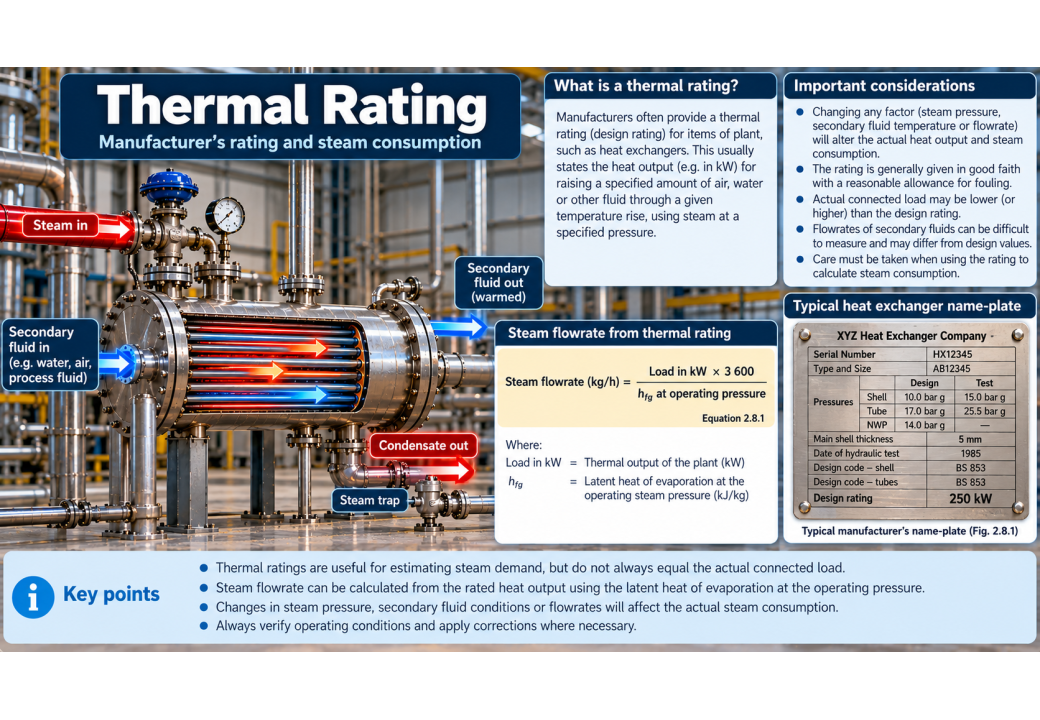
    Heat Exchanger Thermal Rating: From Nameplate Capacity to Actual Steam Load

    The thermal output stated on a heat exchanger nameplate or technical datasheet is useful only when interpreted in the correct context. A thermal rating does not mean that the equipment will always transfer the same amount of heat, nor does it mean that the rating is identical to the actual connected process load. A design rating is based on defined conditions: a stated air, water or other secondary-fluid flowrate, a specified temperature rise and steam at a specified pressure. If any of...

    Read more
  • Measuring Steam Consumption: Flowmeters and Condensate-Based Methods
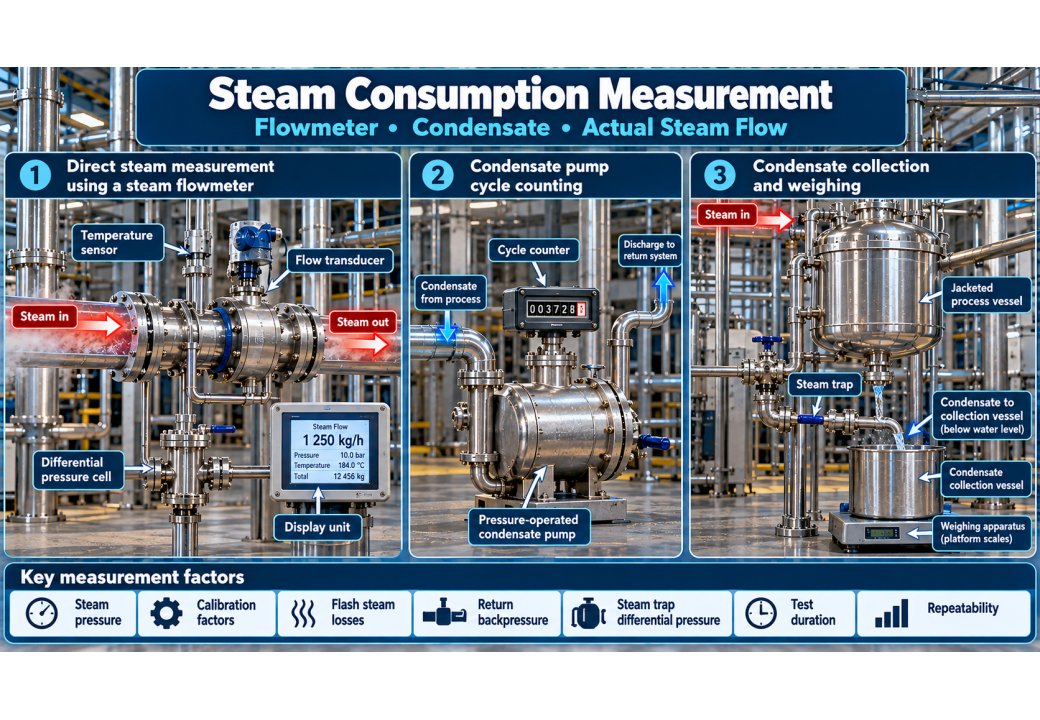
    Measuring Steam Consumption: Flowmeters and Condensate-Based Methods

    Actual steam consumption in an operating industrial plant can be established by measuring steam flow directly or, in suitable applications, by determining the amount of condensate produced. Measurement can be used to assess actual plant performance, compare steam users, evaluate energy-saving measures and assign steam demand to individual production stages.

    Read more
  • Estimating Steam Consumption in Industrial Applications
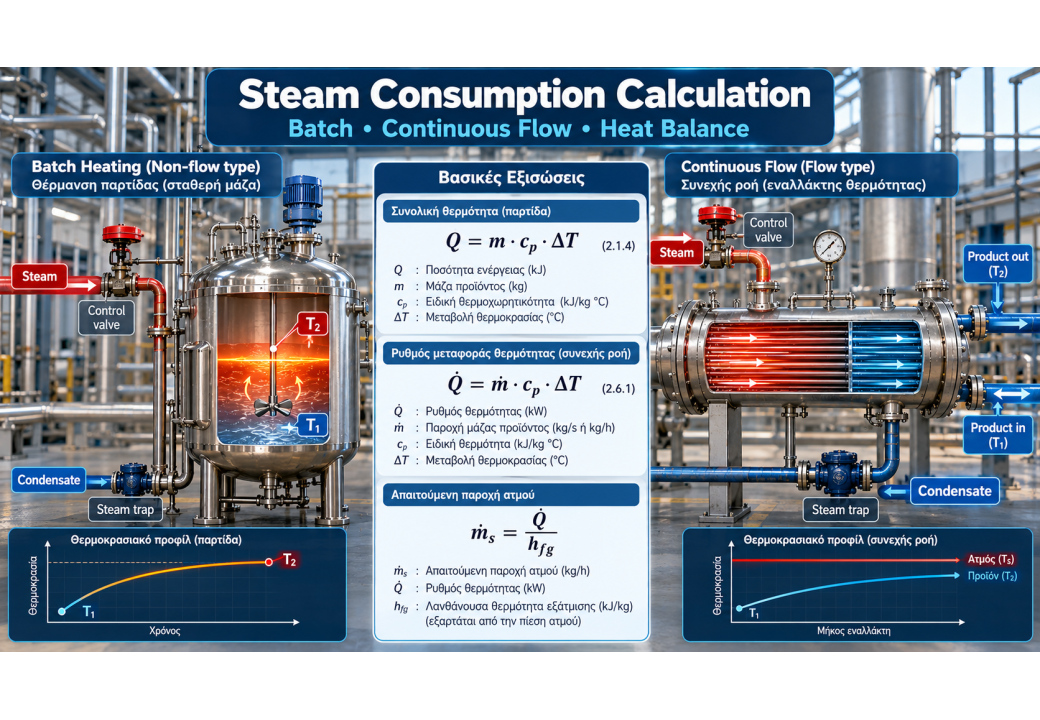
    Estimating Steam Consumption in Industrial Applications

    Accurate steam-consumption estimation is fundamental to the design of an industrial steam system. Required steam flow affects pipe sizing, boiler capacity, control-valve sizing and steam-trap selection.

    Read more
  • Steam Heat Transfer: Fundamentals, Overall U-Value and Thermal Resistance
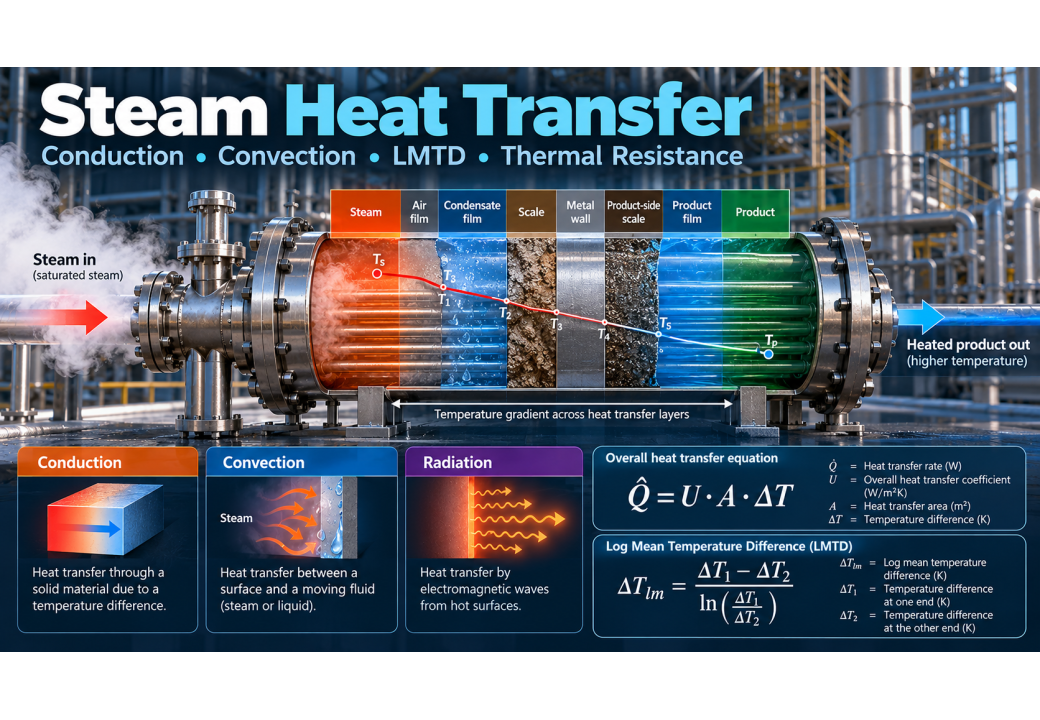
    Steam Heat Transfer: Fundamentals, Overall U-Value and Thermal Resistance

    In a steam-heating system, the purpose of steam generation and distribution is to deliver heat at the process heat-transfer surface. Once heat duty and steam pressure are known, steam consumption can be established and used to size the boiler, distribution system and heat exchanger.

    Read more
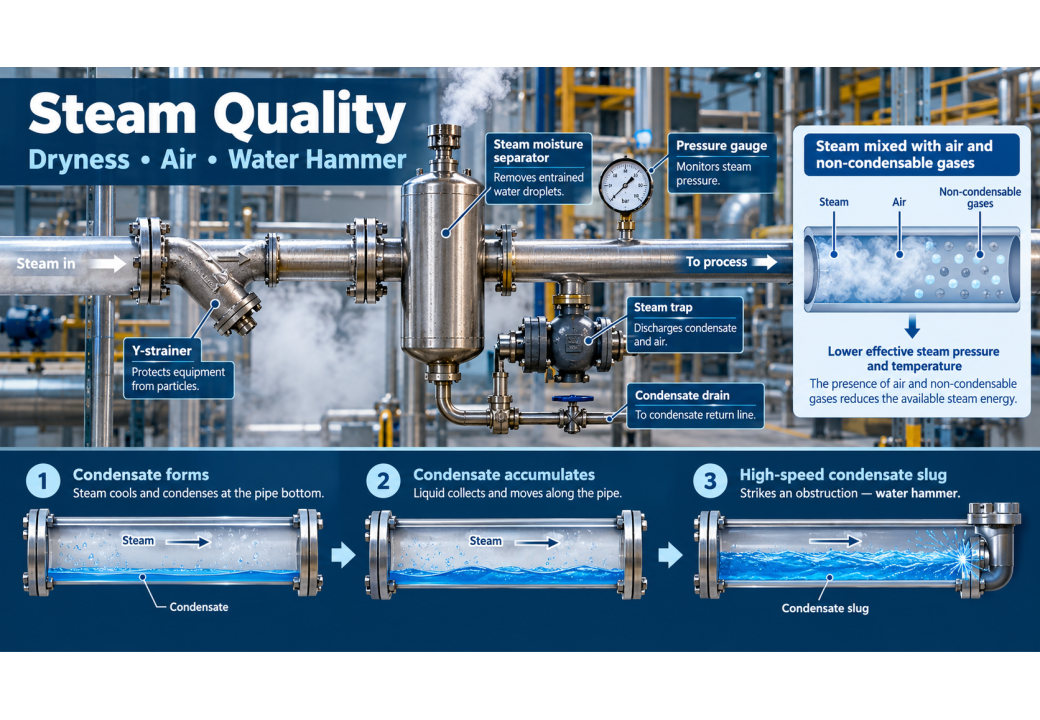
  • Steam Quality in Industrial Systems: Dryness, Cleanliness and Air Removal
    Steam Quality in Industrial Systems: Dryness, Cleanliness and Air Removal

    Steam quality is not defined by pressure alone. For an industrial process to operate correctly, steam must reach the point of use in the required quantity, at the required pressure and temperature, free from excessive air and other non-condensable gases, sufficiently clean and as dry as the system requires. Each of these conditions affects heat transfer, process stability and the mechanical behaviour of the distribution system.

    Read more
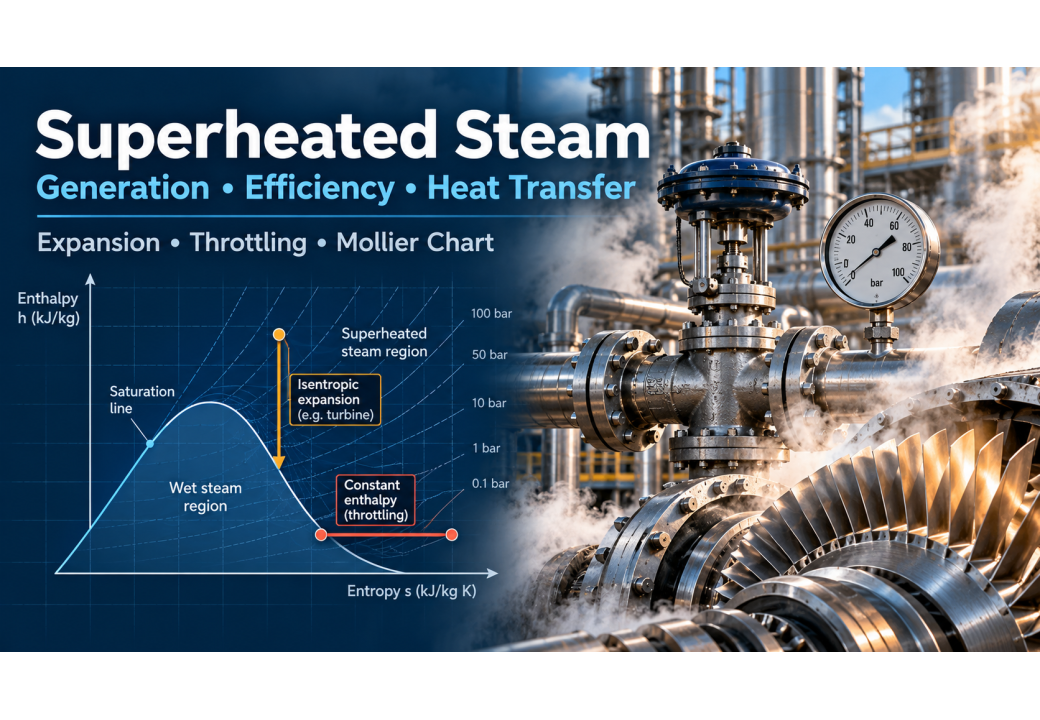
  • Superheated Steam: Generation, Properties and Applications
    Superheated Steam: Generation, Properties and Applications

    Superheated steam is steam whose temperature has been raised above the saturation temperature corresponding to its pressure. The difference between actual steam temperature and saturation temperature is known as the degree of superheat. This condition is especially important when steam is used to produce mechanical work, such as in steam turbines. Superheating, however, does not automatically improve every steam application. Saturated and superheated steam behave differently in heat-transfer...

    Read more
1234567891011 .... >|
Showing 1 to 6 of 73 (13 Pages)