Latest posts

 
Sort by:
  • Steam Consumption in Heat Exchangers: Calculation and Design
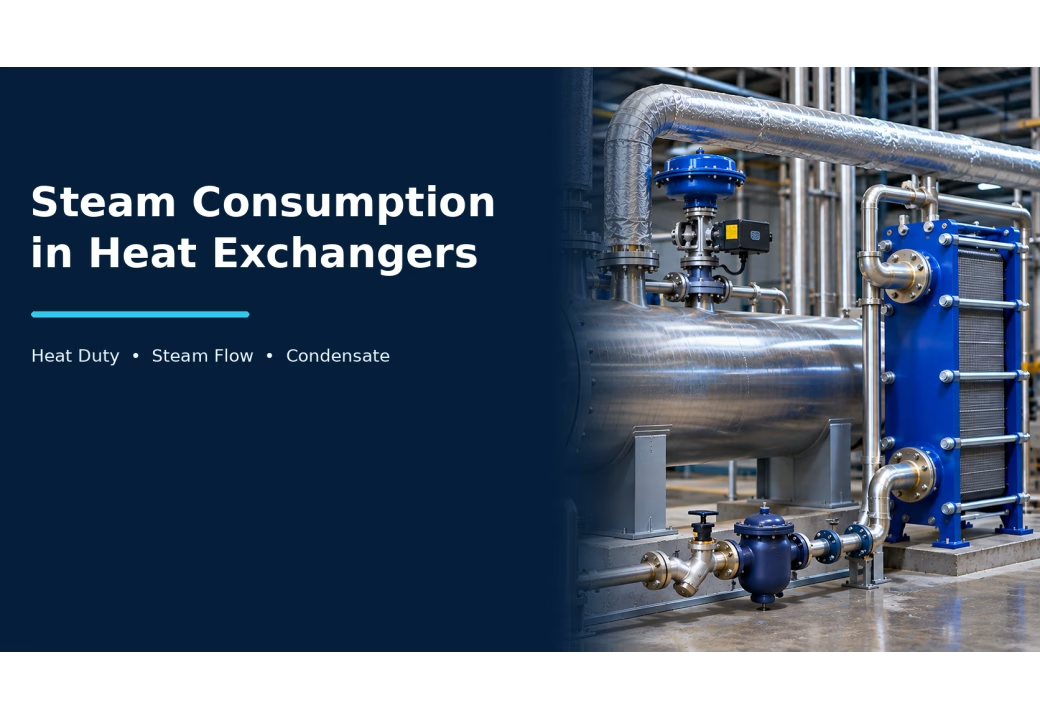
    Steam Consumption in Heat Exchangers: Calculation and Design

    Steam-heated heat exchangers transfer thermal energy from steam to water or another process fluid through a separating metal surface. As saturated steam condenses, it releases latent heat, which is transferred to the secondary fluid. The resulting condensate must be removed from the exchanger. Steam consumption in heat exchangers depends on actual heat duty, not simply on the exchanger's published thermal rating. Secondary-fluid flowrate, inlet and outlet temperatures, steam condensing...

    Read more
  • Steam Consumption in Pipes and Air Heaters: Warm-up, Heat Loss and Condensate Loads
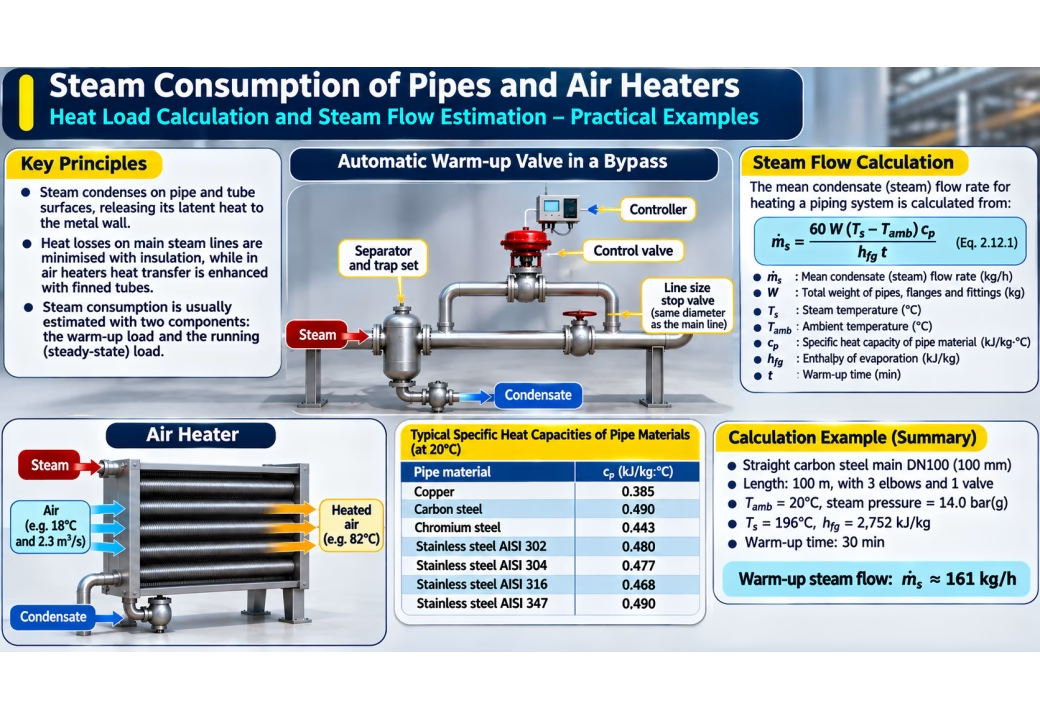
    Steam Consumption in Pipes and Air Heaters: Warm-up, Heat Loss and Condensate Loads

    Steam entering a cold pipeline immediately condenses on the inside wall. During start-up, the metal mass of the main must be heated to operating temperature. Once the pipe is hot, a smaller continuous condensate load remains because heat is lost to the surroundings. The distinction between warm-up load and running load is fundamental for steam-consumption estimates, condensate drainage and insulation assessment.

    Read more
  • Direct Steam Injection for Tanks: Steam Demand, Sparge Pipes and Injectors
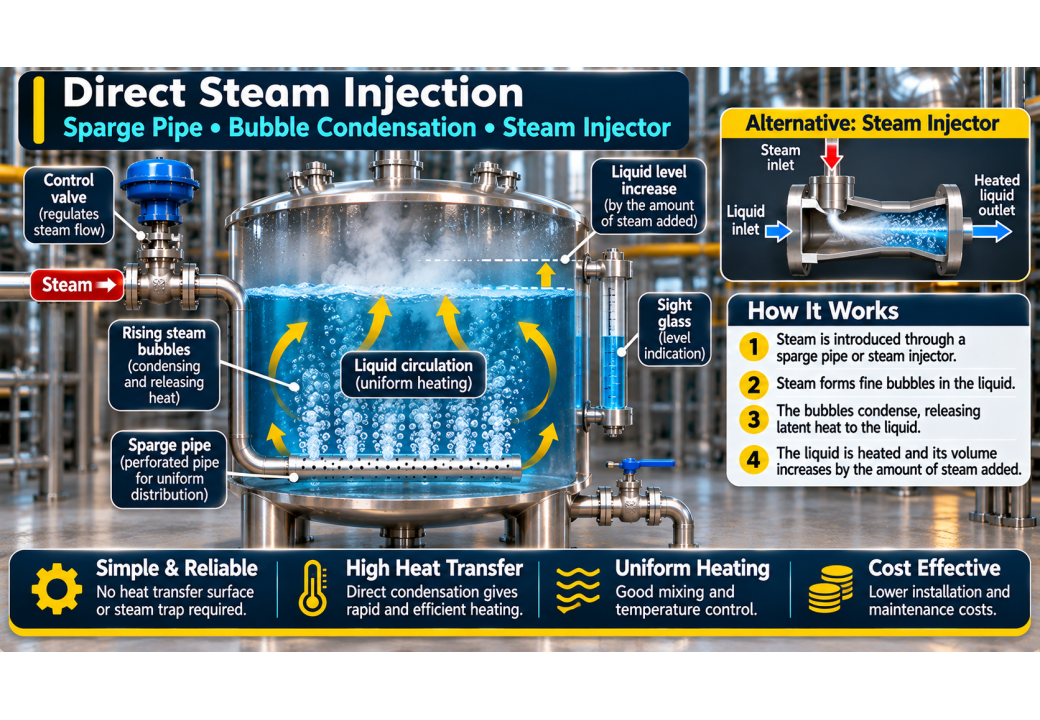
    Direct Steam Injection for Tanks: Steam Demand, Sparge Pipes and Injectors

    Direct steam injection uses steam both as the heating medium and as part of the final liquid inventory. Steam is discharged into a colder liquid as bubbles, where it condenses and transfers heat directly to the surrounding fluid. The method is suitable only where dilution and the resulting increase in liquid mass are acceptable. It is therefore commonly used for water heating and boiler feedtank duties.

    Read more
  • Tank Heating Load Calculation: Start-up, Heat Losses and Steam Demand
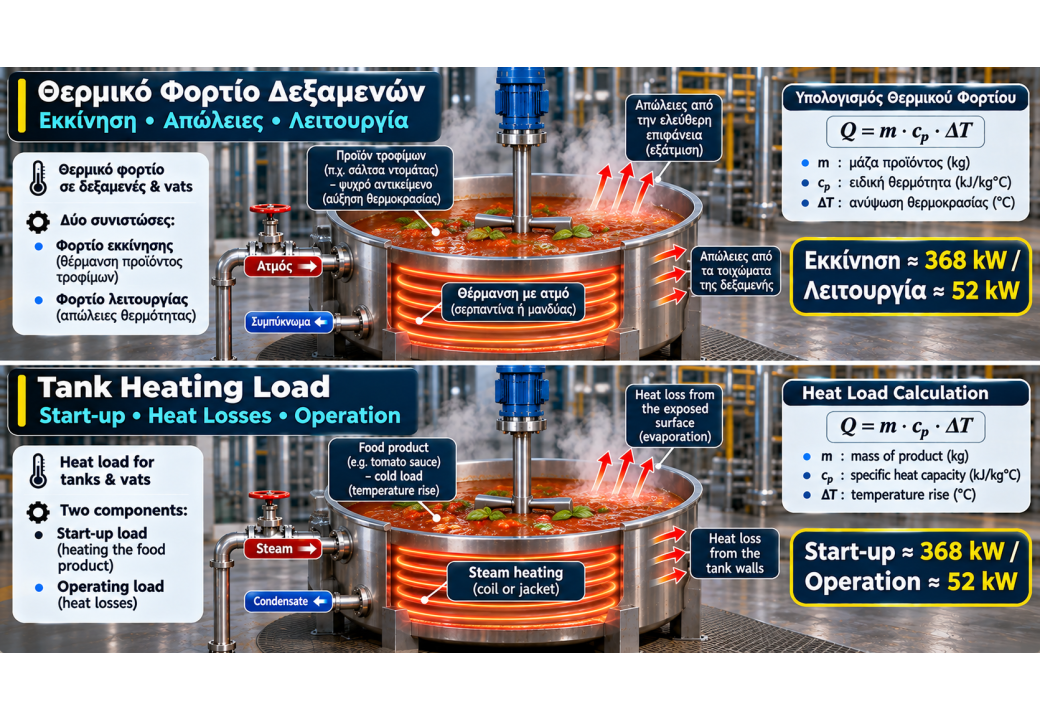
    Tank Heating Load Calculation: Start-up, Heat Losses and Steam Demand

    Heating liquids in tanks is a common requirement across process industries. Tank heat-load calculations should not be limited to the energy needed to raise liquid temperature. Depending on the application, vessel heating, wall losses, exposed-surface losses and cold articles introduced into the process may also be important. A key distinction is the difference between start-up load and operating load.

    Read more
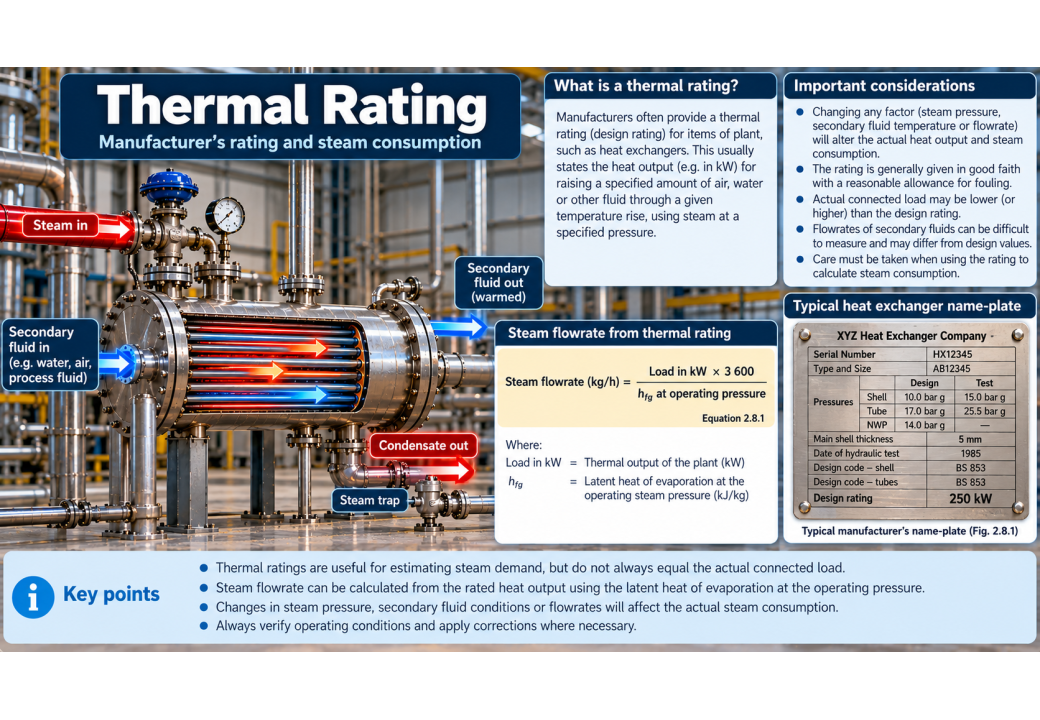
  • Heat Exchanger Thermal Rating: From Nameplate Capacity to Actual Steam Load
    Heat Exchanger Thermal Rating: From Nameplate Capacity to Actual Steam Load

    The thermal output stated on a heat exchanger nameplate or technical datasheet is useful only when interpreted in the correct context. A thermal rating does not mean that the equipment will always transfer the same amount of heat, nor does it mean that the rating is identical to the actual connected process load. A design rating is based on defined conditions: a stated air, water or other secondary-fluid flowrate, a specified temperature rise and steam at a specified pressure. If any of...

    Read more
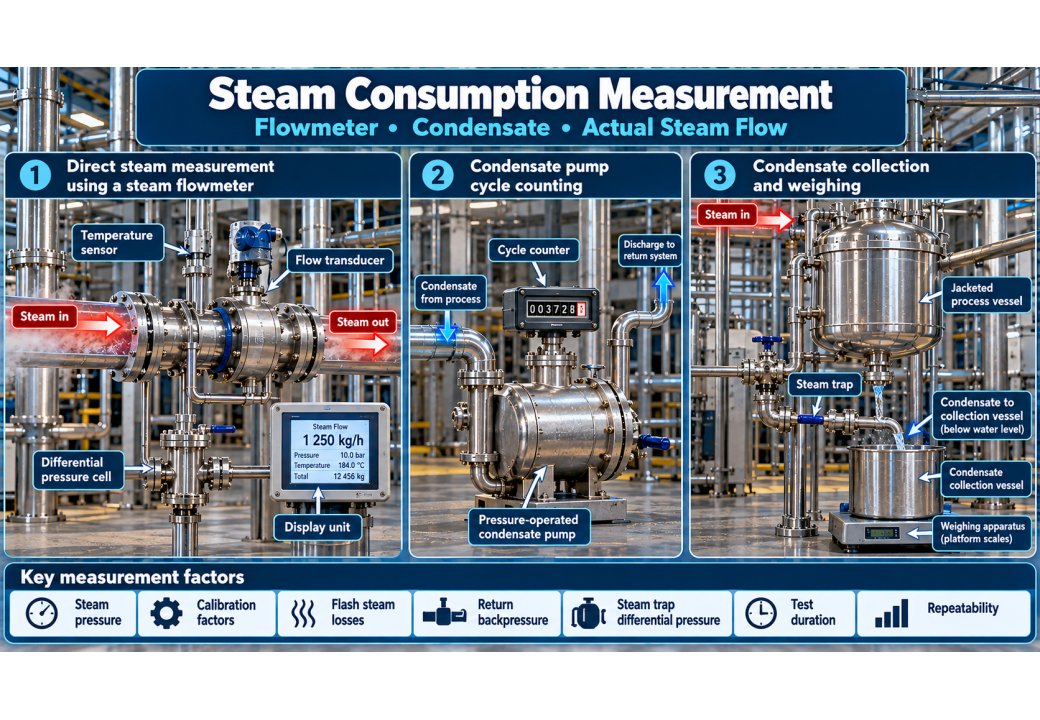
  • Measuring Steam Consumption: Flowmeters and Condensate-Based Methods
    Measuring Steam Consumption: Flowmeters and Condensate-Based Methods

    Actual steam consumption in an operating industrial plant can be established by measuring steam flow directly or, in suitable applications, by determining the amount of condensate produced. Measurement can be used to assess actual plant performance, compare steam users, evaluate energy-saving measures and assign steam demand to individual production stages.

    Read more
1234567891011 .... >|
Showing 1 to 6 of 77 (13 Pages)