Engineering guides

Engineering guides

Engineering Guides for Steam Systems, Piping and Industrial Valves

The engineering guides section of Philippopoulos S.A. provides practical technical information for the preliminary design, review and selection of equipment used in industrial steam, water, air and thermal fluid networks.

The guides cover topics such as saturated steam tables, recommended flow velocities, pressure drop in steam lines, air content in steam systems, flash steam calculation, thermal expansion of pipework, valve body materials and elastomer selection.

This content is intended for plant engineers, technical departments, maintenance teams, designers and procurement engineers who require technical data for valves, steam traps, piping, pressure reducing valves, heat exchangers and industrial network equipment.

 
Sort by:
  • Heat Exchanger Thermal Rating: From Nameplate Capacity to Actual Steam Load
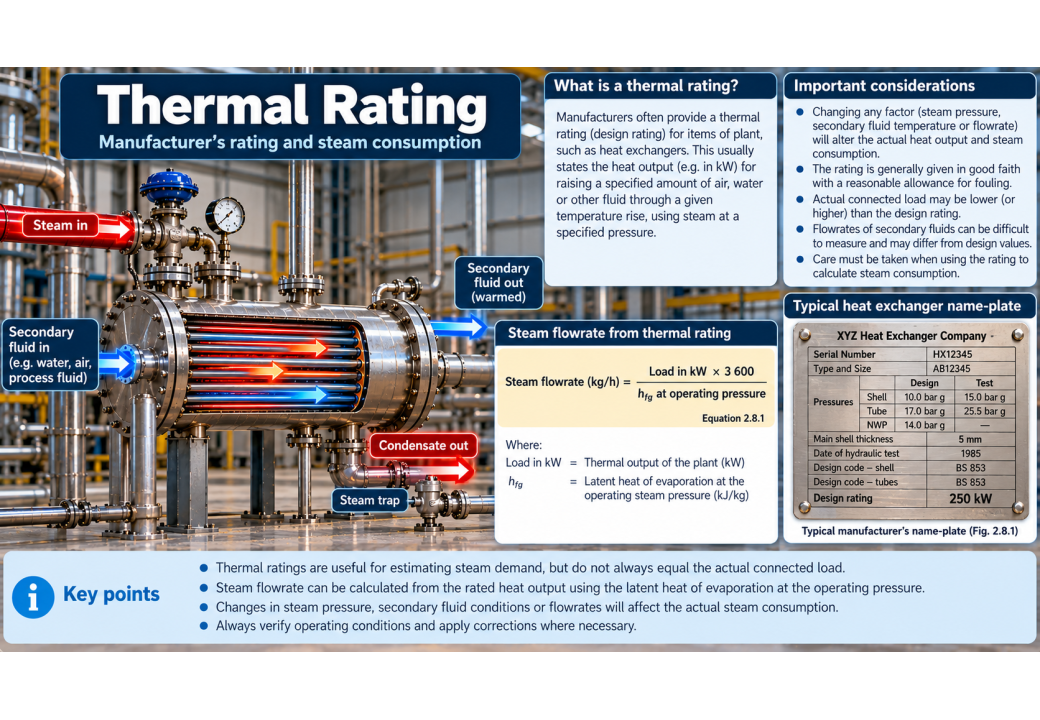
    Heat Exchanger Thermal Rating: From Nameplate Capacity to Actual Steam Load

    The thermal output stated on a heat exchanger nameplate or technical datasheet is useful only when interpreted in the correct context. A thermal rating does not mean that the equipment will always transfer the same amount of heat, nor does it mean that the rating is identical to the actual connected process load. A design rating is based on defined conditions: a stated air, water or other secondary-fluid flowrate, a specified temperature rise and steam at a specified pressure. If any of...

    Read more
  • Measuring Steam Consumption: Flowmeters and Condensate-Based Methods
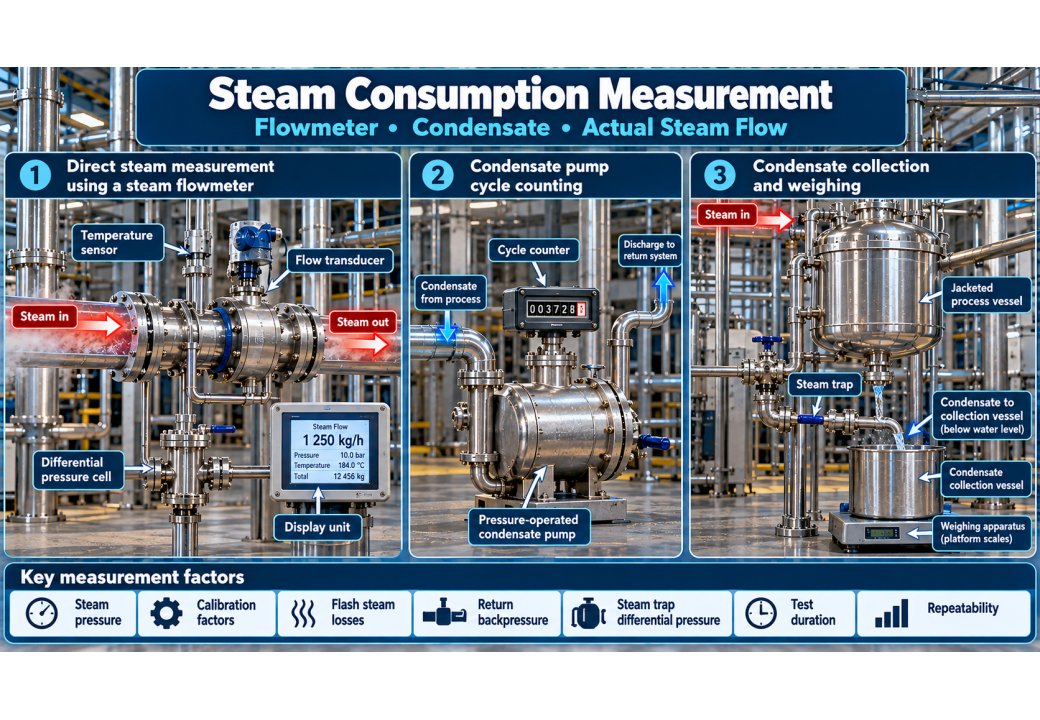
    Measuring Steam Consumption: Flowmeters and Condensate-Based Methods

    Actual steam consumption in an operating industrial plant can be established by measuring steam flow directly or, in suitable applications, by determining the amount of condensate produced. Measurement can be used to assess actual plant performance, compare steam users, evaluate energy-saving measures and assign steam demand to individual production stages.

    Read more
  • Estimating Steam Consumption in Industrial Applications
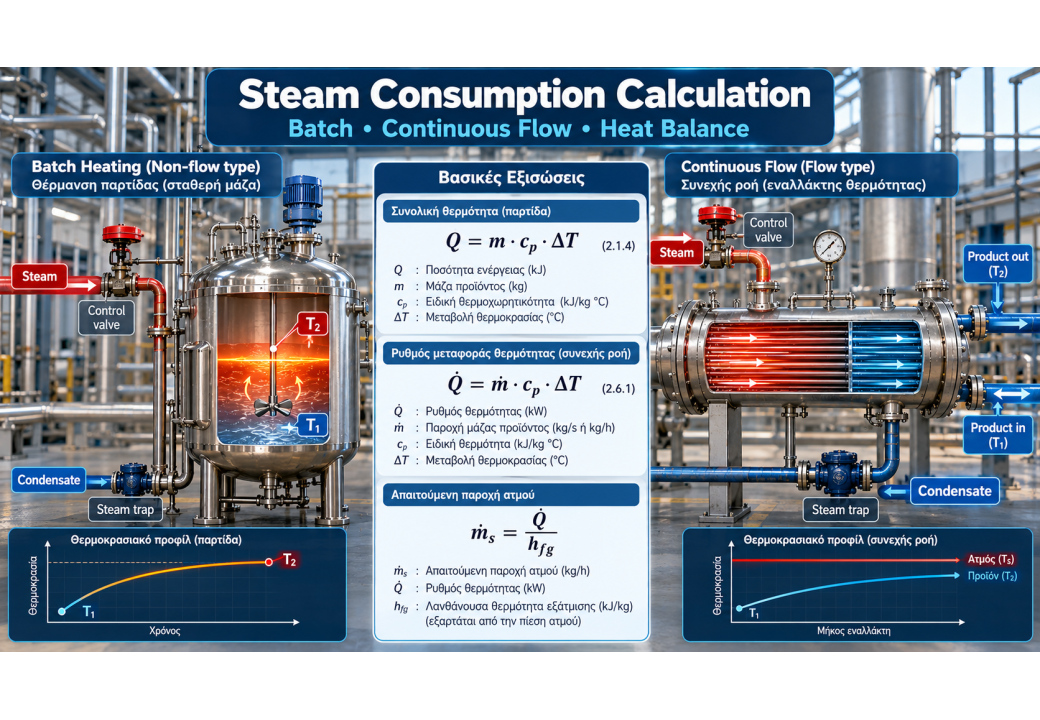
    Estimating Steam Consumption in Industrial Applications

    Accurate steam-consumption estimation is fundamental to the design of an industrial steam system. Required steam flow affects pipe sizing, boiler capacity, control-valve sizing and steam-trap selection.

    Read more
  • Steam Heat Transfer: Fundamentals, Overall U-Value and Thermal Resistance
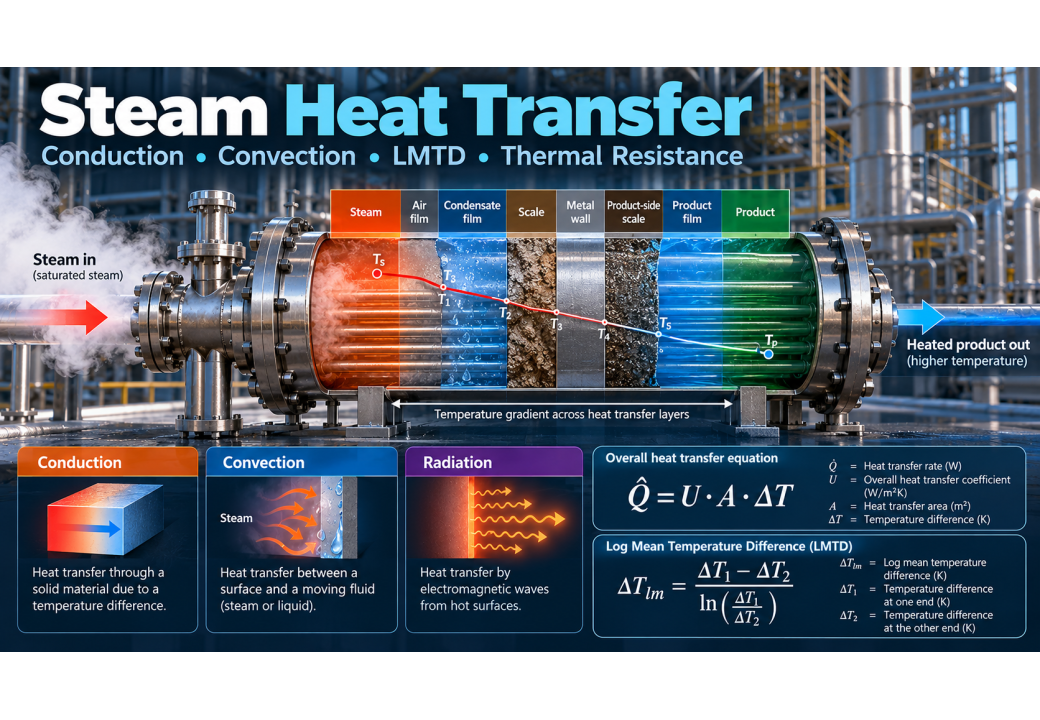
    Steam Heat Transfer: Fundamentals, Overall U-Value and Thermal Resistance

    In a steam-heating system, the purpose of steam generation and distribution is to deliver heat at the process heat-transfer surface. Once heat duty and steam pressure are known, steam consumption can be established and used to size the boiler, distribution system and heat exchanger.

    Read more
  • Steam Quality in Industrial Systems: Dryness, Cleanliness and Air Removal
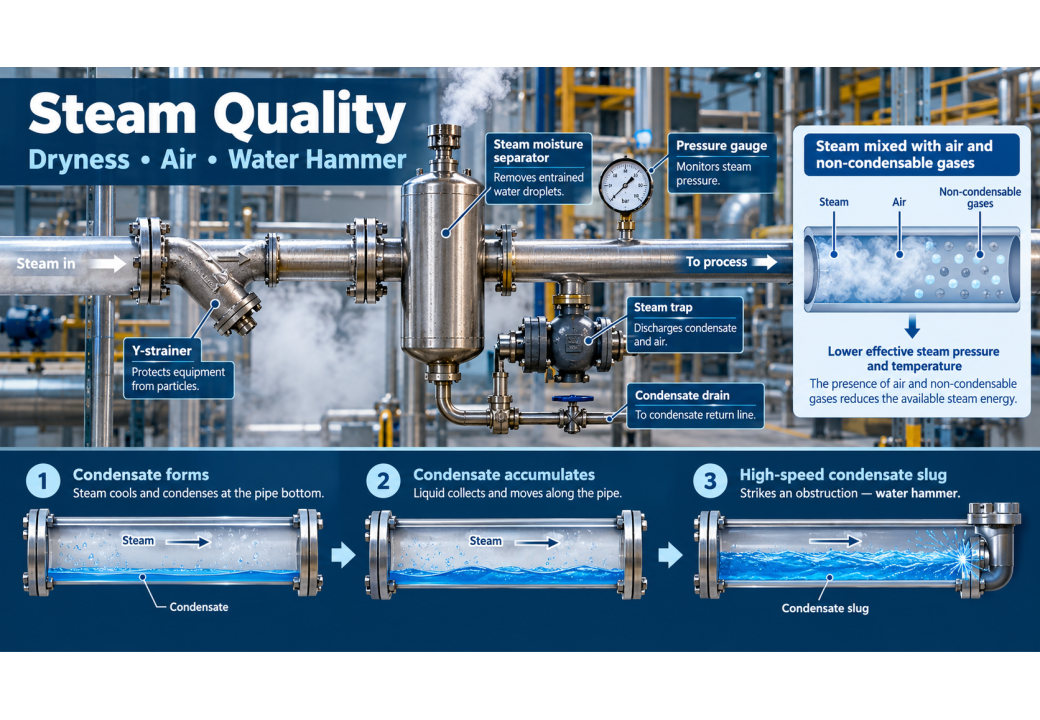
    Steam Quality in Industrial Systems: Dryness, Cleanliness and Air Removal

    Steam quality is not defined by pressure alone. For an industrial process to operate correctly, steam must reach the point of use in the required quantity, at the required pressure and temperature, free from excessive air and other non-condensable gases, sufficiently clean and as dry as the system requires. Each of these conditions affects heat transfer, process stability and the mechanical behaviour of the distribution system.

    Read more
  • Superheated Steam: Generation, Properties and Applications
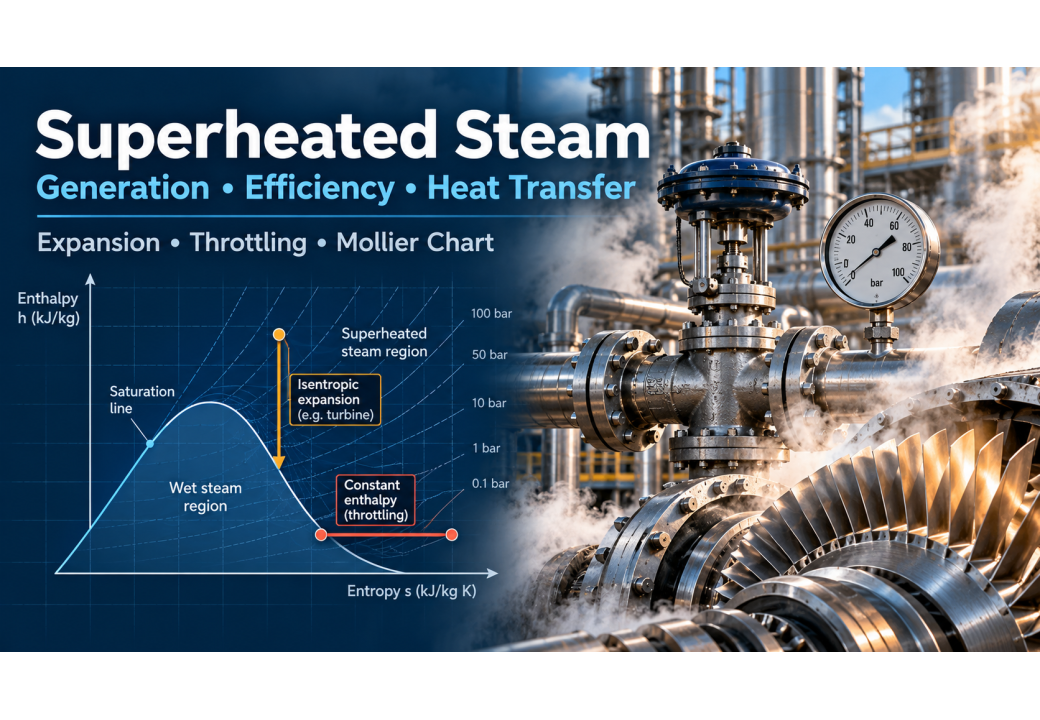
    Superheated Steam: Generation, Properties and Applications

    Superheated steam is steam whose temperature has been raised above the saturation temperature corresponding to its pressure. The difference between actual steam temperature and saturation temperature is known as the degree of superheat. This condition is especially important when steam is used to produce mechanical work, such as in steam turbines. Superheating, however, does not automatically improve every steam application. Saturated and superheated steam behave differently in heat-transfer...

    Read more
  • What Is Steam? Saturation, Enthalpy, Dryness and Flash Steam
    What Is Steam? Saturation, Enthalpy, Dryness and Flash Steam

    Steam is the vapour phase of water, and its behaviour is closely connected to pressure, temperature and the energy state of the water from which it is produced. For industrial steam engineering, it is not enough to state that water boils and becomes steam. It is necessary to understand saturation, the energy required for evaporation, the effect of pressure on specific volume, the meaning of dryness fraction and the mechanism that produces flash steam when hot condensate is reduced to a lower...

    Read more
  • SI Units and Core Thermodynamic Quantities in Steam Engineering
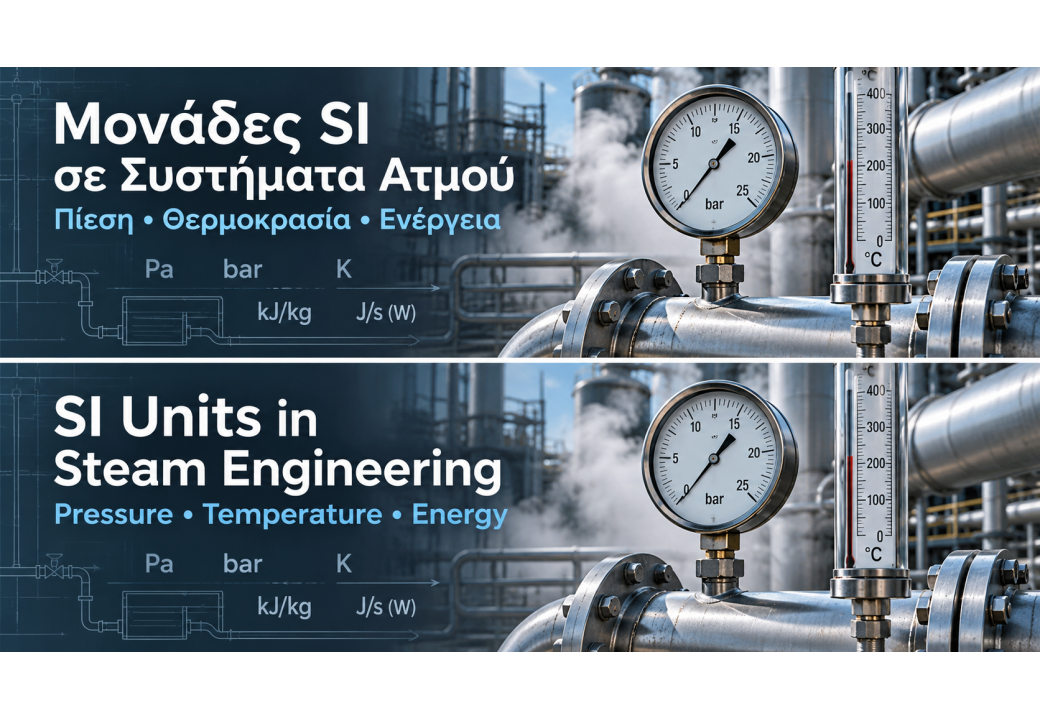
    SI Units and Core Thermodynamic Quantities in Steam Engineering

    Steam engineering calculations depend on a consistent system of units. Pressure, temperature, energy, power, density, specific volume and enthalpy are closely related, and an incorrect unit or pressure reference can change the meaning of an otherwise correct calculation. The International System of Units, SI, provides a common basis for expressing mechanical and thermal properties. In steam engineering, the most frequently used base quantities include length, mass, time and temperature,...

    Read more
  • Industrial steam systems: from the boiler house to condensate return
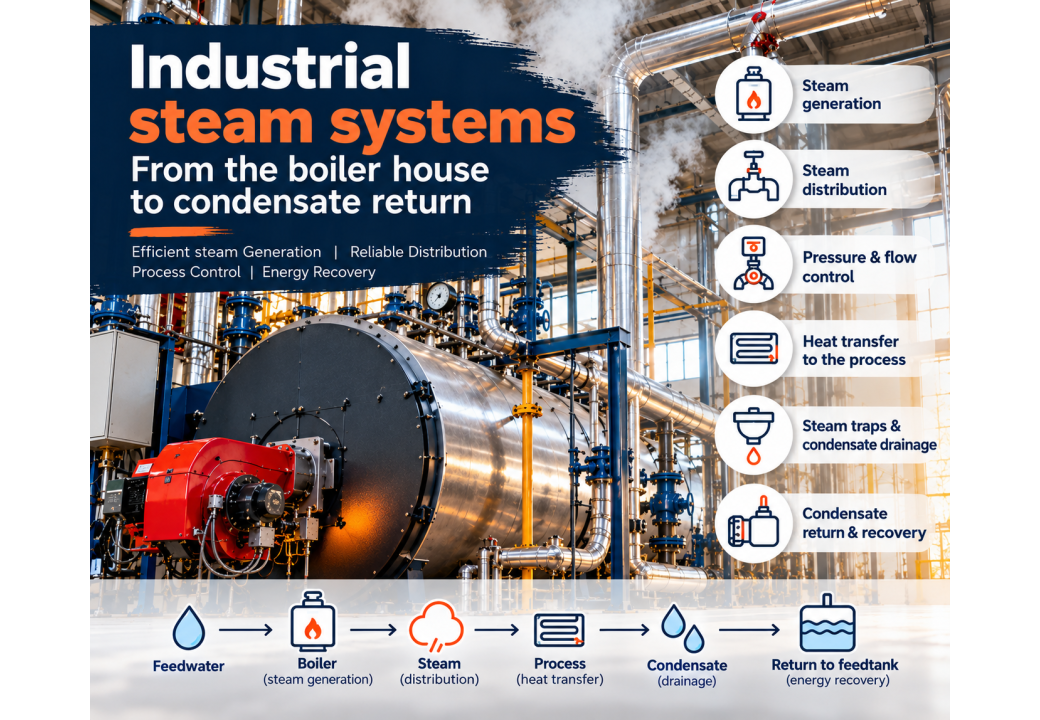
    Industrial steam systems: from the boiler house to condensate return

    In an industrial plant, steam is more than a hot fluid. It is an energy carrier generated centrally, distributed through pipework and used to deliver controlled heat at the point of demand. The system depends on the pressure-temperature relationship of saturated steam and on the energy released when steam condenses. From an engineering perspective, steam should be assessed as a complete loop: generation, distribution, pressure and flow control, heat transfer, condensate drainage, condensate...

    Read more
  • Water Hammer in Steam and Condensate Systems
    Water Hammer in Steam and Condensate Systems

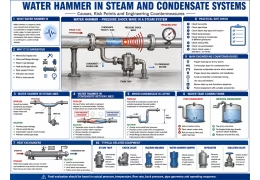
    Causes, Risk Points and Engineering Countermeasures Water hammer in steam and condensate systems is one of the most severe operating phenomena that can occur in industrial steam installations. It is not simply pipe noise. It is a mechanical impact load that can stress valves, flanges, steam traps, heat exchangers, supports, pipework and control instruments. In practice, most water hammer incidents in steam systems are related to condensate being present where controlled steam flow is...

    Read more
  • Steam Dryness Fraction in Steam Distribution Systems
    Steam Dryness Fraction in Steam Distribution Systems

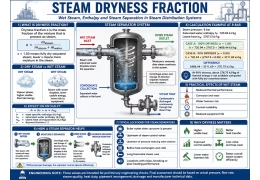
    Wet Steam, Enthalpy and Steam Separation Steam dryness fraction is used to describe the amount of dry saturated steam contained in a steam-water mixture. In real steam systems, water droplets may be present due to boiler carryover, heat losses in pipework, poor drainage or incorrect pipe sizing. For engineering purposes, steam dryness is not a theoretical parameter. It directly affects available thermal energy, heat transfer, steam trap operation, valve wear and the risk of water hammer.

    Read more
  • Flash Steam and Heat Recovery
    Flash Steam and Heat Recovery

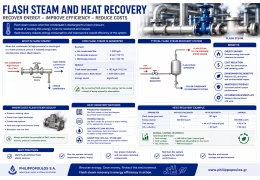
    Flash steam is generated when hot condensate at a higher pressure is released to a lower pressure. This typically occurs downstream of steam traps, pressure reduction points, condensate headers or return systems operating at a lower pressure than the steam-consuming equipment. In terms of thermodynamic properties, flash steam is not different from saturated steam. The term describes the way it is generated: it is not produced in the boiler, but results from pressure reduction of hot...

    Read more
  • Valve Materials and Elastomers
    Valve Materials and Elastomers

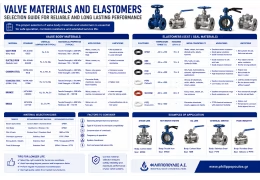
    Valve material selection should not be based only on nominal pressure or valve size. Operating pressure, temperature, fluid compatibility, corrosion risk, mechanical loads, connection type, design standards and installation requirements must be evaluated together. The following tables provide indicative material equivalents according to EN, DIN, WNr and ASTM designations, together with typical temperature limits. These limits do not replace pressure-temperature ratings from applicable...

    Read more
  • Expansion of Pipes in Steam Systems
    Expansion of Pipes in Steam Systems

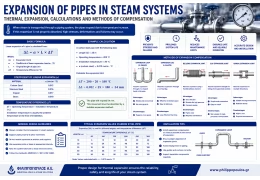
    In steam and hot fluid systems, pipe length increases as temperature rises. Thermal expansion must be considered during system design in order to avoid high mechanical stresses, excessive loads on fixed points, pipe deformation and forces transmitted to valves, flanges, steam traps, heat exchangers and other equipment. Proper arrangement of pipe guides, supports, fixed points and expansion joints allows the pipework to move in a controlled manner and absorb the change in length caused by...

    Read more
  • Calculating Flash Steam
    Calculating Flash Steam

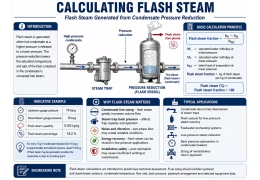
    Flash steam is generated when hot condensate at a higher pressure is released to a lower pressure. The pressure reduction lowers the saturation temperature, and part of the heat contained in the condensate is converted into steam. This phenomenon commonly occurs downstream of steam traps, pressure reducing points, condensate return lines and flash vessels. Correct estimation of flash steam quantity is important for sizing condensate lines, flash vessels, vents and energy recovery systems.

    Read more
  • Content of Air in Steam Systems
    Content of Air in Steam Systems

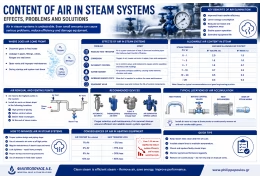
    The presence of air and other non-condensable gases in a steam system affects saturation temperature, heat transfer and equipment operation. Even a small percentage of air can cause a significant reduction in the actual steam temperature at the point of use. Correct air venting, removal of non-condensable gases and proper selection of steam traps and air vents are therefore important factors in the operation of industrial steam systems.

    Read more
  • Pressure Drop in Steam Lines
    Pressure Drop in Steam Lines

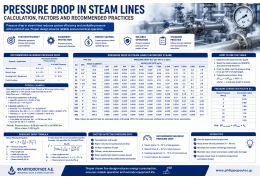
    Pressure drop in a steam distribution network directly affects the available pressure at the point of use, as well as the operation of control valves, pressure reducing valves, steam traps and heat exchangers. For preliminary technical checks, pressure drop may be estimated using the steam density, flow velocity and the total resistance coefficient of the pipework and installed components.

    Read more
  • Recommended Flow Velocities for Steam, Water and Air Lines
    Recommended Flow Velocities for Steam, Water and Air Lines

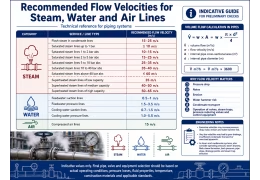
    The following values may be used as an indicative guide for preliminary checks of flow velocities in industrial steam, condensate, feedwater, cooling water and compressed air piping systems. Proper flow velocity selection affects pressure drop, noise, erosion, water hammer risk, condensate transport and the operation of valves, steam traps, pressure reducing valves and control equipment.

    Read more
  • Saturated Steam Table
    Saturated Steam Table

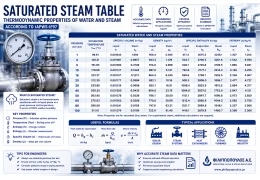
    The following table presents basic thermodynamic properties of saturated steam as a function of absolute pressure. The data may be used as a technical reference for preliminary calculations and equipment selection in steam systems, including steam traps, control valves, pressure reducing valves, safety valves, condensate lines and heat exchange applications.

    Read more
Showing 1 to 19 of 19 (1 Page)