


Ball Valves Cryogenic Service | Fluitek | Philippopoulos s.a.

Ball Valves Cryogenic Service | Fluitek

Cryogenic Ball Valves Fluitek

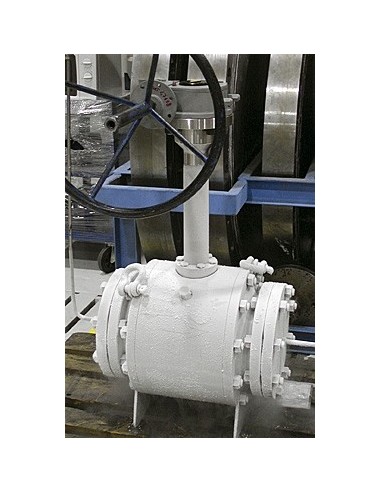
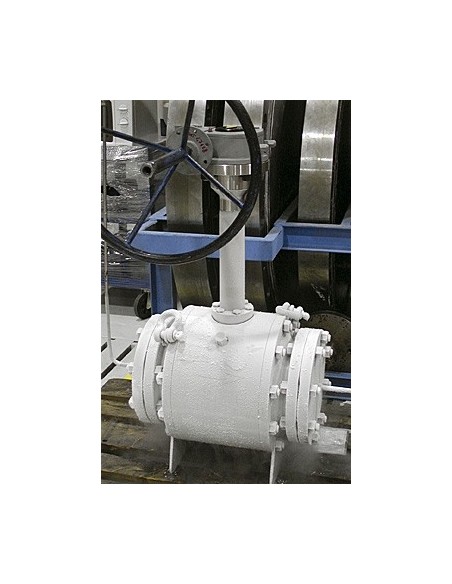
Ball valves for cryogenic isolation, available in two- or three-piece construction, cast or forged. The range includes both floating and trunnion-mounted designs, selected based on DN, pressure, differential pressure, and required operating torque. Body and internal components are made from austenitic stainless steels for low-temperature performance.

Technical Configuration

  • Seats: PCTFE soft-seated or metal-to-metal, depending on temperature and leakage requirements
  • Static/Dynamic Seals: PTFE-based lip seals, spring self-energized and pressure-energized by process media
  • Stem: Anti blow-out design
  • Design Standards: API 6D / ASME B16.34
  • Cryogenic Requirements: BS 6364 or project-specific specification
  • Antistatic Device: API 6D and ISO 17292
  • Ends: Flanged to ASME B16.5, RF/RTJ and other types on request
  • Fire-safe: BS 6755, API 6FA or API 607, with secondary graphite sealing

Floating vs Trunnion Selection

Floating design is typically used for smaller sizes and moderate torques. Trunnion-mounted is selected for larger diameters or higher differential pressures, where ball loads must be mechanically transferred to the body rather than the seats alone.

Cryogenic Stem Extension

Stem extension is dimensioned per BS 6364 or project specification. Purpose is to position the packing outside the cold zone, ensuring sealing operates in a more controlled thermal environment.

Applications

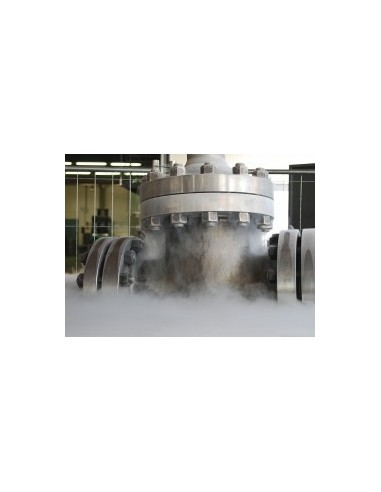
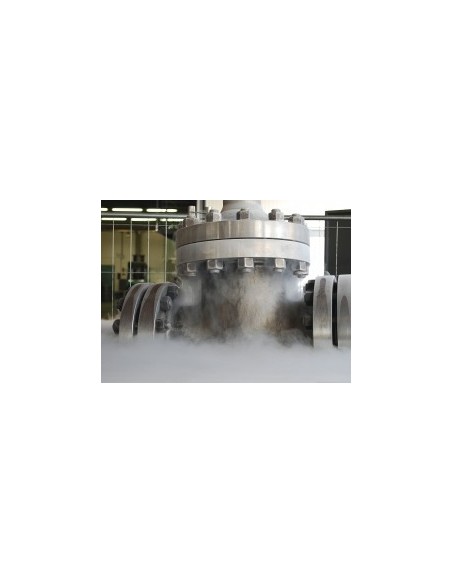
Used in LNG, liquid nitrogen, liquid argon, cryogenic CO₂, and air separation units. For liquid oxygen, dedicated specifications for cleanliness, degreasing, and material compatibility are required.

Actuation

Operation can be manual (lever or gearbox) or automated with electric, pneumatic, or hydraulic actuators.

FAQ

When is metal-to-metal seating required?
For higher thermal cycling, purity, or wear demands where PCTFE seats are insufficient.

What data is needed for specification?
Media, minimum temperature, design pressure, class, DN/NPS, seat type, end connections, fire-safe requirement, and actuator type.

Description

Body construction can be two or three pieces, forged or cast. Valve design can be either Floating Type or Trunnion Type. Body and trim materials are austenitic SS, because of their ductility at low temperatures. Cryogenic Valves can be soft seated (PCTFE) or metal-to-metal seated. Valve static and dynamic seals are lip-seals PTFE based, due to the fact that PTFE material is suitable to cryogenic conditions. These seals are spring self-energized but in service are also pressure-energized by line fluid. Anti blow-out stem warrants high safety during operation and maintenance activities.

Main reference codes:

  • Valve Design in accordance with API 6D / ASME B16.34, but comply also to the additional requirements prescribed by BS6364 or Customer Specifications for Cryogenic Service.
  • Antistatic design as per API 6D and ISO 17292.
  • Valve ends are normally flanged (RF, FF, MF or FF, RTJ), according to ASME B16.5. Other valve ends available on request.
  • Cryogenic stem extension length in accordance with BS6364 or Customer Specifications.
  • Fire Safe according to BS6755 / API 6FA / API 607, since each sealing point is provided by a secondary fire-safe seal in graphite. Valve soft seats also are provided with secondary metal-to-metal seal in case of fire.

Valves in Cryogenic service can be manual operated (lever or gearbox depending on valve size), but also equipped with an actuator (electric, pneumatic, hydraulic).

Certifications