
Size:2"~24"(DN50~DN600)
Pressure Rating: ASME CLASS 150~900(PN16~PN150)
Body material:Stainless steel
End connection:RF, BW, RTJ
Operation:Manual, Pneumatic, Electric, Hydraulic



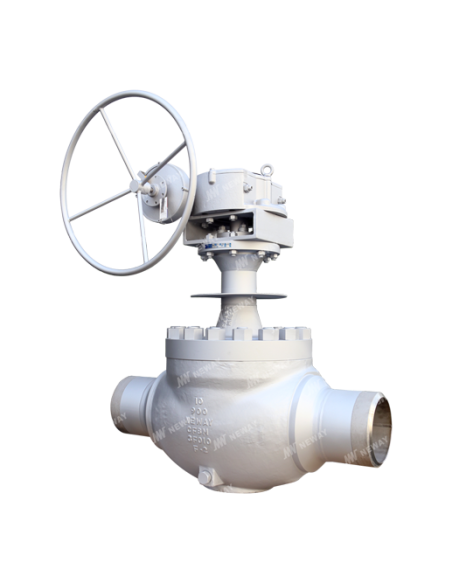
Cryogenic service ball valve, top-entry design, trunnion mounted ball, suitable for LNG isolation lines, air separation gases, and other cryogenic media. Available in NPS 2"–24", ASME Class 150–900 / PN16–PN150. Body materials: stainless steel; end connections: RF, BW, or RTJ. Manual, pneumatic, electric, or hydraulic actuation supported.
Top-entry construction allows access to internal components from above without removing the valve from the pipeline. This is critical for insulated cryogenic lines, where disconnecting flanges or BW sections increases downtime and re-insulation work.
Trunnion support is specified for larger diameters or high differential pressures to minimize seat loading and operating torque. Suitable for ESD, LNG feed lines, liquid nitrogen, liquid oxygen, and cryogenic air separation units.
When is this preferred over floating top-entry?
For larger DN, higher pressure, or when floating ball torque is excessive.
What data is required for specification?
Medium, minimum temperature, design pressure, ASME class, NPS/DN, RF/BW/RTJ, seat material, actuator type, and fail-open/fail-close requirement.
Size:2"~24"(DN50~DN600)
Pressure Rating: ASME CLASS 150~900(PN16~PN150)
Body material:Stainless steel
End connection:RF, BW, RTJ
Operation:Manual, Pneumatic, Electric, Hydraulic
