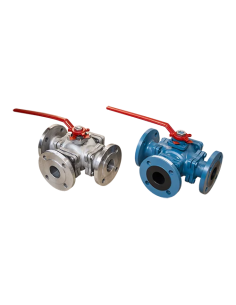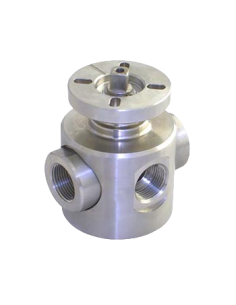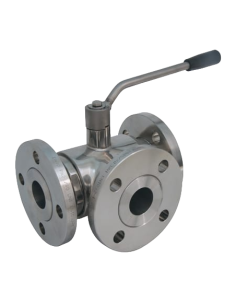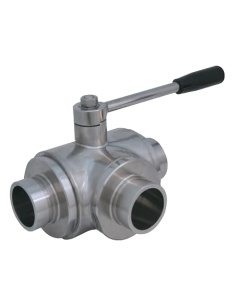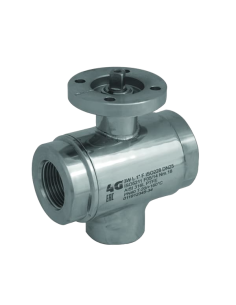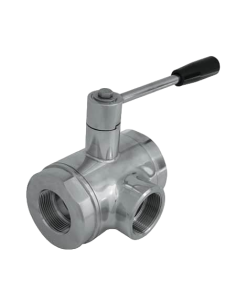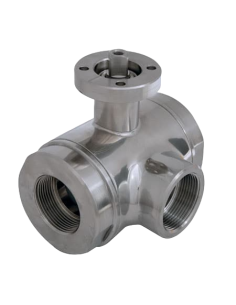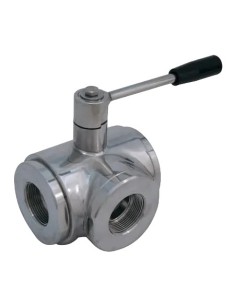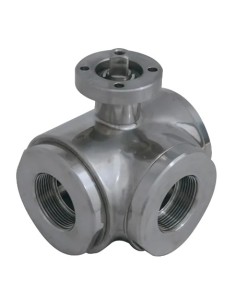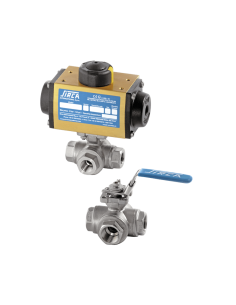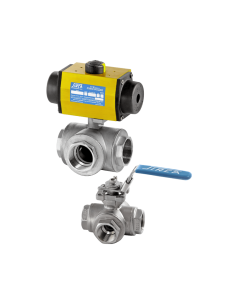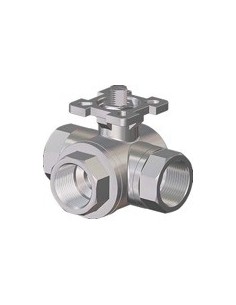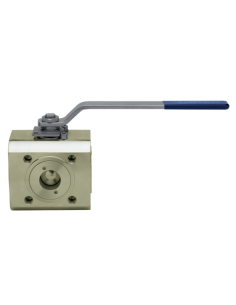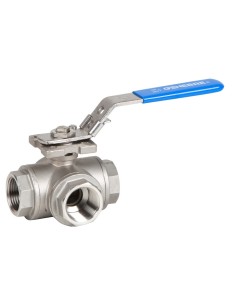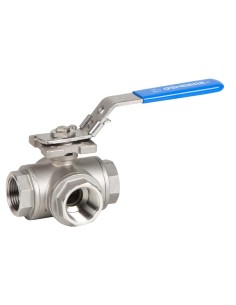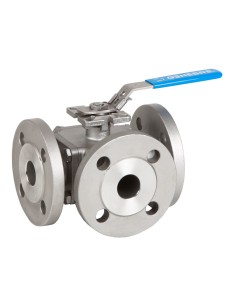

L-Bore
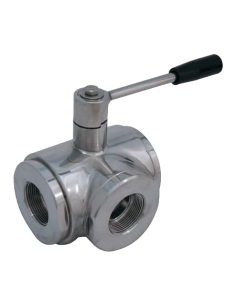
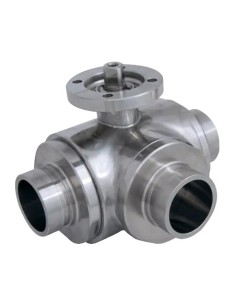
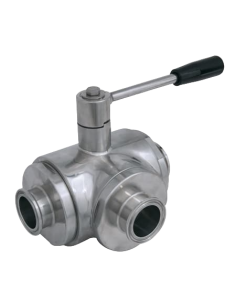
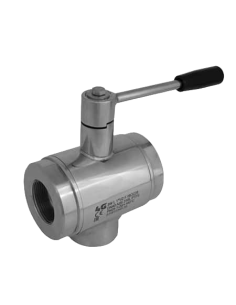
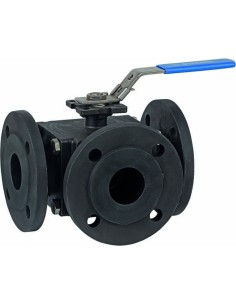
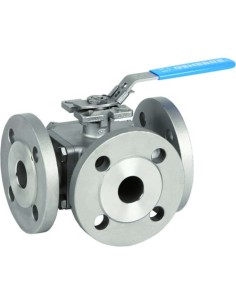
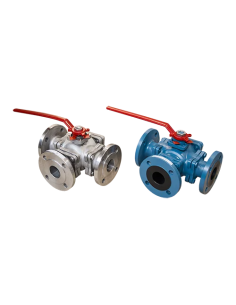
3-way L-port ball valves are used to divert flow between two alternative lines with a common inlet or a common outlet. The L-shaped ball bore is not intended to connect all three ports simultaneously, as may occur with certain T-port configurations, but to provide defined directional flow selection. For this reason, they are applied in bypass lines, tank changeover, circuit selection, return-line switching, and utility networks handling water, air, oil, chemical liquids, and other auxiliary industrial services.
The category includes DIN and ANSI designs, with available pressure ratings PN 10, PN 16, PN 19, PN 25, PN 40, PN 63, PN 64, PN 100, PN 250, and ASME Class 150/300. End connections include BSP, NPT, flanged ends, wafer, split-body flanged ends, butt weld, clamp, Garolla, Victaulic, ISO 228-1, DIN 11851, and SMS, depending on piping specification and plant standard. Body materials include 1.0619, 1.4307, 1.4404, 1.4408, ASTM A105/A105N, ASTM A351 CF8M, and ASTM A479 Type 304/316/316L. Seat materials include PTFE, RPTFE, virgin or modified PTFE, 15% glass-filled PTFE, and PTFE with stainless reinforcement. Operating temperature limits depend on body alloy, seat material, line pressure, and media characteristics.
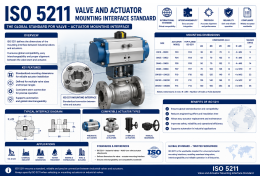
During valve selection, the flow path for each handle or actuator position should be verified, together with identification of the common port, angle of rotation, ISO 5211 actuator interface, operating torque at maximum differential pressure, and chemical compatibility of seats and seals. In automated systems, fail-safe position and port-position indication should be checked to prevent unintended isolation or cross-flow during switching. Seat wear, leakage class, and maintenance access should also be considered, particularly in services with frequent cycling, solids contamination, or pressure fluctuations.