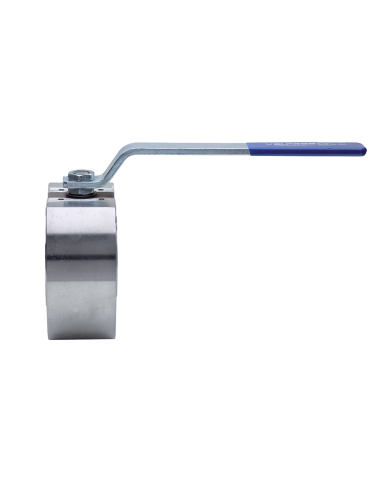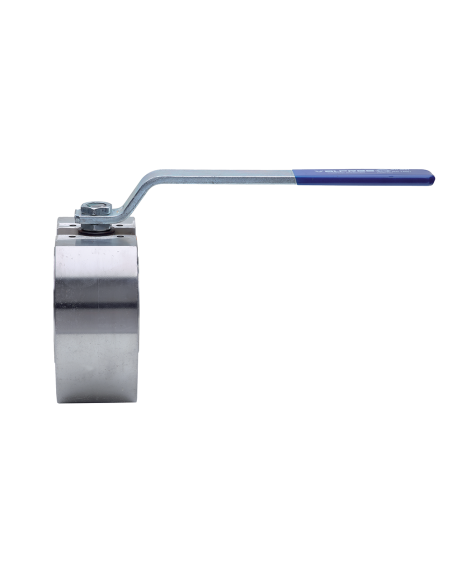
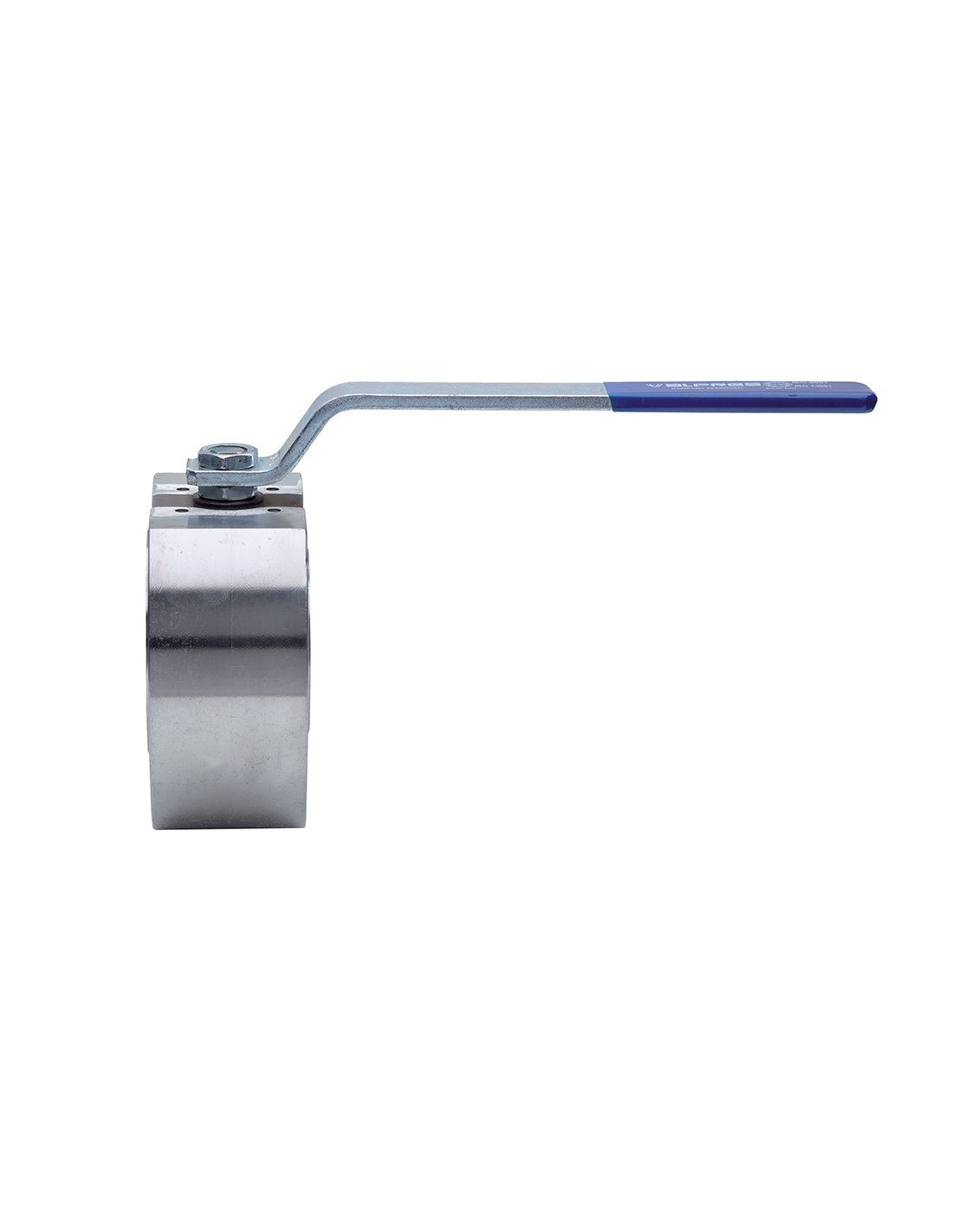
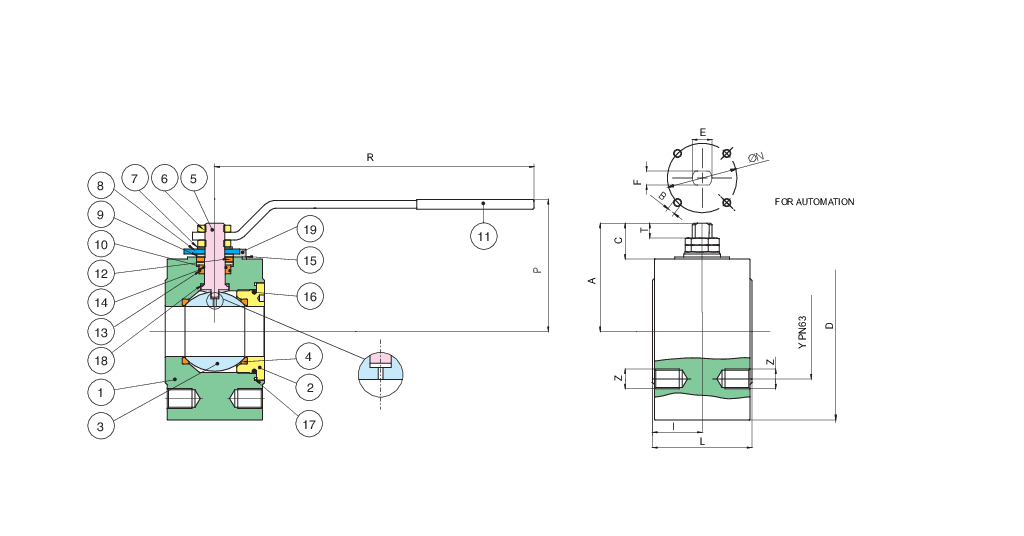



Valpres 720 PN63 / ANSI 300 Wafer Ball Valve
Wafer-pattern ball valve for installation between flanges in PN63 or ANSI Class 300 piping systems. The 720 series is used where a compact face-to-face arrangement is required together with a pressure class above typical PN16/PN40 wafer valves.
Available Variants
- 720700: PN63 version, body/end connection in A479 316/316L stainless steel.
- 720650: PN63 version, body/end connection in A350 LF2 carbon steel.
- 720212: ANSI 300 / PN50 version, body in A182 F316/F316L or A351 CF8M.
Technical Characteristics
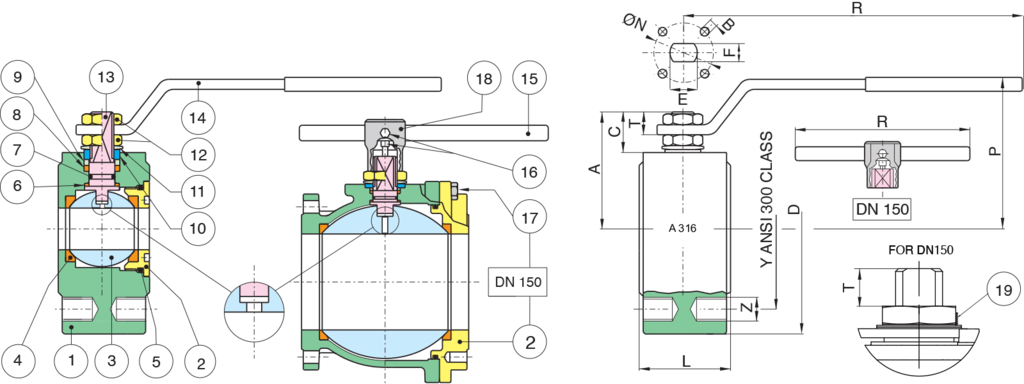
- Nominal sizes: DN15 to DN150, depending on version.
- Temperature range: -20°C to +160°C.
- Vacuum service: down to 10⁻³ torr.
- Seats: PTFE reinforced with fiberglass.
- Stem seat: PTFE; PN63 versions may also use Graphoil.
- O-rings: FKM.
- Ball: CF8M / TP316 or CF8 / TP304.
- Stem: TP316 or 17-4PH.
- Operation: manual lever; actuator mounting possible where ISO top mounting is provided.
Typical Applications
- Industrial water and utility lines.
- Compressed air and neutral gas systems.
- Fuel and compatible hydrocarbon services.
- Process liquids compatible with stainless steel or carbon steel body materials, PTFE/fiberglass seats and FKM elastomers.
- Compact isolation duties in skids, manifolds and high-pressure utility headers.
Variant Selection Logic
The 720700 stainless steel version is normally selected for more corrosive fluids or stainless steel piping. The 720650 LF2 carbon steel version is used on carbon steel pipework where fluid compatibility permits. The 720212 version is intended for ANSI Class 300 flange systems.
Before selection, verify DN, flange drilling, pressure class, operating temperature, Kv requirement, valve weight, gasket arrangement, actuator interface and compatibility of FKM elastomers with the process fluid.
Standards and Interface Considerations
- Pressure classes: PN63, ANSI Class 300 / PN50 depending on variant.
- Installation: wafer body clamped between compatible flanges.
- Automation: confirm ISO top mounting, torque requirement and duty cycle before selecting pneumatic or electric actuators.
- Documentation: project-specific requirements such as PED, ATEX, material certificates, pressure testing or traceability should be confirmed at procurement stage.
FAQ
- Is this valve suitable for throttling? It is primarily an isolation valve. Continuous throttling can increase seat wear and leakage risk.
- Can it be automated? Yes, where the selected size and variant include ISO top mounting and the actuator is sized for breakaway torque.
- What limits media compatibility? Body metallurgy, PTFE/fiberglass seats, FKM O-rings, temperature and pressure determine suitability.
Description
Certifications
F.E. TESTED ISO15848-1
TUV SIL 3
ATEX FIRE-SAFE (On request)