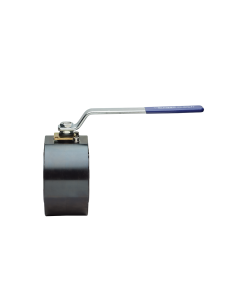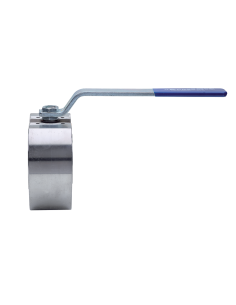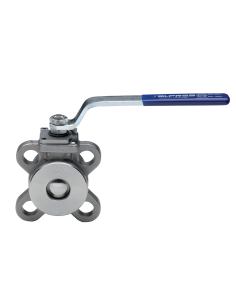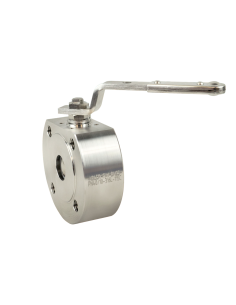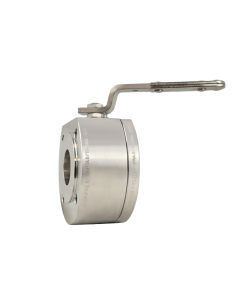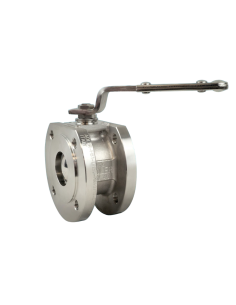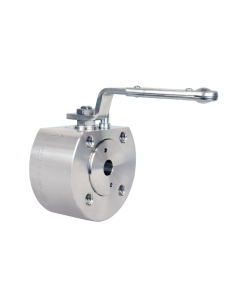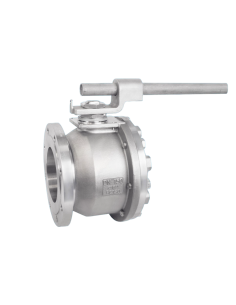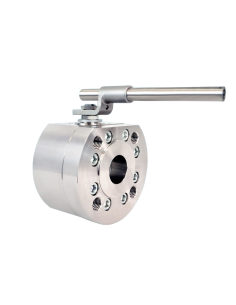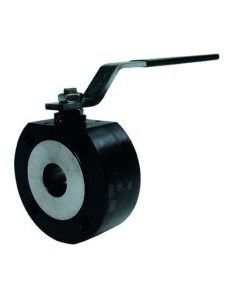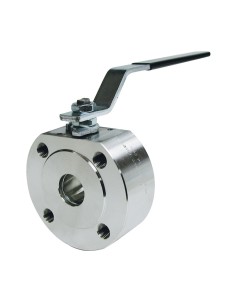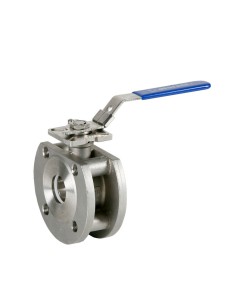

Wafer
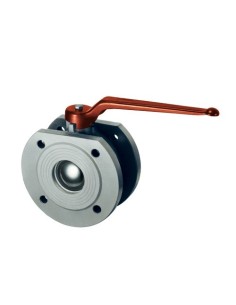
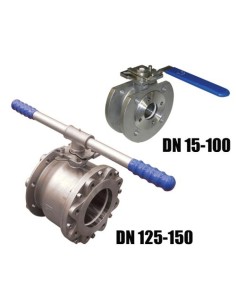
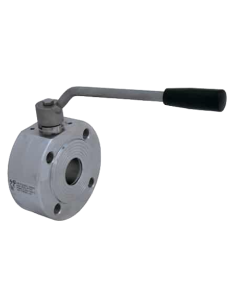
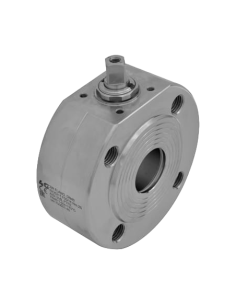
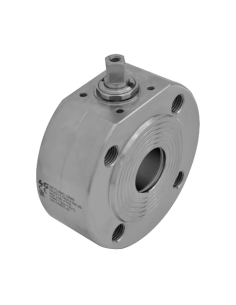
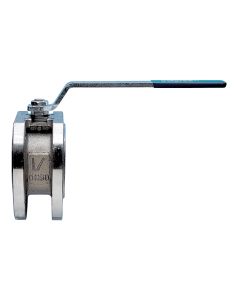
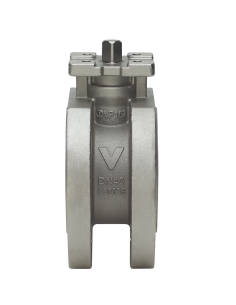
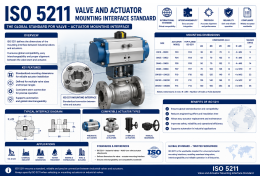
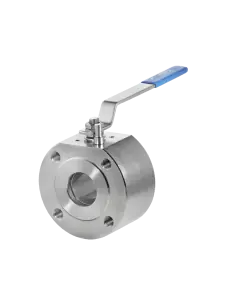
2-way wafer type ball valves are used for flow isolation in industrial piping systems where a short face-to-face dimension and installation between DIN, EN 1092-1 or ANSI B16.5 flanges are required. This category includes full-bore designs for reduced pressure drop, compact wafer bodies, and versions with ISO 5211 mounting pads for pneumatic or electric actuators in on/off service or automated line isolation.
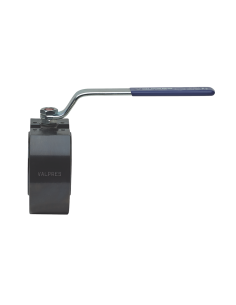
Material selection depends on the process medium, pressure, temperature, and compatibility with the piping class. Available configurations include bodies in cast iron EN-GJL-250, carbon steel ASTM A105 / A352 LCB / LF2, and stainless steel CF8M, AISI 316 / 316L or 1.4404, with stainless steel balls and stems. PTFE or glass-filled PTFE seats are used for water, air, steam, neutral fluids, and compatible industrial media, subject to chemical resistance, thermal loading, and seat leakage requirements.
The available pressure ratings include PN10, PN16, PN20, PN40, PN50, PN63 up to PN160, and ANSI Class 150 up to ANSI Class 1500, depending on the valve series and construction. The operating temperature ranges shown across the series extend indicatively from -40°C to +180°C, while certain versions are also specified for vacuum service down to 10⁻³ torr.
For processes involving viscous, crystallizing, or temperature-sensitive products, jacketed versions are used to maintain fluidity and reduce product retention in the valve body. V-ball versions may be applied where a more defined flow characteristic is required, although they should not be treated as precision control valves for continuous modulating service unless confirmed by the application data.
During specification, DN size, flange rating, body material, seat material, operating temperature, operating torque, actuator compatibility, and seat/stem leakage requirements should be verified. Maintenance considerations include stem sealing inspection, seat wear, correct alignment between flanges, and avoidance of mechanical stress on the wafer body during bolt tightening.