


Ball Valve - Type 19005 | Ibor Valves | Philippopoulos s.a.

Ball Valve - Type 19005 | Ibor Valves

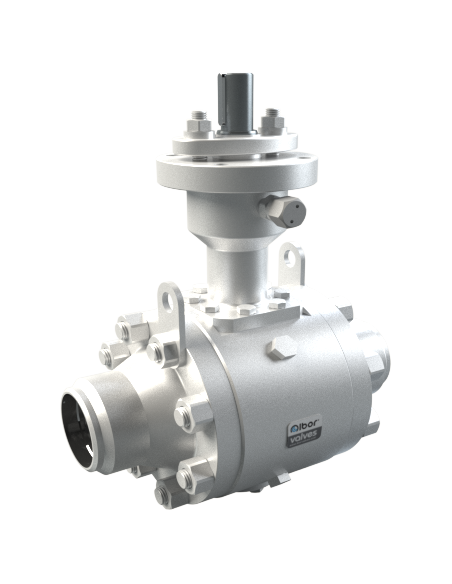
Ibor Type 19005 Ball Valve

The Ibor 19005 is a 2-way ball valve used for flow isolation in industrial piping systems. It is specified with DIB I or DIB II seat configuration and may include auxiliary stem sealing injection for maintenance or emergency sealing during operation.

Seat Configuration and Sealing

  • DIB I: double piston effect on both downstream and upstream seats. Used where bidirectional isolation and cavity pressure management are part of the isolation philosophy.
  • DIB II: double piston effect downstream and single piston effect upstream. Selected where upstream cavity relief behaviour is required by the piping or safety concept.
  • Stem sealing injector for secondary sealant injection.
  • Locking device for valve position control and maintenance safety.
  • Nipple and needle arrangement for drain, vent or sampling duties.
  • Overlay may be applied in the seat area or on all wetted parts for corrosive or erosive service.

Thermal Management

The heating jacket version is used when the process fluid must remain within a controlled temperature band. Typical cases include high-viscosity liquids, media prone to solidification, wax-containing hydrocarbons, resins, bitumen-related services and lines where thermal stability is required during no-flow conditions.

Pipe End Connections

  • Flanged ends: ASME B16.5, GOST 12815-80, EN 1092-1.
  • Butt weld ends: ASME B16.25.
  • Integral nipples available according to line configuration and project requirements.

Suitable Media and Operating Conditions

  • Chemical and petrochemical liquids.
  • Hydrocarbon streams and process gases.
  • Viscous or temperature-sensitive fluids when supplied with heating jacket.
  • Corrosive service when material selection and overlay are matched to the medium.

Pressure class, temperature range, seat material, body material and trim metallurgy should be selected from the project line class and confirmed against the manufacturer data sheet.

Actuation Options

  • Manual lever or gearbox for local operation.
  • Pneumatic, electric or hydraulic actuator for remote isolation and process control interfaces.
  • Limit switches, solenoids and position feedback devices may be specified for interlock or DCS/PLC integration.

Typical Industrial Use Cases

  • Chemical and petrochemical transfer lines.
  • Hydrocarbon and process gas isolation.
  • Lines requiring drain, vent or sampling through nipple and needle connections.
  • Services requiring heat tracing or jacketed valve construction.

Selection Notes

The choice between DIB I and DIB II must be aligned with the isolation philosophy, cavity pressure relief method and seat leakage test requirements. Overlay should be evaluated when the medium is corrosive, erosive or likely to damage the base material at the seating surfaces.

FAQ

  • When is DIB I preferred? When double piston sealing is required from both sides and cavity pressure handling is addressed by the system design.
  • When is DIB II preferred? When one side must provide double piston sealing while the opposite side allows single piston behaviour for pressure relief logic.
  • What should be checked before procurement? Line class, flange or weld standard, pressure rating, temperature, medium compatibility, actuator torque and leakage test requirements.

Description

Seat design

  • Double piston effect downstream & upstream – DIB I
  • Double piston effect downstream & single piston effect upstream – DIB II

Stem

  • Stem sealing injector
  • Locking device

Others

  • Nipple & Needle
  • Overlay on seat area or on all wetted parts
  • Heating jacket

Connections

Flanged End: ASME B16.5 / GOST 12815-80 / EN 1092.1

Butt Weld End: ASME B16.25

**integral nipples and available

Others

Design & Certification

Normative: ANSI / DIN

Design: API 6D / ISO 14313

Face to Face: ASME B16.10 / EN 558.1 Serie 27

Top Flange: ISO 5211

Press-Temp Ratings & Thickness: ASME B16.34

Test: API 6D / API 598 / EN 12266-1

Pressure Equipment Directive: PED 2014/68/EU Mod. H1

Equipment Directive: ATEX 94/9/EC

Fugitive Emissions: Class”A” acc.to ISO 15484-2

Safety integrity level: Sil 2 acc.to IEC 61508

Material: NACE MR0175 Lastest Edition

Certification:EN 10204 type 3.1, (3.2 upon request)