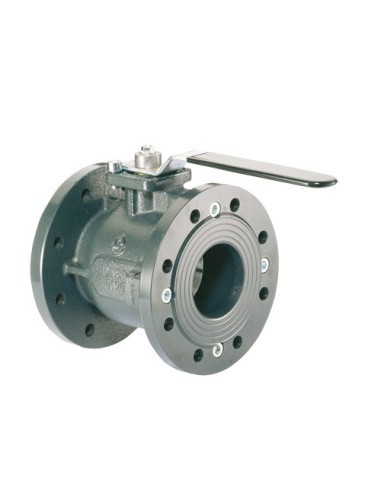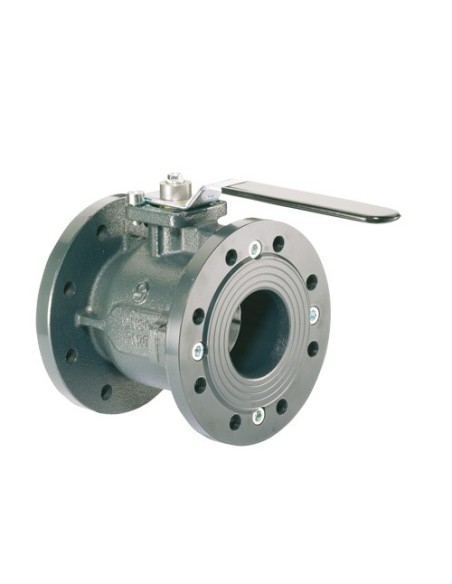

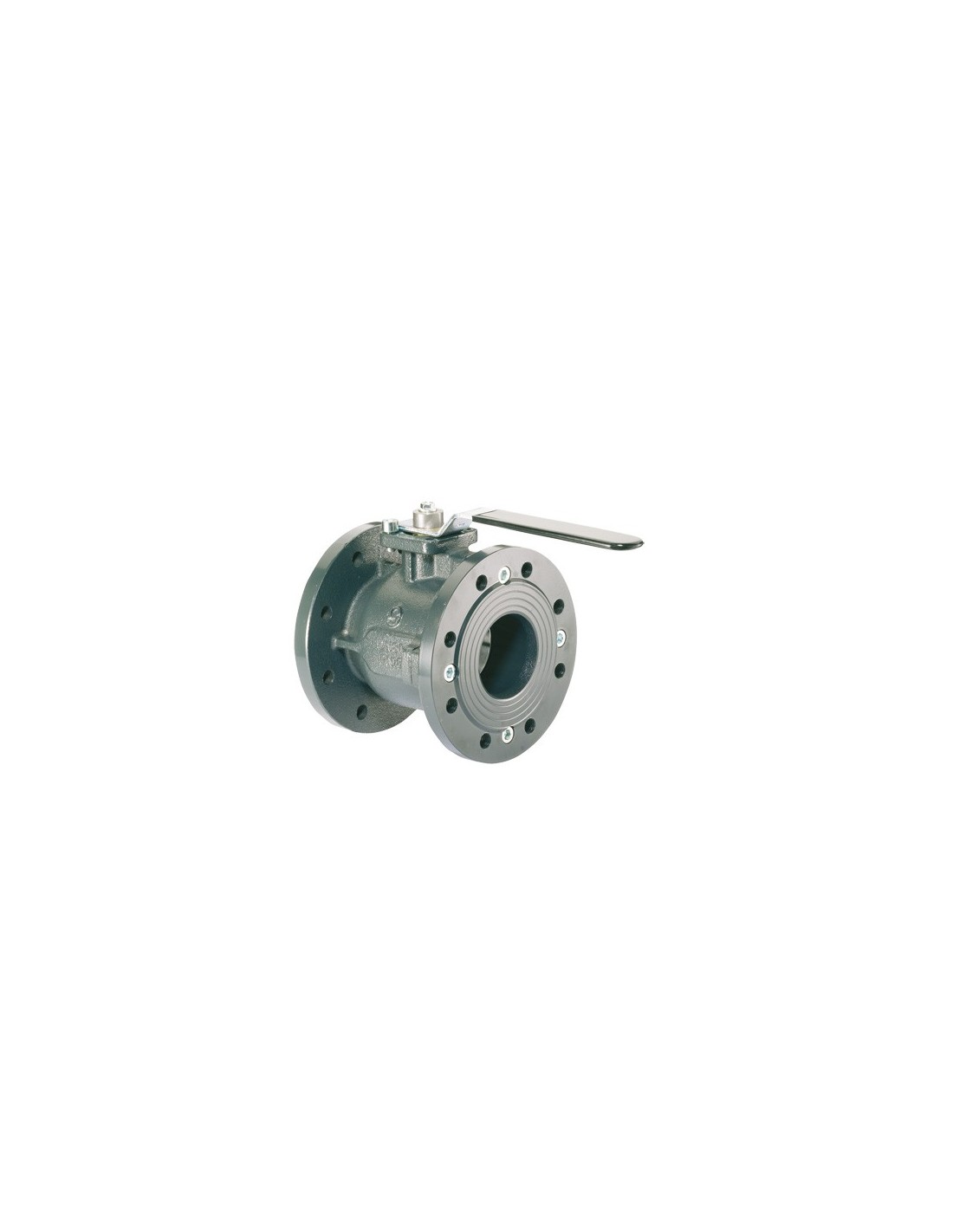
Cast iron GJL 250 ball valve - Flanged ends PN 16 (IVR 77) Cast iron GJL 250 ball valve - Inox stem and ball - Flanged ends PN 16 (IVR 78) Application: Hydrotermosanitary plants, overheated water, compressed air, waterworks, hydrocarbons (non-gaseous) and oils


Ball Valve - Type 77/78 | IVR

IVR Type 77/78 Flanged Ball Valve
Flanged PN 16 ball valve manufactured from EN-GJL-250 cast iron, intended for on/off isolation service in industrial and building-services pipework. IVR types 77 and 78 are used in hydronic systems, superheated water circuits, compressed air lines, water distribution, non-gaseous hydrocarbons and oil services, subject to media and temperature compatibility.
Construction
- Body material: EN-GJL-250 cast iron
- End connection: flanged
- Flange standard: DIN pattern
- Pressure class: PN 16
- Seat material: PTFE
- IVR 78: stainless-steel stem and ball
Typical Applications
- Isolation of heating and cooling water circuits
- Industrial utility water and auxiliary process lines
- Compressed air distribution where valve materials are compatible
- Oil and non-gaseous hydrocarbon circuits
- Plant room and HVAC manifold isolation
Operating Conditions and Media Compatibility
The PN 16 construction is suitable for general industrial isolation duties where full-bore flow and low pressure drop are required. Final selection shall be checked against the valve pressure-temperature rating, PTFE seat limits, flange rating, fluid composition, and any additives, oils or treatment chemicals present in the system.
Type 77 vs Type 78 Selection
- Type 77: suitable for standard water and auxiliary service where corrosion risk is controlled by the system chemistry.
- Type 78: selected where the ball and stem require improved corrosion resistance or where cleaner wetted surfaces are preferred.
Sealing and Leakage Considerations
The PTFE seat provides tight shut-off for compatible fluids, but seat condition is affected by temperature, cycling frequency, suspended solids and chemical exposure. For critical isolation points, leakage class requirements should be confirmed against the project specification.
Actuation Options
The valve is normally used for manual isolation. Where remote operation is required, actuator compatibility, operating torque, stem arrangement and mounting interface must be confirmed from the manufacturer’s data before selecting electric or pneumatic actuation.
Maintenance
In compressed air and oil circuits, maintenance checks should include seat tightness, flange gasket condition, stem sealing and operating torque after long periods without cycling. Valves used infrequently should be operated periodically to reduce the risk of sticking.
FAQ
Is this valve suitable for throttling?
No. It is primarily an isolation valve. Continuous throttling can damage the PTFE seats and reduce shut-off performance.
Can it be used on steam?
Use on steam must be verified against the manufacturer’s pressure-temperature chart and seat material limits. The listed applications refer to hydronic and superheated water service, not unrestricted steam duty.
Which variant should be specified for more corrosive service?
Type 78 is preferred when stainless-steel ball and stem materials are required for improved resistance within the limits of the cast-iron body and PTFE seats.
Datasheet and documents
Description
Tap to zoom