


Ball Valve - Type 37002 | Ibor Valves | Philippopoulos s.a.

Ball Valve - Type 37002 | Ibor Valves

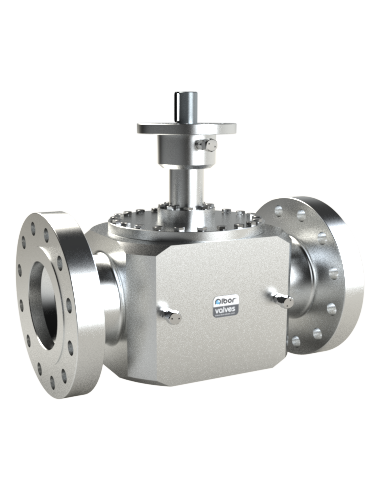
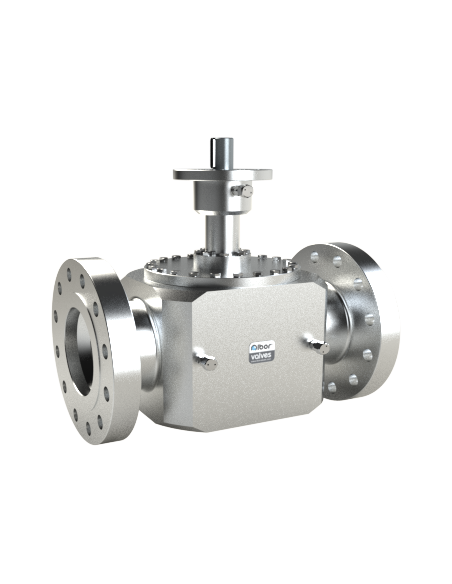
Ibor Ball Valve Type 37002

The Ibor 37002 is a 2-way ball valve for industrial isolation of liquid and gas lines. It is intended for on/off service, not continuous throttling. Seat configuration is selected according to cavity pressure behavior, leakage acceptance, maintenance philosophy, and upstream/downstream isolation requirements.

Seat and Cavity Sealing Options

  • DIB I: double piston effect on both upstream and downstream seats. Used where active sealing against the body cavity is required from both directions.
  • DIB II: double piston effect downstream and single piston effect upstream. Used where different upstream/downstream pressure relief behavior is required.
  • Seat sealing injectors: allow sealant injection for leakage mitigation without immediate valve disassembly, subject to site maintenance procedure.

Stem, Operation and Leakage Control

  • Stem sealing injector for intervention on stem leakage.
  • Stem or bonnet extension available for insulated lines, buried service, or restricted-access installations.
  • Design may be specified for fugitive-emission requirements where hydrocarbon or gas leakage control is part of the valve selection basis.
  • Locking device for position control and isolation procedures.
  • Manual lever, gearbox, pneumatic, electric, or hydraulic actuation may be selected according to valve size, pressure class, torque, and control system interface.

End Connections and Standards

  • Flanged ends: ASME B16.5, GOST 12815-80, or EN 1092-1.
  • Socket weld ends: ASME B16.11, with integral nipples available.
  • Butt weld ends: ASME B16.25, with integral nipples available.
  • Threaded NPT: ASME B1.20.1.
  • BSPP or BSPT threads: BS 21.

Suitable Media and Applications

  • Steam, hot water, thermal oil, hydrocarbons, process gases, and industrial utility systems.
  • Isolation duties in process piping, boiler auxiliaries, fuel gas skids, oil circulation lines, and plant utility headers.
  • Service conditions shall be checked against body material, seat material, pressure class, temperature, corrosion allowance, and applicable piping code.

Variant Selection

Select DIB I when sealing from both sides of the cavity is required and cavity pressure management is defined in the operating procedure. Select DIB II where upstream relief behavior and downstream sealing require different seat functions. For weld-end valves, consider maintainability and future removal before installation.

FAQ

  • Can it be used for flow control? No. It is an isolation valve for open/closed operation.
  • When are injectors specified? When online leakage intervention is required for seats or stem packing.
  • Which actuator should be used? Base selection on break torque, differential pressure, valve size, cycle frequency, fail position, and plant control requirements.

Description

Seat design

  • Double piston effect downstream & upstream-DIB I
  • Double piston effect downstream & single piston effect upstream-DIB II
  • Seat sealing injector

Stem

  • Stem sealing injector
  • Stem or bonnet extension
  • Design according to fugitive emissions
  • Locking device

Connections

Flanged End: ASME B16.5 / GOST 12815-80 / EN 1092.1

Socket Weld End: ASME B16.11

**integral nipples and available

Butt Weld End: ASME B16.25

**integral nipples and available

Threaded NPT End: ASME B1.20.1

Threaded BSPP OR BSPT: BS21

Others

Design & Certification

Normative: ANSI / DIN

Design: API 6D / ISO 14313

Face to Face: ASME B16.10 / EN 558.1 Serie 27

Top Flange: ISO 5211

Press-Temp Ratings & Thickness: ASME B16.34

Test: API 6D / API 598 / BS 6364

Pressure Equipment Directive: PED 2014/68/EU Mod. H1

Equipment Directive: ATEX 94/9/EC

Fire Safe: API 6FA / API 607 / ISO 10497-2

Fugitive Emissions: Class”A” acc.to ISO 15484-2

Safety integrity level: Sil 2 acc.to IEC 61508

Material: NACE MR0175 Lastest Edition

Certification:EN 10204 type 3.1, (3.2 upon request)