


Ball Valve - Type 37001 | Ibor Valves | Philippopoulos s.a.

Ball Valve - Type 37001 | Ibor Valves

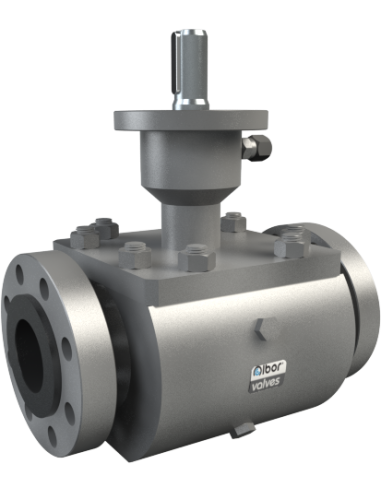
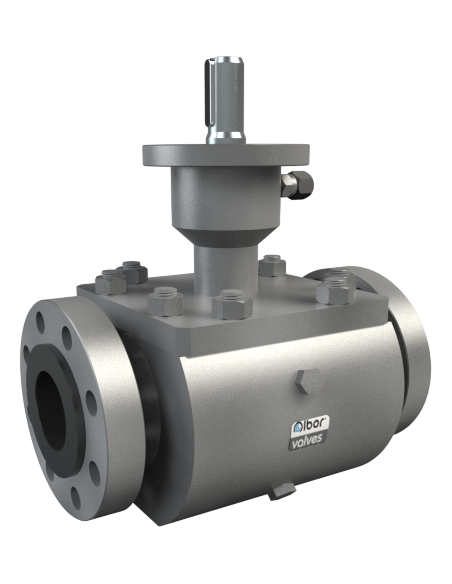
Spherical Ball Valve Ibor Type 37001

The Ibor 37001 is a 2-way industrial ball valve used for on/off isolation in process piping. The design is applicable where tight shut-off, cavity pressure management and seat sealing philosophy must be defined during valve selection.

The valve can be specified with DIB seat arrangements and a secondary soft seat to improve shut-off performance in clean services where soft sealing materials are compatible with the process medium and temperature.

Sealing and Construction Options

  • DIB I or DIB II seat configuration
  • Secondary soft seat for additional leakage control
  • Stem sealing injector for maintenance intervention
  • Stem or bonnet extension for insulation, buried service or operating access
  • Fugitive-emission-oriented stem sealing design, subject to project specification
  • Locking device for isolation control and maintenance safety
  • Seat-area overlay or overlay on all wetted parts for corrosion or erosion duty
  • Heating jacket for viscous media, crystallizing fluids or temperature-sensitive service

End Connections and Standards

  • Flanged ends: ASME B16.5, GOST 12815-80, EN 1092-1
  • Socket weld ends: ASME B16.11
  • Butt weld ends: ASME B16.25
  • NPT threaded ends: ASME B1.20.1
  • BSPP or BSPT threaded ends: BS 21

Typical Applications

  • Steam and condensate isolation lines
  • Hot water and thermal oil circuits
  • Hydrocarbon process lines
  • Fuel gas, process gas and utility gas systems
  • Chemical, petrochemical, power generation and industrial utility units

Media and Operating Conditions

Media compatibility depends on body material, ball and seat material, soft-seat compound, trim overlay and pressure-temperature rating. Final selection should consider pressure class, design temperature, fluid phase, solids content, cycling frequency, fire-safe requirements, leakage class and corrosion allowance.

DIB I vs DIB II Selection Logic

  • DIB I: selected where active sealing is required from both sides of the body cavity. It is relevant for double isolation duties where reverse pressure conditions may occur.
  • DIB II: selected where upstream and downstream seats have different pressure response characteristics. Cavity pressure relief philosophy must be reviewed against the piping and safety design.

Actuation Options

The valve may be operated manually or equipped with gearbox, pneumatic, electric or hydraulic actuation when torque, automation, ESD function or remote operation is required. Actuator sizing should include differential pressure, seat type, operating temperature and safety factor.

Maintenance Considerations

  • Stem injection can support temporary sealing intervention without immediate valve removal.
  • Soft secondary seats require clean media and temperature compatibility checks.
  • Overlay selection is relevant for corrosive, sour, erosive or high-cycle applications.
  • Locking devices support isolation procedures during maintenance and commissioning.

FAQ

When is a secondary soft seat used?
It is used when additional shut-off tightness is required and the service is sufficiently clean for soft-seat materials.

Is this valve suitable for steam?
Yes, subject to pressure class, temperature rating, seat material and end-connection selection.

Which certificates are required?
Project documents should define EN 10204 material certificates, pressure testing, fugitive emission testing or fire-safe certification where applicable.

Description

Seat design

  • Double piston effect downstream & upstream-DIB I
  • Double piston effect downstream & single piston effect upstream-DIB II
  • Secondary Soft Seat

Stem

  • Stem sealing injector
  • Thermic extension, stem or bonnet extension
  • Design according to fugitive emissions
  • Locking device

Others

  • Overlay on seat area or on all wetted parts
  • Heating jacket

Connections

Flanged End: ASME B16.5 / GOST 12815-80 / EN 1092.1

Socket Weld End: ASME B16.11

**integral nipples and available

Butt Weld End: ASME B16.25

**integral nipples and available

Threaded NPT End: ASME B1.20.1

Threaded BSPP OR BSPT: BS21

Others

Design & Certification

Normative: ANSI / DIN

Design: API 6D / ISO 14313

Face to Face: ASME B16.10 / EN 558.1 Serie 27

Top Flange: ISO 5211

Press-Temp Ratings & Thickness: ASME B16.34

Test: API 6D / API 598 / EN 12266-1

Pressure Equipment Directive: PED 2014/68/EU Mod. H1

Equipment Directive: ATEX 94/9/EC

Fugitive Emissions: Class”A” acc.to ISO 15484-2

Safety integrity level: Sil 2 acc.to IEC 61508

Material: NACE MR0175 Lastest Edition

Certification:EN 10204 type 3.1, (3.2 upon request)