
Strainers
Marine strainers are installed in shipboard piping systems to retain particles, metal shavings, rust, sand, and sludge upstream of pumps, heat exchangers, control valves, coolers, and auxiliary equipment. Strainer selection should be based on service medium, flow rate, allowable pressure drop, perforation or mesh size, installation orientation, flange standard, and the possibility of cleaning without extensive dismantling.
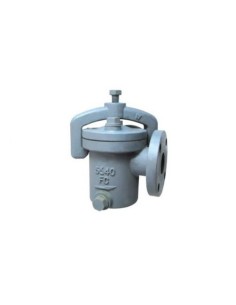
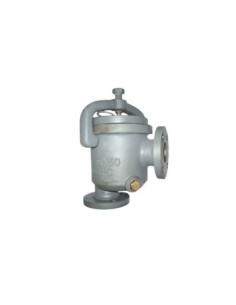
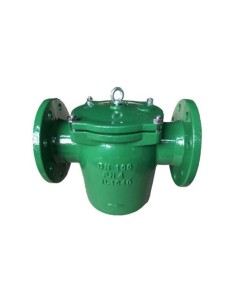
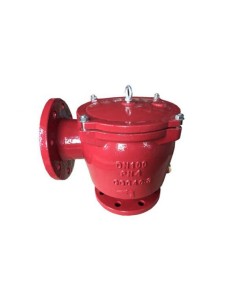
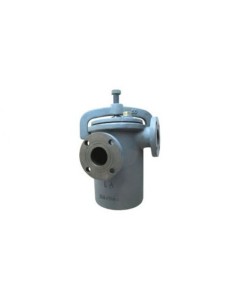
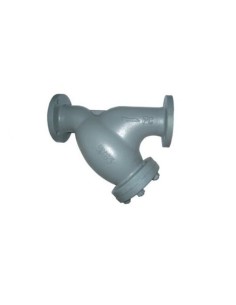
This category includes cast iron Y-strainers to JIS F7220, seawater sediment boxes to JIS F7121 and JIS F7203, simplex oil strainers to JIS F7209, and straight or angle-pattern mud boxes to DIN. The JIS F7220 Y-strainer is specified to JIS F7220-1996, tested to JIS F7200-1996, with FC200 body, SUS304 screen, and body hydraulic test pressure 1.05 MPa.
Sediment boxes are generally used on seawater suction lines and services where a higher solids load is expected. JIS F7121 is specified with FC200 body and bonnet, FCD400 cover, SUS304 strainer element, and body test pressure 0.3 MPa. JIS F7203 is listed as a marine mud box with FC200 body, SS400 strainer, and body test pressure 0.1 MPa.
For oil systems, the simplex oil strainer to JIS F7209 is designed to JIS F7209-1996 and tested to JIS F7200-1996, with FC200 body and strainer element in SS400 or SUS304. Body hydraulic test pressure is 0.74 MPa. DIN mud boxes are referenced to DIN 87151E, with EN 1092-2 PN10 flanges, pressure rating PN4, inspection to EN 12266-1, GG25 body, SS316 screen, and mesh opening 5 mm for DN40-65 or 8 mm for DN80-DN400.
During maintenance, the basket or screen should be checked for cleanliness, corrosion loss, cover tightness, gasket condition, drain plug sealing, and the actual differential pressure across the strainer. Excessive solids loading increases pressure loss and can lead to pump cavitation, reduced cooling duty, or unstable control valve operation.