
Pressure Sensor - Industrial - Type KMC | Gefran

Gefran KMC Pressure Transmitter
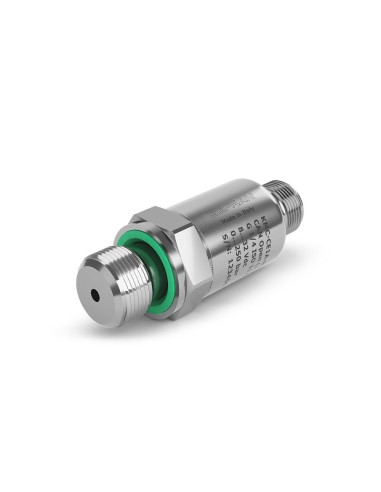
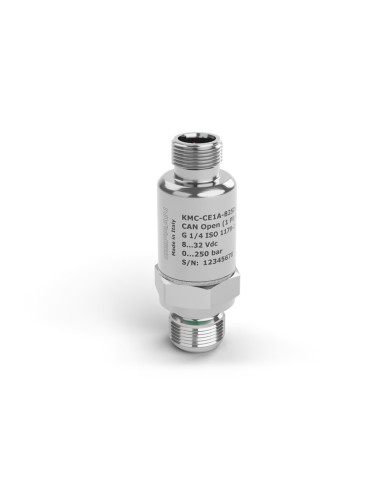
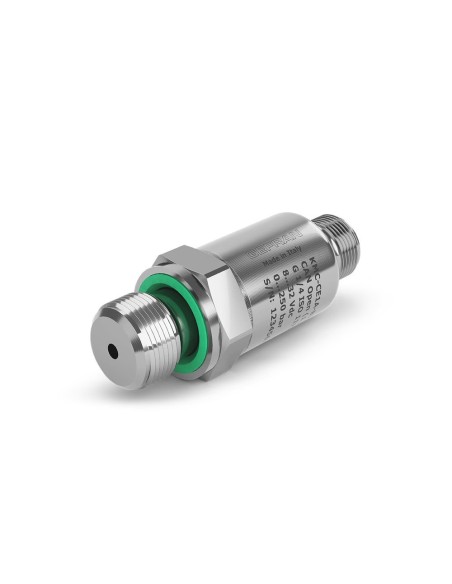
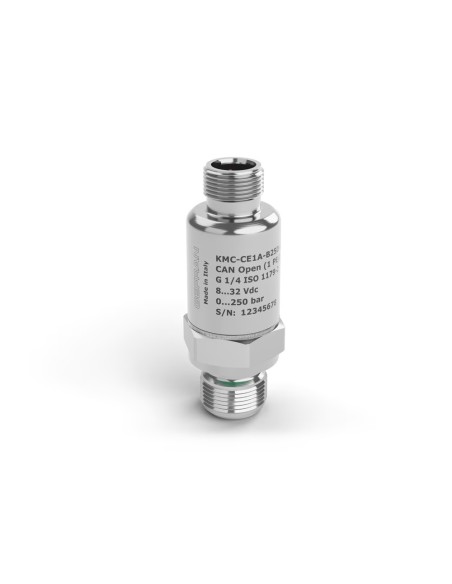
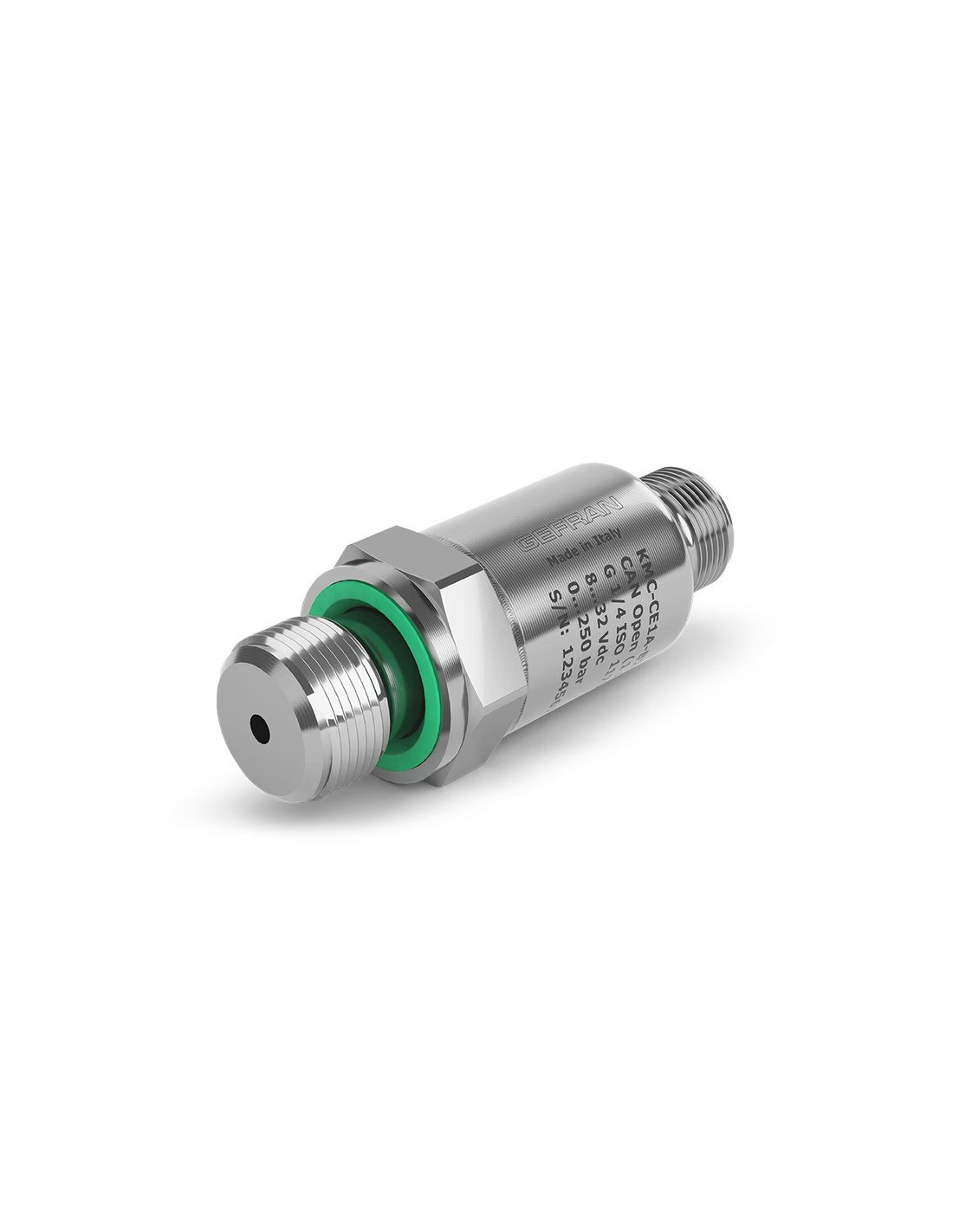
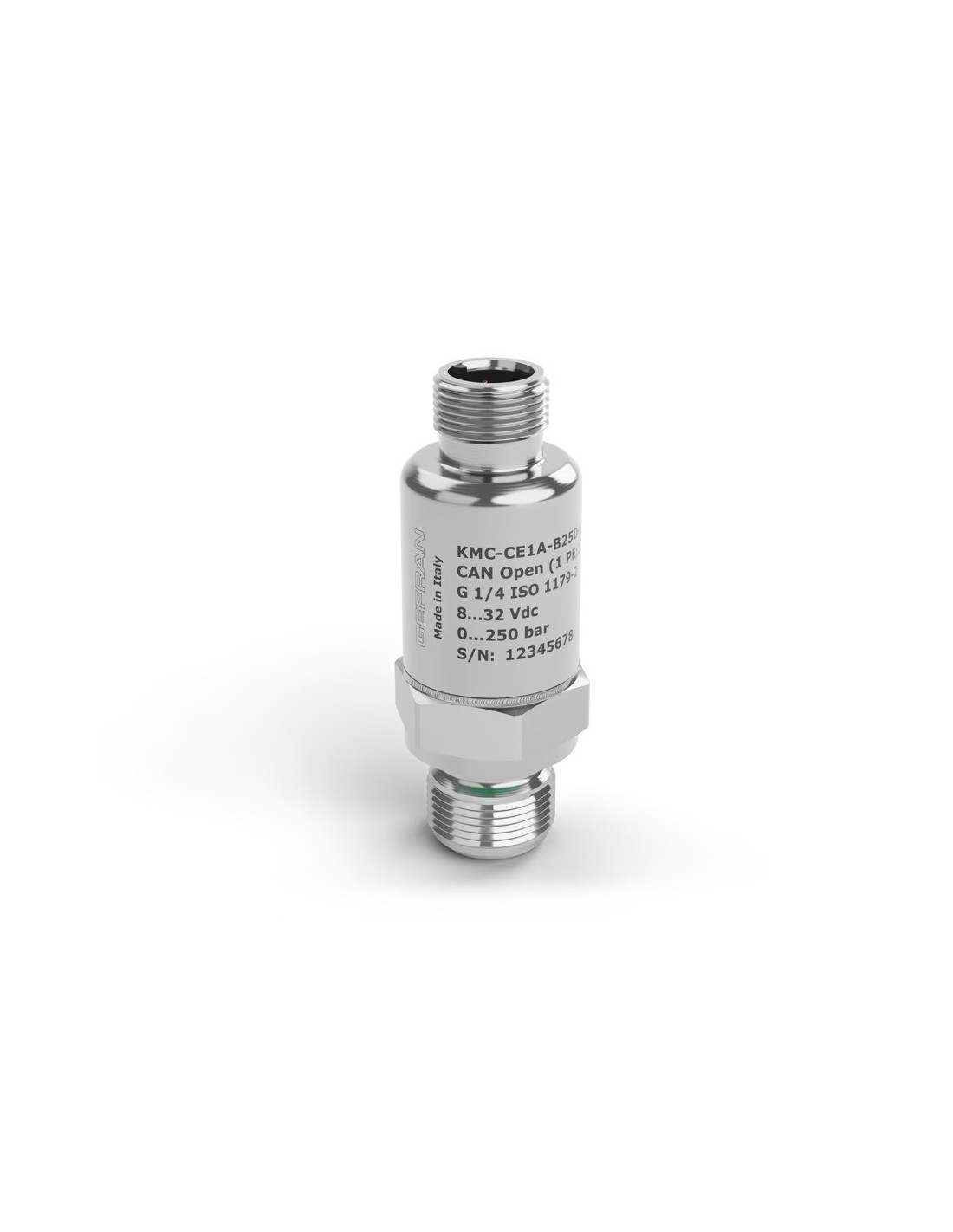
The Gefran KMC is a digital pressure transmitter designed for hydraulic circuits and mobile hydraulics. It utilizes a film sensor on a stainless steel diaphragm and transmits both pressure and device temperature via CANopen DS404 or SAE J1939 protocols. No analog output is available.
Technical Data
- Measuring ranges: 4…1000 bar
- Supply voltage: 8…32 Vdc
- Accuracy at 23 °C: < ±0.5% FS
- Sampling rate: 4 kHz
- Response time (10…90% FS): < 1 ms
- Process/ambient temperature: -40…+125 °C
- Wetted parts: AISI 430F and 17-4 PH
- Housing: AISI 304
- Protection: IP67 / IP69K with correctly installed M12 female connector
- Vibration: 20 g, 10…2000 Hz per IEC 60068-2-6
Communication Options
The CANopen version is used with CANopen master controllers, supporting PDO/SDO, NMT, and LSS configuration. DS301, DS305, DS404, and DR303-2 are supported. The J1939 version is intended for ECU networks in mobile machinery, operating at 250 kbit/s baudrate.
Mechanical and Electrical Options
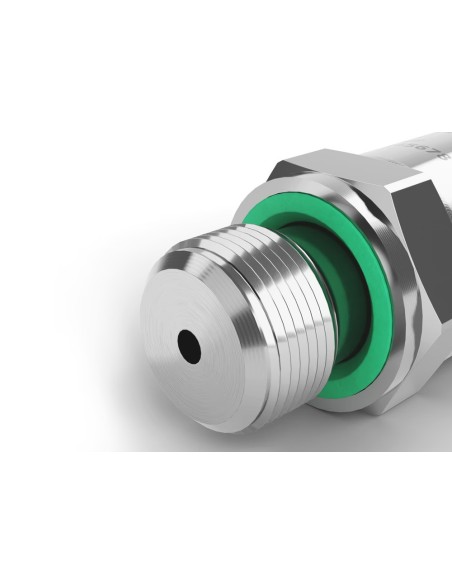
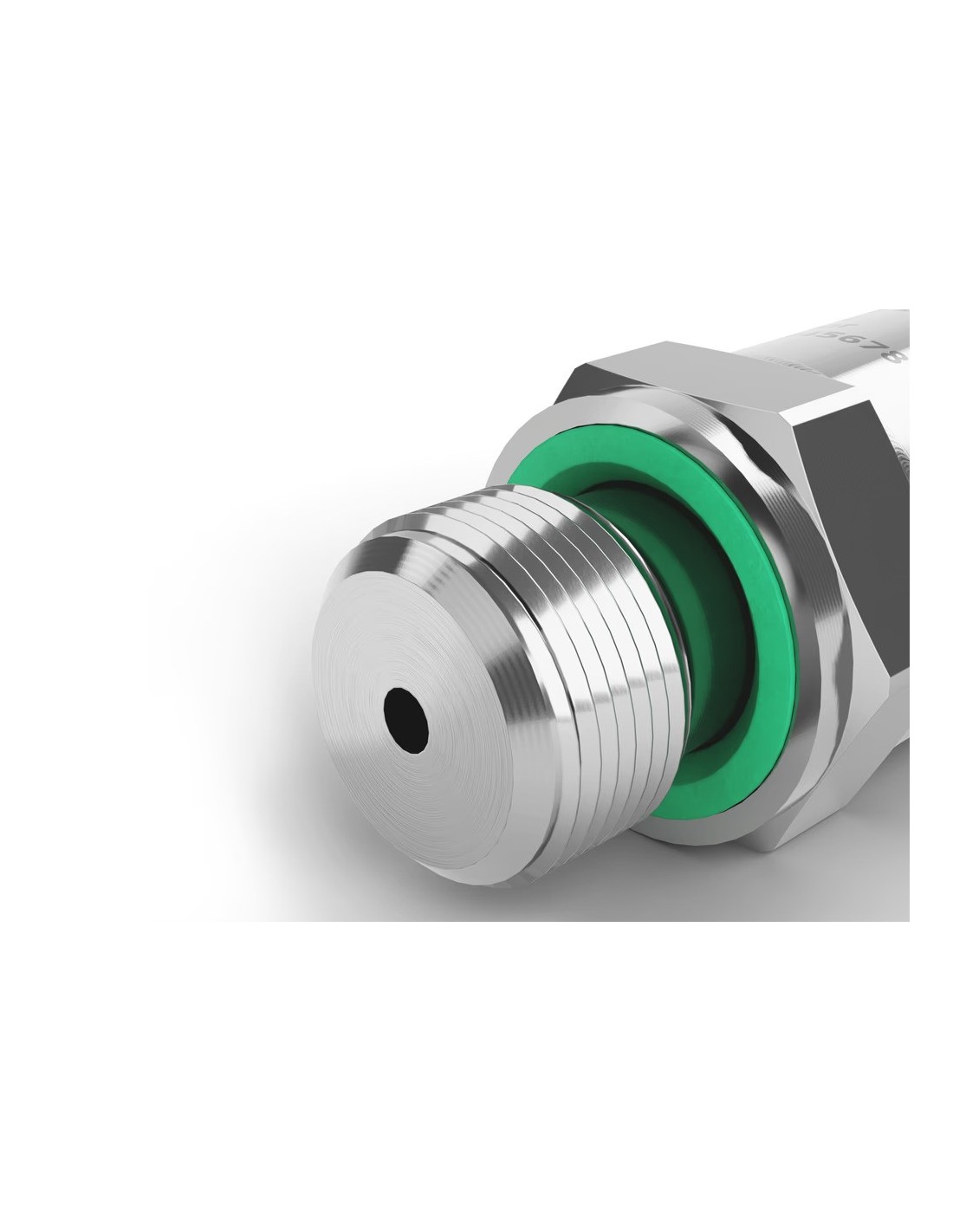
Pressure connections available: G 1/4 ISO 1179-2 with FKM, 9/16 UNF SAE J1926-2 with NBR, and R 1/4 ISO 7/1. Electrical connection is M12x1 5-pin (Supply+, Supply-, CAN H, CAN L). No actuator; this is a measurement instrument.
Pressure Spike Protection
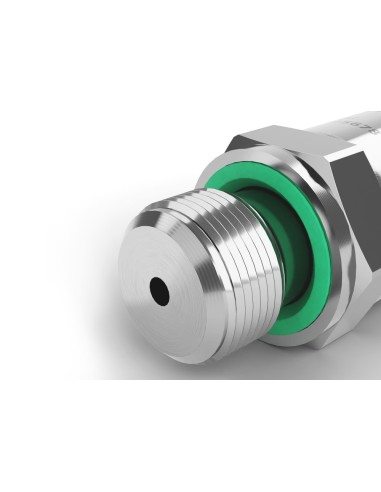
For hydraulic systems with cavitation, liquid hammer, or rapid valve closure, an integrated snubber with 0.5 mm orifice can be specified. Recommended for frequent pressure pulsations in pumps, valve blocks, or cylinders.
Installation
Ground via machine body. Separate power and signal cables. Use shielded cable for lengths over 30 m; shield grounded at connector side.
Standards and Compliance
Conforms to RoHS 2011/65/EU, EMC 2014/30/EU, EN IEC 63000:2018, EN 61326-1:2013, EN 61326-2-3:2013.
FAQ
Suitable media?
Liquids and gases compatible with AISI 430F and 17-4 PH.
When select KMC over KM?
When PLC or ECU requires digital CAN communication instead of 4…20 mA or voltage output.
Maintenance checks?
Connection tightness, M12 connector condition, grounding, CAN termination, Node-ID, and indication deviation.
Datasheet and documents


Description
Certifications
Tap to zoom