
Level Indicators - Magnetic level gauge - 00000177 - Magnetic Level Gauge | Fival Srl

Fival Magnetic Level Gauge – Magnetic Level Indicator
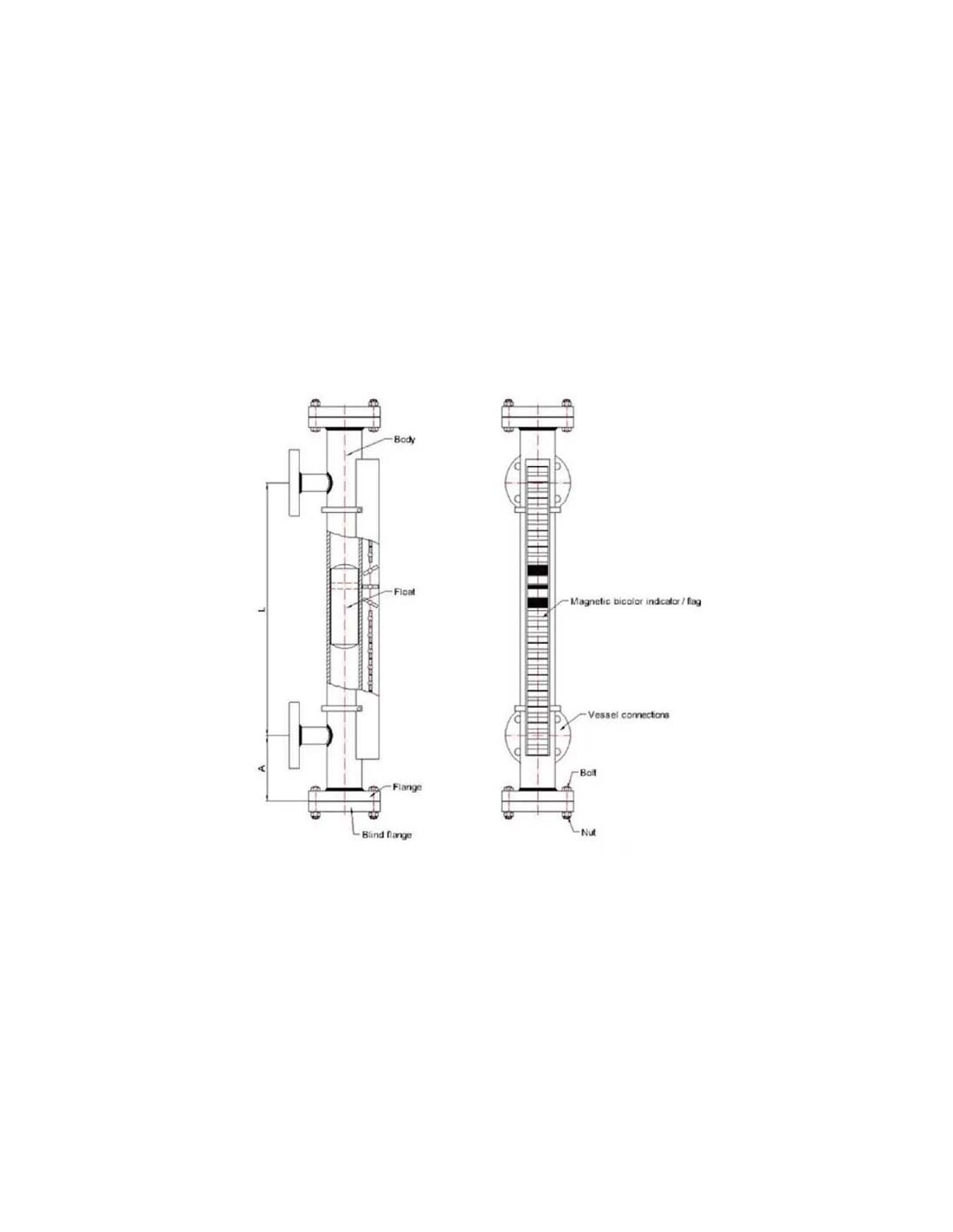
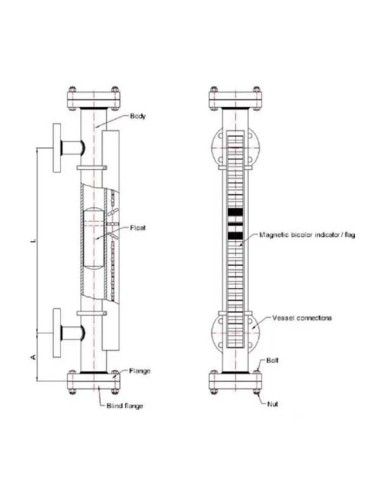
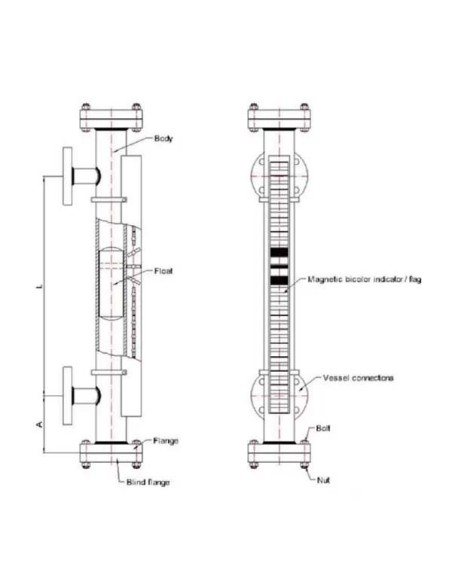
The Fival magnetic level gauge is designed for local level indication in tanks, vessels, and boiler circuits where direct contact between operator and process fluid is undesirable. The assembly consists of an external float chamber, a magnet-equipped float, and a side-mounted bi-color indicator with rotating flags for visual level reading.
Operating Principle
The float moves within the chamber in response to liquid level changes. The magnetic field transmits the float position to the external indicator without mechanical penetration of the indicator chamber. Level is read by observing the color change of the flags along the scale.
Construction and Materials
Standard float chamber dimensions are internal Ø55.8 mm / external Ø60.3 mm. Available construction materials include AISI 316L, titanium, or plastic. The indicator housing can be supplied in aluminum or stainless steel. Material selection should be based on process compatibility and corrosion resistance requirements.
Connections and Optional Equipment
Side connections to the vessel, blind flanges (top/bottom), bolts, and nuts are standard. Optional isolation valves, vent, and drain can be provided in globe, plug, or ball valve types, with materials such as F316L/316L or A105N. Specify valve type and material based on process and maintenance needs.
Specification Data
Required for specification:
- Center-to-center distance L
- Measuring length A
- Operating pressure and temperature
- Fluid density for float calculation
- Chamber material per compatibility
- Connection type and isolation requirements
Pressure class and temperature limits are not specified in the attached drawing and must be confirmed for each application and material selection.
Applications
Suitable for water, condensate, feedwater tanks, chemical liquids, and auxiliary industrial vessels. For steam, corrosive, or high-temperature media, verify fluid density, material compatibility, and thermal expansion considerations.
Maintenance
Maintenance focuses on chamber cleanliness, unobstructed float movement, isolation valve operation, sediment removal, and correct indicator alignment with actual level.
Datasheet and documents