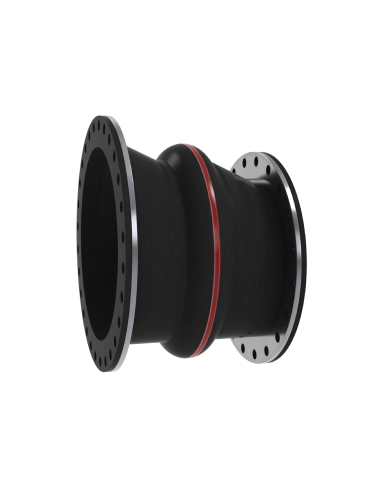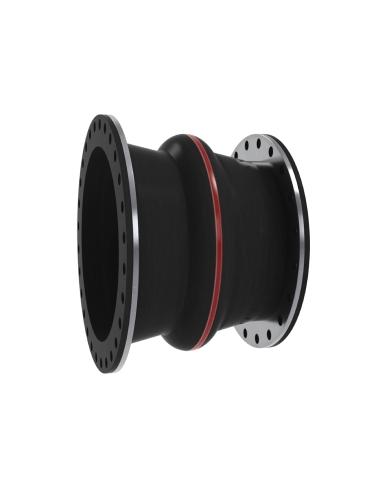
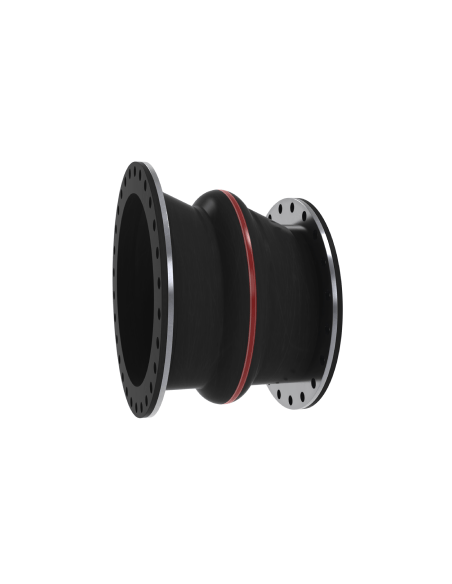
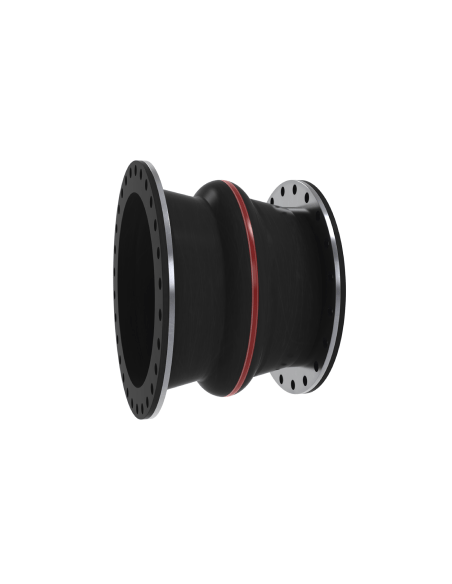

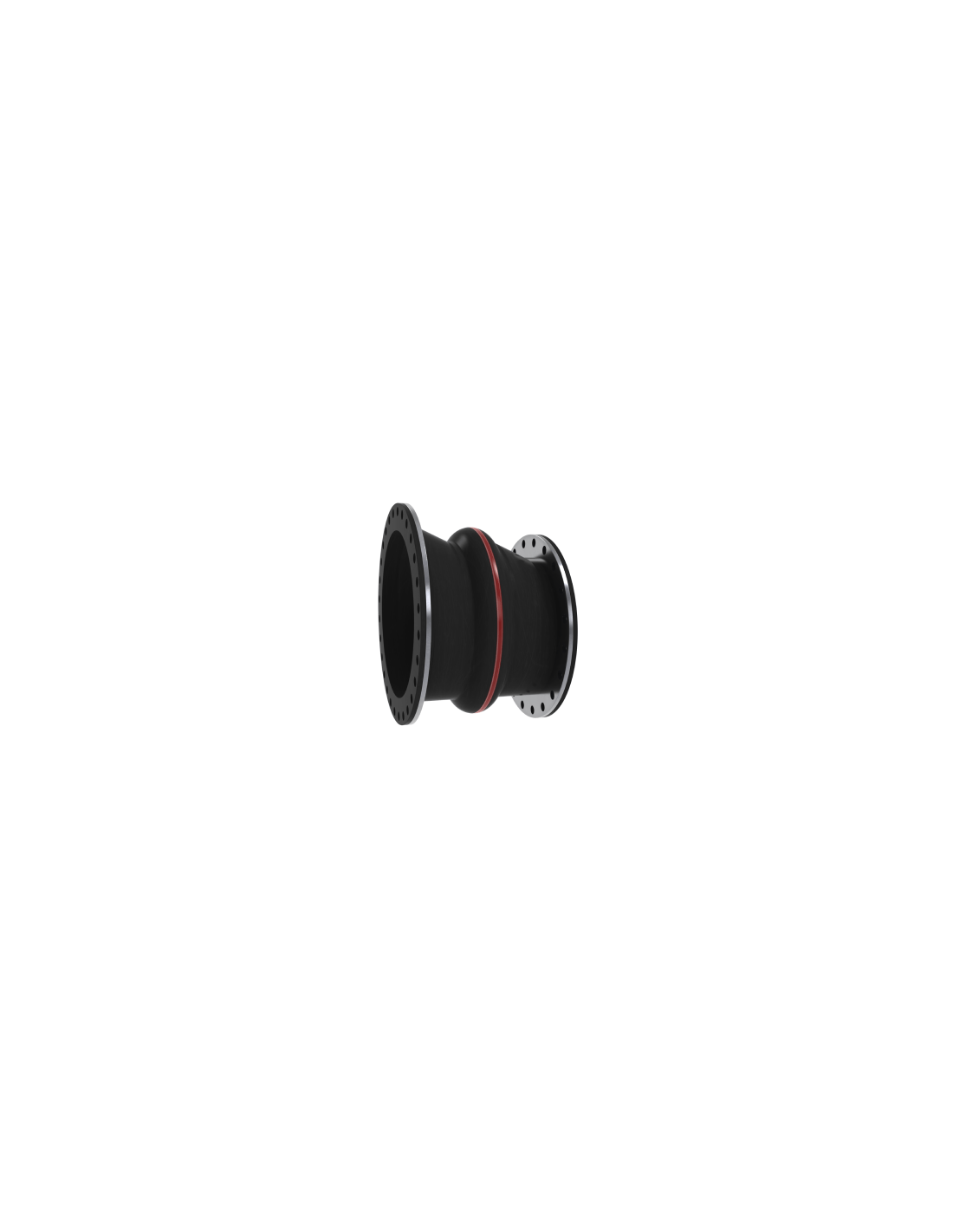
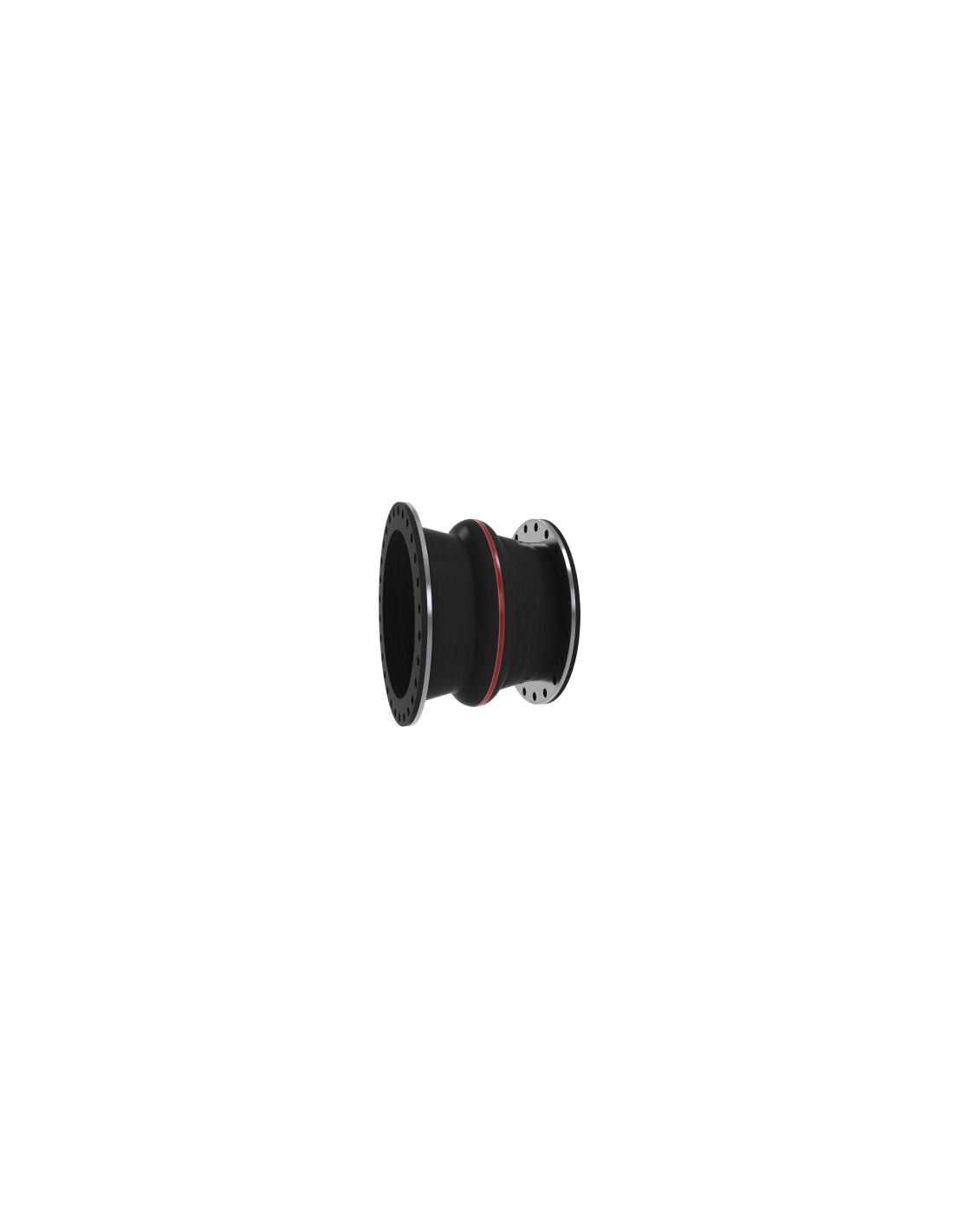
Reducing expansion joints are designed and manufactured to allow the connection of different diameter pipes. There are two main types of reducer: concentric and eccentric reducers. Reducers are usually concentric but eccentric reducers are used when required to maintain the same top -or bottom of- pipe level.


Variations and optional devices for rubber expansion joints - Reduction Type | Macoga

MACOGA Reduction Type – Elastomeric Expansion Joint with Diameter Change
The MACOGA Reduction Type elastomeric expansion joint is specified when connecting pipelines of differing diameters. This configuration serves both as a compensator and as a reducer spool, eliminating the need for a separate metallic conical reducer.
Concentric and Eccentric Reduction
Two main geometries are available:
- Concentric reducer: Both pipe axes remain aligned. Used in vertical lines or horizontal runs where elevation consistency is not required.
- Eccentric reducer: Pipe axes are offset to maintain a consistent top of pipe or bottom of pipe. Typically selected for pump suction lines or systems where air or liquid entrapment must be avoided.
Selection Data
For technical selection, specify:
- Inlet and outlet DN (diameters)
- Reduction type: concentric or eccentric
- Flange standard: EN, ANSI, AWWA, JIS, or project-specific drilling
- Pressure, temperature, and conveyed medium
- Axial, lateral, and angular movement requirements
- Vacuum service, if applicable
- Elastomer material and optional PTFE/FEP internal lining
PTFE or FEP lining can be specified for wetted surfaces of the pipe and flange where enhanced chemical resistance is required.
Installation and Sealing
The joint must not be stretched, compressed, or twisted to compensate for misalignment unless designed for such movement. Pipe flanges should be flat, clean, and free of burrs. No additional gasket is installed between the elastomeric face and the pipe flange.
Applications
Commonly used in pump stations, cooling circuits, industrial water, desalination, chemical processes, HVAC, and piping systems with diameter transitions near equipment. No actuator is included; selection depends on geometry, pressure thrust, anchoring, media compatibility, and allowable loads at connections.
Datasheet and documents
Description
CERTIFICATES
MACOGA holds numerous industry approvals, including:
Ministry of Defense and NATO Member Countries
Tap to zoom