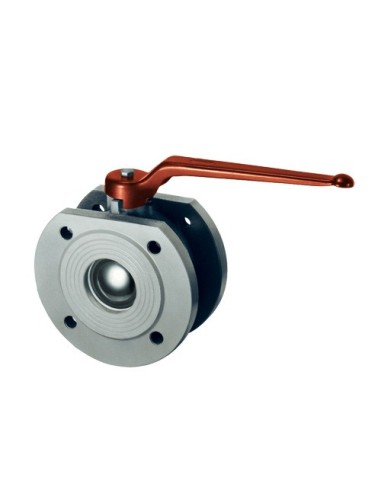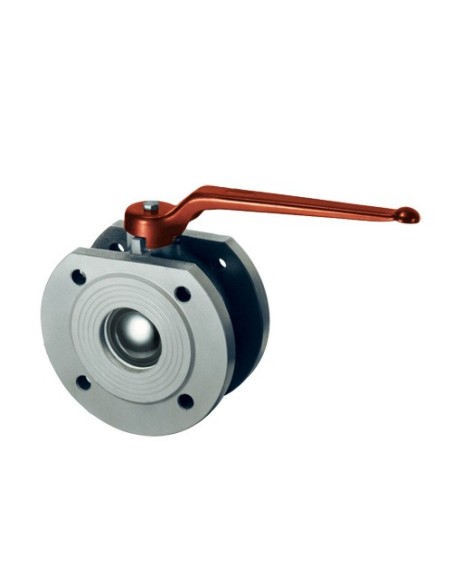

The 80-81 series are a general purpose valve, suitable for use in the hydraulic, sanitary, compressed air industries, hydrocarbons and oils.


Ball Valve - Type 80 | IVR

IVR Type 80 wafer-pattern ball valve
The IVR Type 80 is a 2-way wafer-pattern ball valve with DIN flanged installation, used for flow isolation in industrial, HVAC and building services pipework. The valve is rated PN 16, with body material EN-GJL-250 and PTFE seats.
Construction data
- Valve type: 2-way ball valve, on/off service
- Connection: wafer type between DIN flanges
- Pressure class: PN 16
- Body material: EN-GJL-250 cast iron
- Seat material: PTFE
- Function: manual isolation; not intended as a control valve unless confirmed by the manufacturer
Suitable media
The 80/81 series is applied in general utility services where the fluid is compatible with cast iron and PTFE. Typical media include:
- domestic water and technical water
- HVAC water circuits and auxiliary services
- compressed air
- oils and non-gaseous hydrocarbons
- non-aggressive industrial fluids within the pressure and temperature limits of the valve data sheet
Typical industrial applications
- isolation of pumps, strainers, heat exchangers and skid-mounted equipment
- utility water headers and branch lines
- compressed-air distribution where shut-off leakage requirements are compatible with soft-seated ball valves
- oil transfer and lubrication service, subject to seal compatibility
- HVAC plant rooms, boiler-house auxiliaries and mechanical rooms
Selection notes
The wafer body reduces face-to-face length compared with a full flanged ball valve, but it requires correct flange alignment, suitable gaskets and uniform bolt tightening. PN 16 selection shall be checked against design pressure, operating temperature, pressure surges and applicable piping code requirements.
PTFE seats provide low operating torque and tight shut-off in clean services, but compatibility shall be verified for hydrocarbons, additives, cleaning chemicals and elevated temperatures. Suspended solids may increase seat wear and operating torque.
Standards and documentation
- Flanged installation: DIN-compatible flange arrangement
- Pressure designation: PN 16
- Material designation: EN-GJL-250
- Inspection certificates, pressure test records or declarations of conformity should be requested at procurement stage when required by project specifications.
Actuation options
The valve is normally supplied for manual on/off operation. If remote actuation is required, confirm stem interface, mounting arrangement, required torque at differential pressure, cycle frequency and actuator fail position before selecting pneumatic or electric actuation.
Variant comparison
Types 80 and 81 are used in the same general application group. The exact variant should be selected from the manufacturer’s dimensional table, considering face-to-face length, flange compatibility, handle clearance, bore size and available accessories.
Maintenance considerations
- Check seat leakage and flange gasket tightness after commissioning and thermal cycling.
- Operate valves periodically in compressed-air or oil service to prevent sticking after long standstill periods.
- Monitor operating torque; increasing torque may indicate seat contamination, fluid degradation or misalignment.
- Do not use the wafer valve as a pipe spacer during welding or flange alignment.
FAQ
Can it be used for throttling? It should be treated as an isolation valve. Continuous throttling may damage the seats and ball surface.
Is it suitable for steam? Steam service must not be assumed. Verify temperature rating, seat material limits and manufacturer approval.
What must be checked before ordering? DN size, PN 16 suitability, flange standard, medium compatibility, operating temperature, required leakage class, actuation method and documentation requirements.
Datasheet and documents
Description
Tap to zoom