

Ball Valve - UNIFLOW Fig. B8 | Comeval | Philippopoulos s.a.

Ball Valve - UNIFLOW Fig. B8 | Comeval

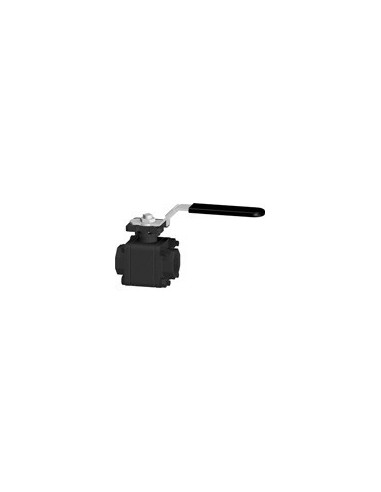
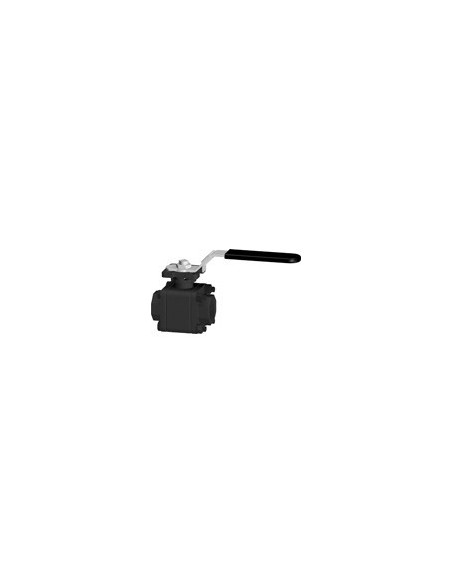
Comeval UNIFLOW Fig. B8 Floating Ball Valve

Two-way floating ball valve, split-body construction, bidirectional service, used for flow isolation in industrial utilities and process piping. The valve is supplied with ANSI flanged ends in pressure classes 150, 300 or 600 lb.

Materials and Available Variants

  • Carbon steel: ASTM A105, ASTM A216 WCB
  • Stainless steel forgings: ASTM A182 F304 / F316
  • Stainless steel castings: ASTM A351 CF8 / CF8M / CF3 / CF3M
  • Low-temperature carbon steel: ASTM A352 LCB
  • Sizes: DN15–DN50 / 1/2"–2"
  • Operation by lever, gear operator, pneumatic actuator or electric actuator

Typical Applications and Media

Applicable for HVAC circuits, compressed air, industrial gases, lubrication lines and general process isolation duties. Media compatibility depends on body material, seat material, stem sealing, corrosion allowance, temperature and the applicable pressure-temperature rating.

Operating Considerations

  • Floating ball design is intended mainly for on/off isolation, not continuous throttling.
  • Bidirectional sealing allows installation in either flow direction where system design permits.
  • For actuator sizing, verify breakaway torque, differential pressure, cycling frequency and available air or electrical supply.
  • For maintenance planning, check seat leakage class, stem packing arrangement and access requirements in the pipeline.

Standards and Certifications

Referenced approvals include PED Module H, ATEX, EAC and fire-test certifications according to API 607 / API 6FA for floating ball valves, where applicable to the selected execution.

Variant Selection

  • A105 / WCB: common selection for non-corrosive utilities and general hydrocarbon service within the pressure-temperature limits.
  • F304 / CF8: used where stainless steel corrosion resistance is required but chlorides are not controlling.
  • F316 / CF8M: selected for improved resistance in many chemical and marine-related services.
  • LCB: used for low-temperature service when impact-tested carbon steel is required.

Sealing and Automation

Seat and stem sealing materials shall be selected against fluid, temperature, pressure class, fire-safe requirement and fugitive-emission expectations. Soft-seat configurations are typically used for tight shut-off. Automated assemblies require verification of valve torque, safety factor, actuator fail position, limit switches, solenoid valves and control system interface.

FAQ

Is the Fig. B8 suitable for modulating control?
It is primarily an isolation valve. Use for throttling should be reviewed because partial opening can increase seat wear and affect controllability.

Can it be used on gas service?
Yes, subject to material compatibility, leakage requirements, pressure class, temperature and any hazardous-area or fire-safe certification requirements.

What should be checked before procurement?
Line size, ANSI class, body material, seat and packing material, operating temperature, differential pressure, actuator type, certification requirements and maintenance access.

Standard (Options)
  • ANSI
Connection (Options)
  • Flanged
Material (Options)
  • ASTM A105
  • ASTM A182 F304
  • ASTM A182 F316
  • ASTM A216 WCB
  • ASTM A351 CF8
  • ASTM A351 CF3
  • ASTM A351 CF3M
  • ASTM A351 CF8M
  • ASTM A352 LCB
Pressure Rating (Options)
  • 150 lbs
  • 300 lbs
  • 600 lbs

Description

Floating ball valves, split body, bidirectional, for stopping the flow in process, industry, etc. Operated by hand lever, gear or actuator.

Specification of the range:

Diverse design combinations by end connections (flanged, BW), materials of construction (cast and forged), nominal size range (DN15-50 / 1/2" -2"), design pressure range (PN16-100 / ANSI Class 150-800), operated by hand lever, gear, pneumatic or electric actuators styles and accessories.

Other typical denominations: Forged steel Forged steel floating ball valves Module H

Applications: HVAC, lubrication, gases, compressed air, process, etc.

Certifications: Fire test api 607 floating ball valve 4 8 inches class 300 600, Fire test api 6fa floating ball valve 2 8 inch class 150 300, Fire test api 6fa floating ball valve 8 16 inch class 150 300, Comeval ped

Certificates