


Ball Valve - Type 36005 | Ibor Valves | Philippopoulos s.a.

Ball Valve - Type 36005 | Ibor Valves

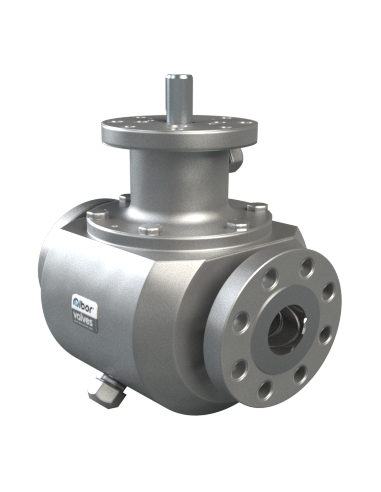
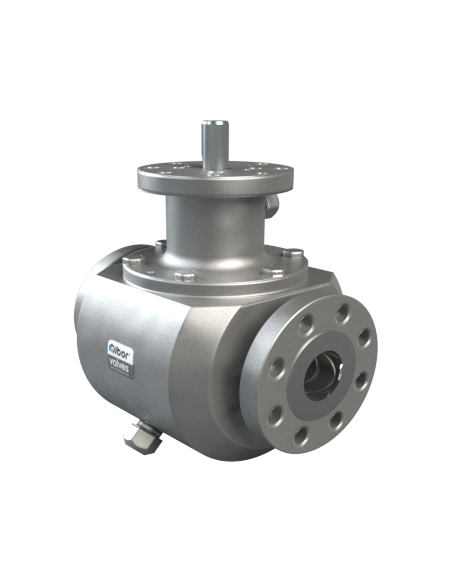
Ibor Type 36005 Ball Valve

The Ibor 36005 is a 2-way industrial ball valve used for flow isolation in process piping. The design includes a self-relieving seat for cavity pressure relief and bidirectional shut-off, subject to the selected seat, seal, body material, pressure class, and temperature rating.

Sealing and Operation

  • Self-relieving seat for cavity pressure relief from trapped fluid or thermal expansion
  • Bidirectional flow capability for isolation duties in either line direction
  • Stem sealing injector for maintenance intervention where specified
  • Locking device for valve position control and plant safety procedures
  • Drain plug for cavity draining or depressurisation
  • Nipple and needle arrangement for drain, vent, or sampling service
  • Seat-area overlay or full wetted-part overlay for erosive or corrosive media
  • Heating jacket option for services requiring temperature maintenance

End Connections and Standards

  • Flanged ends: ASME B16.5, GOST 12815-80, or EN 1092-1
  • Butt-weld ends: ASME B16.25
  • Integral nipples available depending on piping layout and installation requirements
  • Pressure rating is defined by the selected flange or weld-end design, body material, and applicable standard
  • Material certificates, pressure testing, PED/ATEX applicability, and EN 10204 documentation should be confirmed at order stage

Typical Applications and Media

Suitable services include steam, hot water, thermal oil, hydrocarbons, process gases, utility lines, and auxiliary plant networks. For fluids with solidification risk, high viscosity, or heat-loss sensitivity, the heating jacket is used to maintain the medium above the required process temperature.

Valve Selection Notes

  • Use the self-relieving seat where trapped cavity pressure may increase due to thermal expansion.
  • Specify nipple and needle when controlled drain, vent, or sampling access is required.
  • Consider overlay for corrosive, fouling, or abrasive service, especially at the seating area.
  • Confirm seat and stem seal compatibility with operating temperature, pressure, media chemistry, and leakage class requirements.
  • For frequent operation or remote control, verify actuator mounting provisions for pneumatic, electric, or hydraulic actuation.

Variant Considerations

  • Flanged version: preferred where removal for maintenance or inspection is required.
  • Butt-weld version: used for permanent welded piping systems and reduced external leak paths.
  • Heating-jacket version: selected for viscous, waxy, crystallising, or temperature-sensitive fluids.
  • Overlay version: selected when base material alone is not sufficient for corrosion or erosion allowance.

FAQ

Is the valve bidirectional?
Yes, the 36005 is described as bidirectional, but final suitability depends on seat design, pressure differential, and the specified configuration.

Does the self-relieving seat replace a drain connection?
No. The self-relieving seat manages cavity overpressure. Drain, vent, or sampling functions require the appropriate plug, nipple, or needle arrangement.

When is a heating jacket required?
It is used when the process medium must remain within a controlled temperature range to avoid viscosity increase, freezing, crystallisation, or poor flowability.

Description

Seat design

  • Self-relieving seat (cavity relief)
  • Bidirectional

Stem

  • Stem sealing injector
  • Locking device

Others

  • Drain plug
  • Nipple & Needle
  • Overlay on seat area or on all wetted parts
  • Heating jacket

Connections

Flanged End: ASME B16.5 / GOST 12815-80 / EN 1092.1

Butt Weld End: ASME B16.25

**integral nipples and available

Others

Design & Certification

Normative: ANSI / DIN

Design: API 6D / ISO 17292

Face to Face: ASME B16.10 / EN 558.1 Serie 27

Top Flange: ISO 5211

Press-Temp Ratings & Thickness: ASME B16.34

Test: API 6D / API 598 / EN 12266-1

Pressure Equipment Directive: PED 2014/68/EU Mod. H1

Equipment Directive: ATEX 94/9/EC

Fire Safe: API 6FA / API 607 / ISO 10497-2

Fugitive Emissions: Class”A” acc.to ISO 15484-2

Safety integrity level: Sil 2 acc.to IEC 61508

Material: NACE MR0175 Lastest Edition

Certification:EN 10204 type 2.1,3.1, (3.2 upon request)