


Ball Valve - Type 36002 | Ibor Valves | Philippopoulos s.a.

Ball Valve - Type 36002 | Ibor Valves

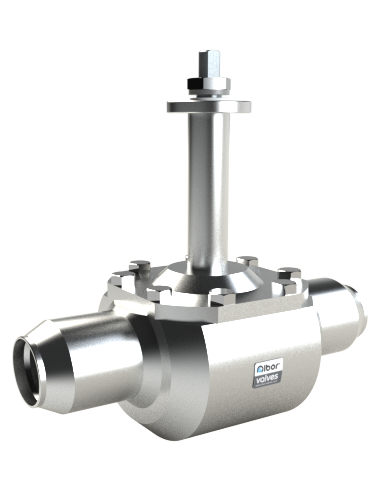
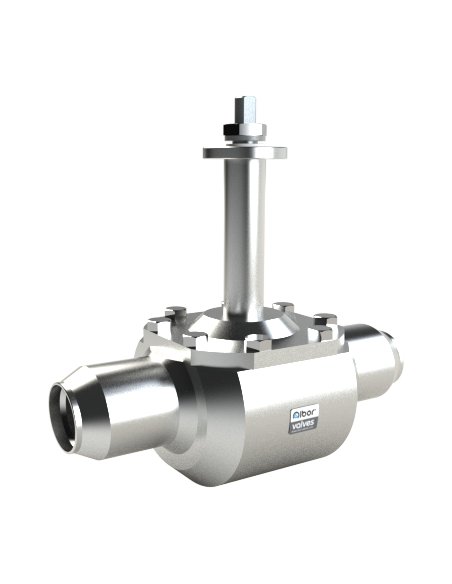
Ibor Type 36002 Ball Valve

The Ibor 36002 is a 2-way ball valve used for industrial isolation service in liquid and gas lines. The valve includes a self-relieving seat arrangement to relieve pressure from the ball cavity when trapped fluid expands thermally.

Seat Design and Cavity Relief

  • Self-relieving seat / cavity relief design.
  • Reduces the risk of cavity overpressure caused by thermal expansion of trapped media.
  • Applicable for open/closed isolation duty; not intended for continuous throttling or modulating flow control.
  • Seat and seal material selection shall be checked against fluid compatibility, pressure class, and operating temperature.

Stem, Leakage Control, and Maintenance

  • Available with stem or bonnet extension for insulated lines, elevated temperatures, or access constraints.
  • Stem sealing design suitable for fugitive-emission control requirements where specified by the project.
  • Locking device available for position control and maintenance safety procedures.
  • Drain plug permits cavity draining, depressurisation, or flushing before maintenance.

End Connections and Standards

  • Flanged ends: ASME B16.5, GOST 12815-80, or EN 1092-1.
  • Socket weld ends: ASME B16.11.
  • Butt weld ends: ASME B16.25.
  • NPT threaded ends: ASME B1.20.1.
  • BSPP or BSPT threaded ends: BS 21.
  • Integral nipples are available for socket weld and butt weld executions.

Typical Applications and Media

  • Steam and condensate isolation, subject to pressure-temperature rating and seat material limits.
  • Hot water, compressed air, process gases, lubricating oil, hydrocarbons, and plant utility services.
  • Process lines where tight shut-off and low pressure drop in the fully open position are required.
  • Isolation upstream or downstream of equipment, manifolds, skids, and utility headers.

Variant Selection

  • Flanged valves are preferred where periodic removal, inspection, or replacement is expected.
  • Socket weld and butt weld versions are used on permanent process pipework where leakage at joints must be reduced.
  • Threaded versions are generally selected for smaller bore utility lines and non-critical services.
  • Manual lever, gear operator, pneumatic actuator, or electric actuator selection depends on valve size, differential pressure, cycle frequency, and site automation requirements.

FAQ

  • Can it be used for throttling? No. It is intended for isolation service; partial opening can damage seats and create unstable control.
  • Why specify a self-relieving seat? It allows pressure trapped in the ball cavity to relieve, reducing thermal expansion risk in closed valve conditions.
  • Which connection is easiest to maintain? Flanged construction allows removal without cutting the pipe. Welded versions provide a more permanent joint.

Description

Seat design

  • Self-relieving seat (cavity relief)

Stem

  • Stem or bonnet extension
  • Design according to fugitive emissions
  • Locking device

Other

  • Drain plug

Connections

Flanged End: ASME B16.5 / GOST 12815-80 / EN 1092.1

Socket Weld End: ASME B16.11

**integral nipples and available

Butt Weld End: ASME B16.25

**integral nipples and available

Threaded NPT End: ASME B1.20.1

Threaded BSPP OR BSPT: BS21

Others

Design & Certification

Normative: ANSI / DIN

Design: API 6D / ISO 17292

Face to Face: ASME B16.10 / EN 558.1 Serie 27

Top Flange: ISO 5211

Press-Temp Ratings & Thickness: ASME B16.34

Test: API 6D / API 598 / BS 6755 Part 1

Pressure Equipment Directive: PED 2014/68/EU Mod. H1

Equipment Directive: ATEX 94/9/EC

Fire Safe: API 6FA / API 607 / ISO 10497-2

Fugitive Emissions: Class”A” acc.to ISO 15484-2

Safety integrity level: Sil 2 acc.to IEC 61508

Material: NACE MR0175 Lastest Edition

Certification:EN 10204 type 3.1, (3.2 upon request)