


Ball Valve - Type 36000 | Ibor Valves | Philippopoulos s.a.

Ball Valve - Type 36000 | Ibor Valves

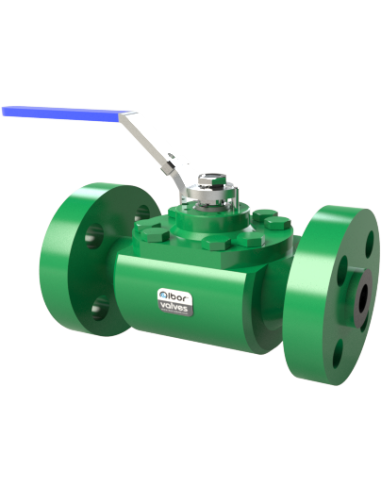
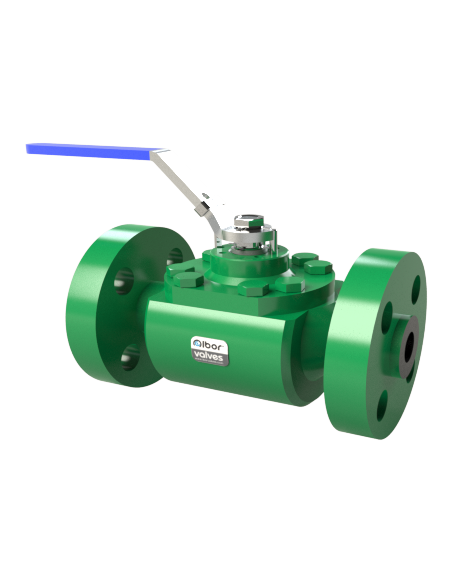
Ibor Type 36000 Ball Valve

The Ibor 36000 is a 2-way ball valve used for flow isolation in industrial liquid and gas services. The self-relieving seat arrangement allows pressure trapped in the ball cavity to vent, which is relevant where thermal expansion of an isolated medium can occur.

Design Features

  • Self-relieving seat for cavity pressure relief
  • Stem or bonnet extension for insulated lines, buried service, or elevated handwheel access
  • Locking device for open/closed position control
  • Drain plug for cavity draining, depressurisation, or maintenance checks
  • Seat-area overlay or overlay on all wetted parts for corrosive or erosive media
  • Heating or cooling jacket where process temperature must be maintained or controlled

End Connections and Standards

  • Flanged ends: ASME B16.5, GOST 12815-80, EN 1092-1
  • Socket weld ends: ASME B16.11
  • Butt weld ends: ASME B16.25
  • NPT threaded ends: ASME B1.20.1
  • BSPP or BSPT threaded ends: BS 21

Typical Media and Operating Context

  • Steam, hot water, thermal oil, fuel oil, process gases, hydrocarbons, and plant utilities
  • Isolation duty in process lines, skids, boiler auxiliaries, tank farms, and compressor or pump packages
  • Pressure class, allowable temperature, and leakage class depend on body material, seat material, sealing system, and end connection rating

Variant Selection

  • Standard valve: isolation of clean liquids or gases within the rated pressure-temperature envelope.
  • Overlay execution: selected for corrosive, erosive, or sour service where base metal compatibility is not sufficient.
  • Jacketed execution: used for viscous, crystallising, waxy, or temperature-sensitive media.
  • Extended stem/bonnet: used on insulated, cryogenic-adjacent, elevated, or buried installations.

Actuation and Control Interfaces

The valve may be supplied for manual operation or prepared for pneumatic, electric, or hydraulic actuation. Actuator sizing should consider differential pressure, operating frequency, breakaway torque, media temperature, and required fail position.

Sealing and Maintenance Considerations

Seat and stem seal selection should be checked against media compatibility, pressure class, temperature range, fugitive-emission requirements, and cycling duty. The drain plug provides a controlled means to empty or verify the cavity before maintenance.

Documentation and Compliance

For procurement, specify applicable pressure class or PN rating, material certificates such as EN 10204 3.1, pressure test reports, PED/CE requirements where applicable, and any project-specific leakage or inspection criteria.

FAQ

  • Why use a self-relieving seat? To reduce overpressure risk in the closed-ball cavity caused by thermal expansion of trapped liquid.
  • When is a jacket required? When the medium must remain above pour point, below degradation temperature, or within a controlled viscosity range.
  • Can it be automated? Yes, if the mounting interface and torque data are specified for the selected actuator.

Description

Seat design

  • Self-relieving seat (cavity relief)

Stem

  • Stem or bonnet extension
  • Locking device

Others

  • Drain plug
  • Overlay on seat area or on all wetted parts
  • Heating or cooling jacket

Connections

Flanged End: ASME B16.5 / GOST 12815-80 / EN 1092.1

Socket Weld End: ASME B16.11

**integral nipples and available

Butt Weld End: ASME B16.25

**integral nipples and available

Threaded NPT End: ASME B1.20.1

Threaded BSPP OR BSPT: BS21

Others

Design & Certification

Normative: ANSI / DIN

Design: API 6D / ISO 17292

Face to Face: ASME B16.10 / EN 558.1 Serie 27

Top Flange: ISO 5211

Press-Temp Ratings & Thickness: ASME B16.34

Test: API 6D / API 598 / EN 12266-1

Pressure Equipment Directive: PED 2014/68/EU Mod. H1

Equipment Directive: ATEX 94/9/EC

Fire Safe: API 6FA / API 607 / ISO 10497-2

Fugitive Emissions: Class”A” acc.to ISO 15484-2

Safety integrity level: Sil 2 acc.to IEC 61508

Material: NACE MR0175 Lastest Edition

Certification:EN 10204 type 3.1, (3.2 upon request)