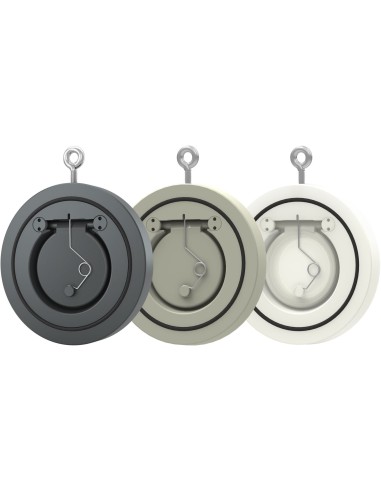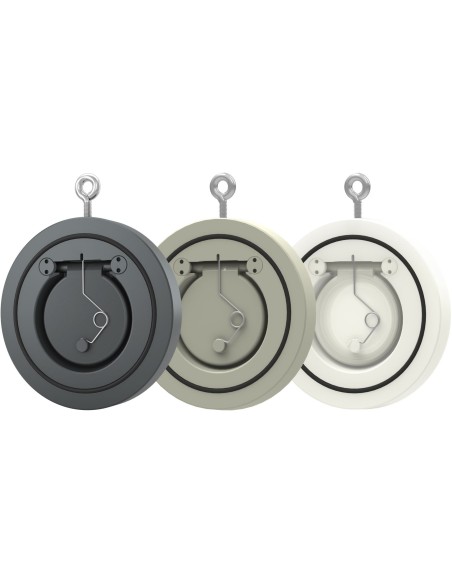

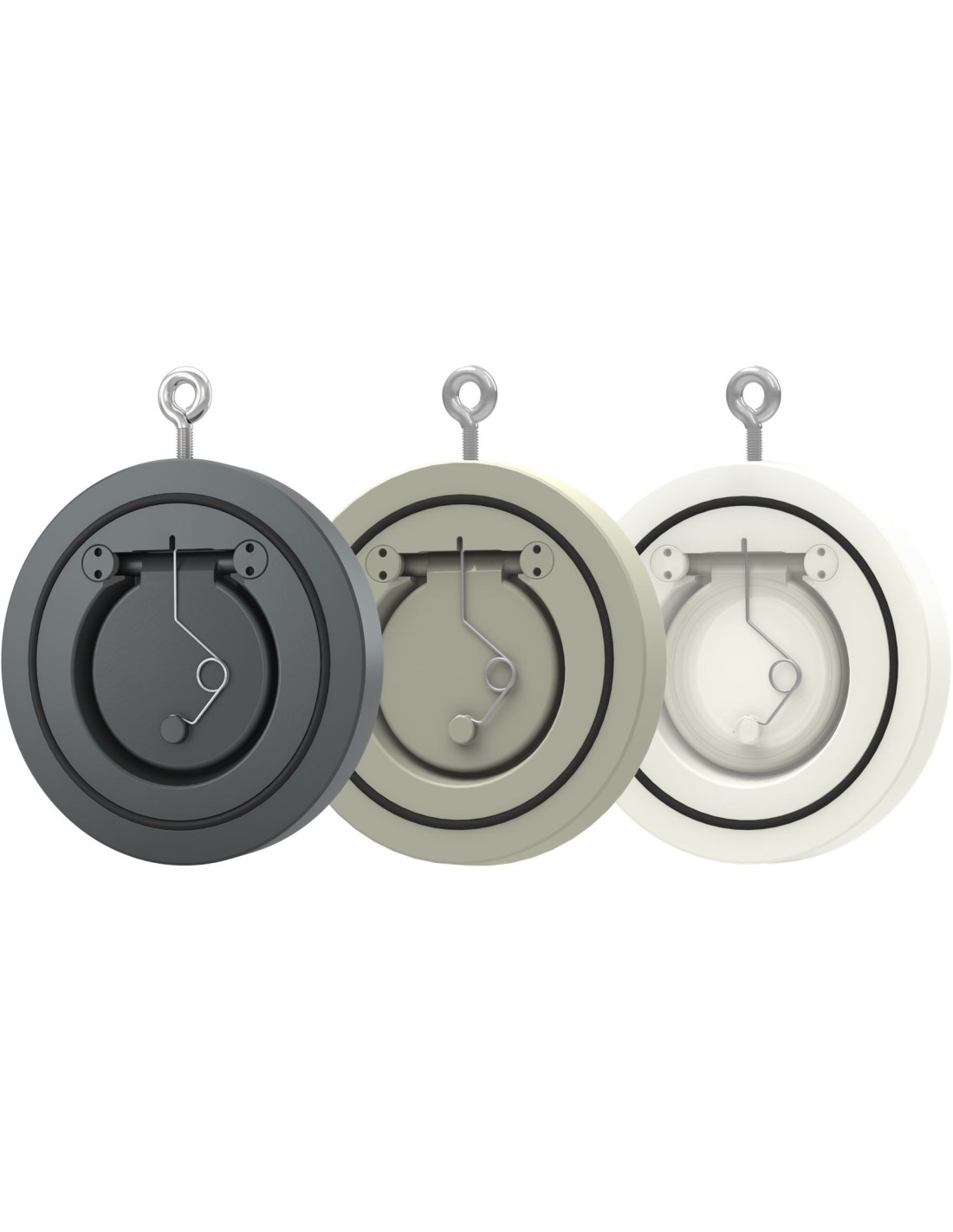
PVC-U, PVC-C, PP-H and PVDF cover almost everything from classic pool applications to aggressive chemical applications.


Swing Check Valve - RSK 920 | AWS

AWS RSK 920 – Plastic Wafer Check Valve
The AWS RSK 920 is a wafer-type check valve designed for direct installation between flanges. Constructed from industrial-grade plastics, it is available with or without a return spring. The disc opens when flow force exceeds the disc weight and, if present, the spring force. The valve closes against the seat upon inlet pressure drop or reverse pressure.
Technical Data
- Sizes: DN32–DN600
- Connections: PN6 / PN10, Class 150, JIS 10K
- Max Pressure: 10 bar (subject to material, DN, and temperature)
- Temperature Range: -20°C to +120°C (depends on plastic and seat material)
- Body/Disc Materials: PVC-U, PVC-C, PP-H, PVDF
- Spring: 1.4571 or Hastelloy C4
- Seats: NBR, EPDM, FKM/Viton, PTFE
- Leakage Rate: Class A per EN 12266-1 (soft seat variants)
Material and Sealing Limits
Body material selection must consider chemical compatibility, temperature, and pressure. PVC-U is generally used for water and low-temperature, simple chemical circuits. PP-H is suitable for more chemically aggressive media, while PVDF is specified for demanding chemical environments. Spring material must be checked for chemical resistance to the process fluid.
Applications
Suitable for water treatment, low-pressure chemical piping, swimming pools, process drainage without solids, and plastic utility networks. Not recommended for fluids containing solid particles.
Installation
Correct flow direction, centering between flanges, and clean piping are required. Manufacturer recommends 5×DN straight pipe upstream and downstream of the valve and avoiding direct mounting to pump flanges. In horizontal lines, the eyebolt should face upward; in vertical installations, the flow arrow must point upward.
FAQ
Is maintenance required?
AWS classifies this valve as maintenance-free, but periodic functional and leakage checks are recommended by the operator.
What does operational noise indicate?
Typically caused by insufficient straight pipe, low flow, low pressure, or an overly strong closing spring.
Datasheet and documents
Description
Tap to zoom