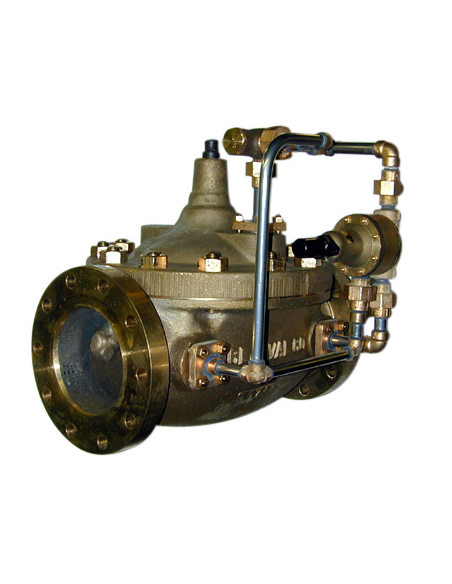


The 50M Pressure Relief Valve is a pilot operated modulating type valve that employs a spring-loaded, adjustable relief control to operate the main valve according to pre-set pressure settings in gasoline or jet fuel distribution systems.


Pressure Relief Valve - 50M | Cla-Val
Cla-Val 50M Pressure Relief Valve
The Cla-Val 50M is a hydraulically operated, pilot-controlled pressure relief valve with modulating opening characteristics. It utilizes an adjustable spring-loaded relief pilot to actuate the main valve when line pressure exceeds a preset value. Product documentation specifies use in gasoline and jet fuel distribution systems.
Operation
The valve opens rapidly to maintain line pressure and closes gradually to minimize transient effects and pressure surges. It can function as a pressure relief, pressure sustaining, back pressure, or unloading valve in by-pass configurations, discharging to tank or pump suction as required by system design.
Main Assembly Components
- Main Valve: Hytrol main valve
- Pilot: CRL Pressure Relief Control
- Pilot Line Protection: X44M orifice strainer
- Operation: fully automatic, set pressure adjustable at pilot
- Type: modulating pressure relief valve
Marine Applications
In marine quick reference guides, the 50M / 50M-2 / 50M-5 series is classified as pressure relief and remote sensed relief valves for shipboard piping. Applications include gasoline and jet fuel distribution, back pressure/pressure relief, and constant pressure pumping systems.
Selection Criteria
Selection should be based on:
- Set pressure and allowable overpressure
- Maximum relief flow rate
- Upstream pressure and back pressure in return line
- Material compatibility with fuel, jet fuel, or other media
- Flange specification MIL-F20042 Class 150 / Class 250 where applicable
- Requirement for local or remote sensing
Maintenance
Periodic inspection should include cleaning of the strainer, checking pilot lines, main valve diaphragm and seat, CRL adjustment, and verification of opening at actual set pressure. Emulsions, particulates, or fuel residues may affect pilot response and seat tightness.
Datasheet and documents
Description
Tap to zoom
