


Pressure relief valve - C 8.6 N | KITO Armaturen | Philippopoulos s.a.

Pressure relief valve - C 8.6 N | KITO Armaturen

KITO DS/oG-PA Pressure Relief Valve, Type C 8.6 N

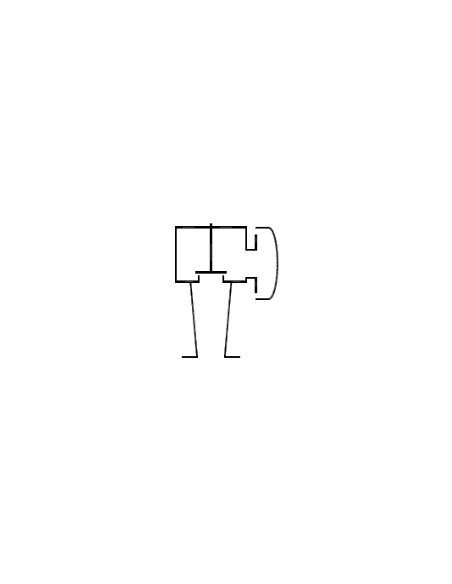
The KITO DS/oG-PA C 8.6 N is a spring-loaded pressure relief valve designed for vertical installation on tank roofs. It is applied in tank breathing systems where higher set pressures are required, with simultaneous limitation of vapor or gas losses. This valve does not provide explosion or stabilized flame protection.

Dimensions and Set Pressure Range

Available in DN 50 to DN 300. Flanges are PN 16 for DN 50–150 and PN 10 for DN 200–300. Set pressure range is >60 to 415 mbar.

Connections:

  • standard: EN 1092-1 type B1
  • optional: ASME B16.5 Class 150 RF

Construction and Materials

Standard configuration:

  • upper body PN 1 in cast steel 1.0619, optionally stainless cast steel 1.4408
  • lower body in carbon steel, optionally stainless 1.4571
  • cover in carbon or stainless steel 1.4301 / 1.4571
  • gasket PTFE
  • spring-loaded valve plate
  • seat, plate, and shaft in stainless 1.4571
  • metallic sealing
  • springs and loaded parts in stainless steel
  • protective mesh in stainless 1.4301

Operational Selection

Type C 8.6 N is selected when the 2–60 mbar range of C 8.5 N is insufficient and higher set pressure is required. Metallic sealing and spring-loaded design are suitable for applications where opening pressure must remain stable at higher setpoints.

Flow rates are specified for air at 1.29 kg/m³ and 273 K. Stated flows are achieved with 20% accumulation above set pressure; for lower permissible overpressure, flow correction is necessary.

Certifications

Technical documentation states no EC certificate and no CE marking.

Standard (Options)
  • DIN
Connection (Options)
  • Flanged
Material (Options)
  • 1.0619
  • 1.4408
Pressure Rating (Options)
  • PN 10
  • PN 16

Datasheet and documents

Description

KITO® DS/oG-PA-… DE

  • As venting device for installation on storage tanks with a PRV to protect against hazardous excess pressure but minimize the loss of gas/vapours.
  • This device does not protect against the hazard of explosion or stabilized burning.
  • The housing is mounted perpendicularly on a tank roof.