

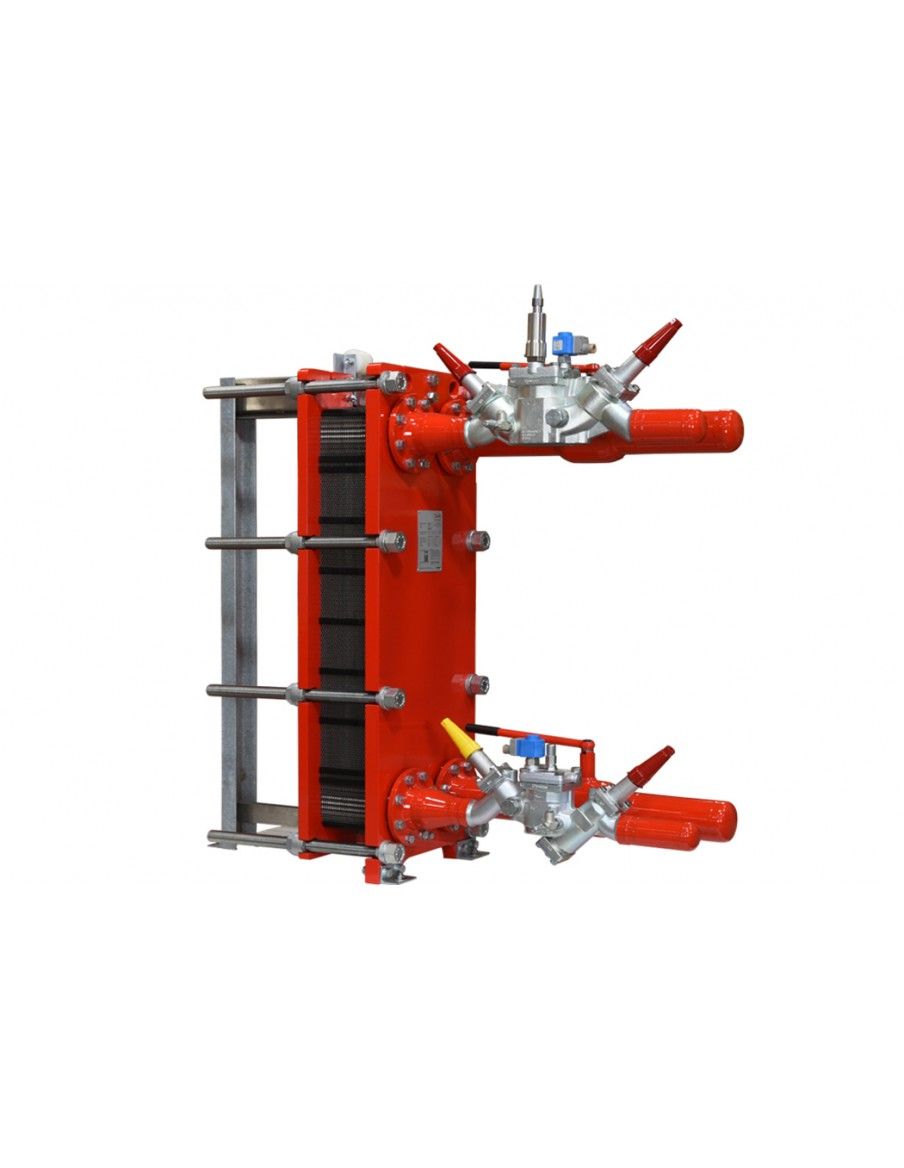
Semi-welded plate heat exchanger for industrial refrigeration ammonia applications | Sondex/Danfoss

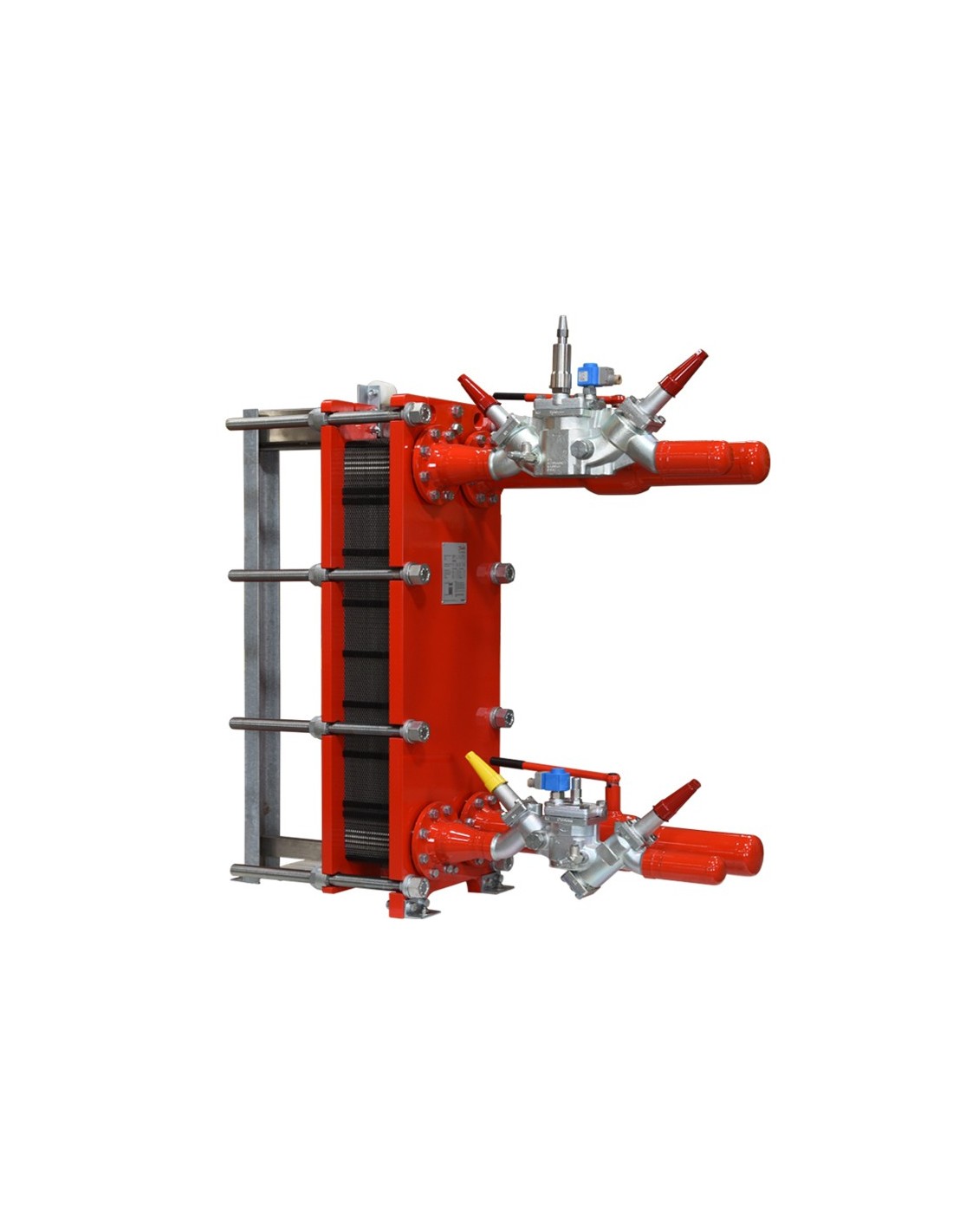
Semi-Welded Plate Heat Exchangers Danfoss SONDEX for NH₃
Semi-welded plate heat exchangers are utilized in industrial refrigeration with ammonia, where refrigerant charge limitation, controlled pressure drop, and maintenance of the plate pack are required. The SW19–SW59 series supports operation from -40°C to 150°C and pressure up to 40 bar, depending on configuration.
Construction and Sealing
The refrigerant side is configured with laser-welded plate pairs into cassettes. The secondary side remains gasketed, allowing for opening, cleaning, and replacement of gaskets or cassettes. The double-gasket system directs potential leaks outside the plate pack, reducing cross-contamination risk between circuits.
Media and Operating Conditions
Suitable media:
- NH₃, R134a, R1234ze, R513A, R410A, R507A
- water, ethylene glycol, propylene glycol, and brine mixtures
- ammonia applications in condensation, evaporation, subcooling, heat recovery, and oil cooling
Typical selection parameters: DN65–DN200, PN16/25/40 or ANSI Class 150/300, plate materials AISI 304 or AISI 316, thickness 0.5–0.7 mm, and gaskets NBR HT, HNBR, EPDM, Chloroprene, or FEPM, depending on the medium.
Standards and Testing
Construction can be based on CE/PED, EN 13445, and ASME VIII Sec. 1. Includes strength tests, 48-hour vacuum tests, pressure fatigue cycles, and helium leak testing on cassettes and assembled exchangers.
Comparison with Fully Welded Plate Exchanger
In NH₃ applications, the semi-welded design limits gasket exposure to the refrigerant. Compared to fully welded exchangers, it provides access for mechanical cleaning and cassette replacement.
FAQ
Where is it used? In flooded/pumped evaporators, condensers, subcoolers, economizers, desuperheaters, and oil coolers.
What affects selection? Thermal load, flow rates, ΔT, allowable pressure drop, refrigerant type, glycol concentration, and maintenance schedule.
Datasheet and documents

Description
Tap to zoom
