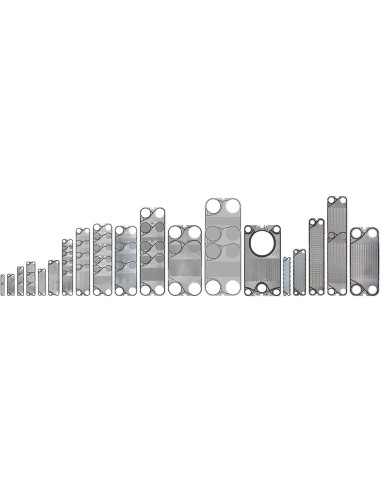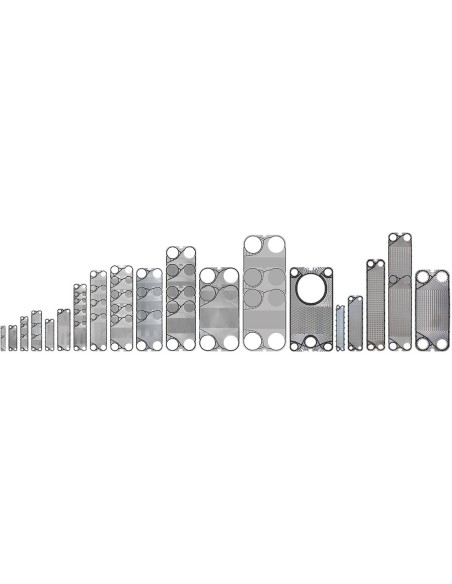

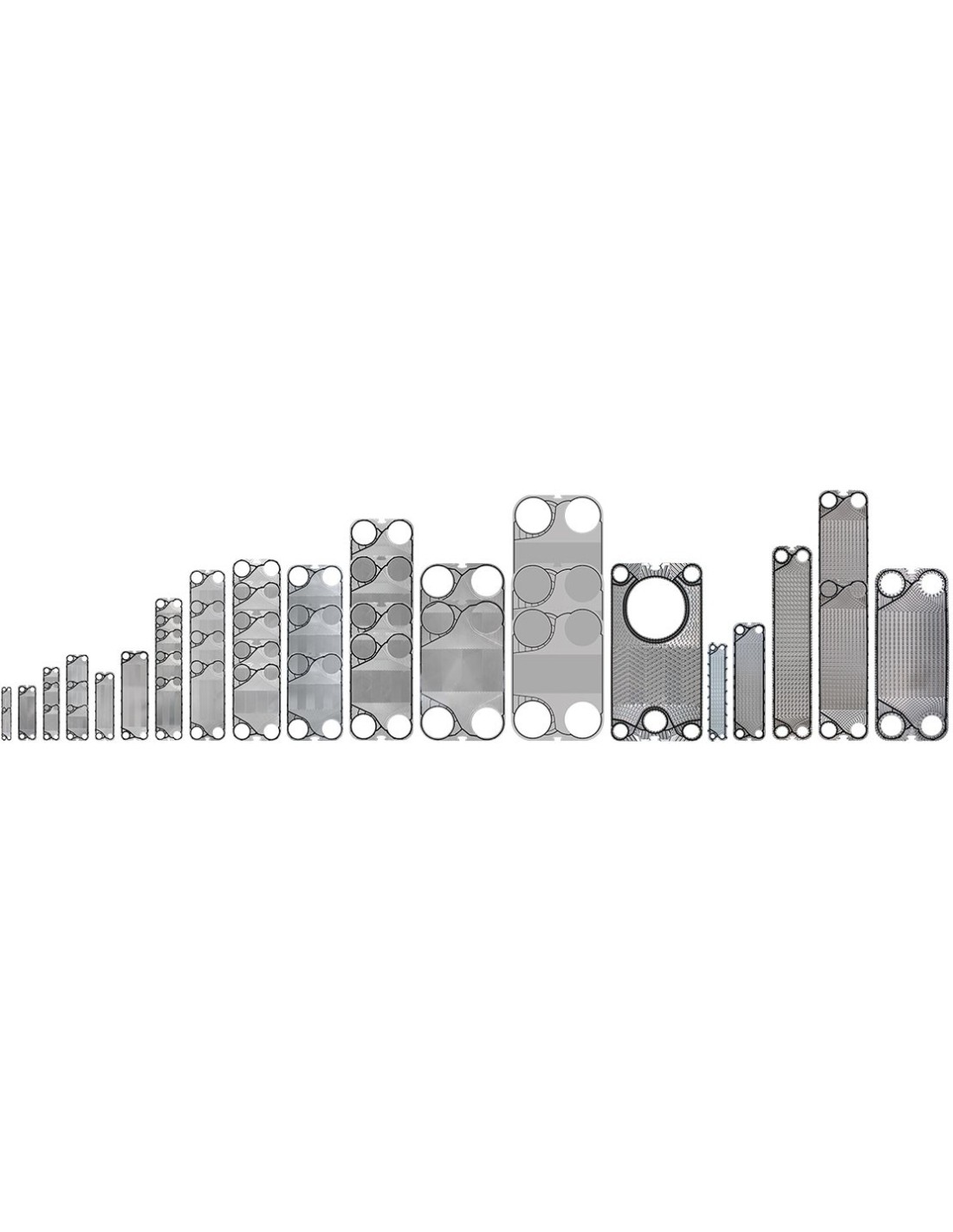

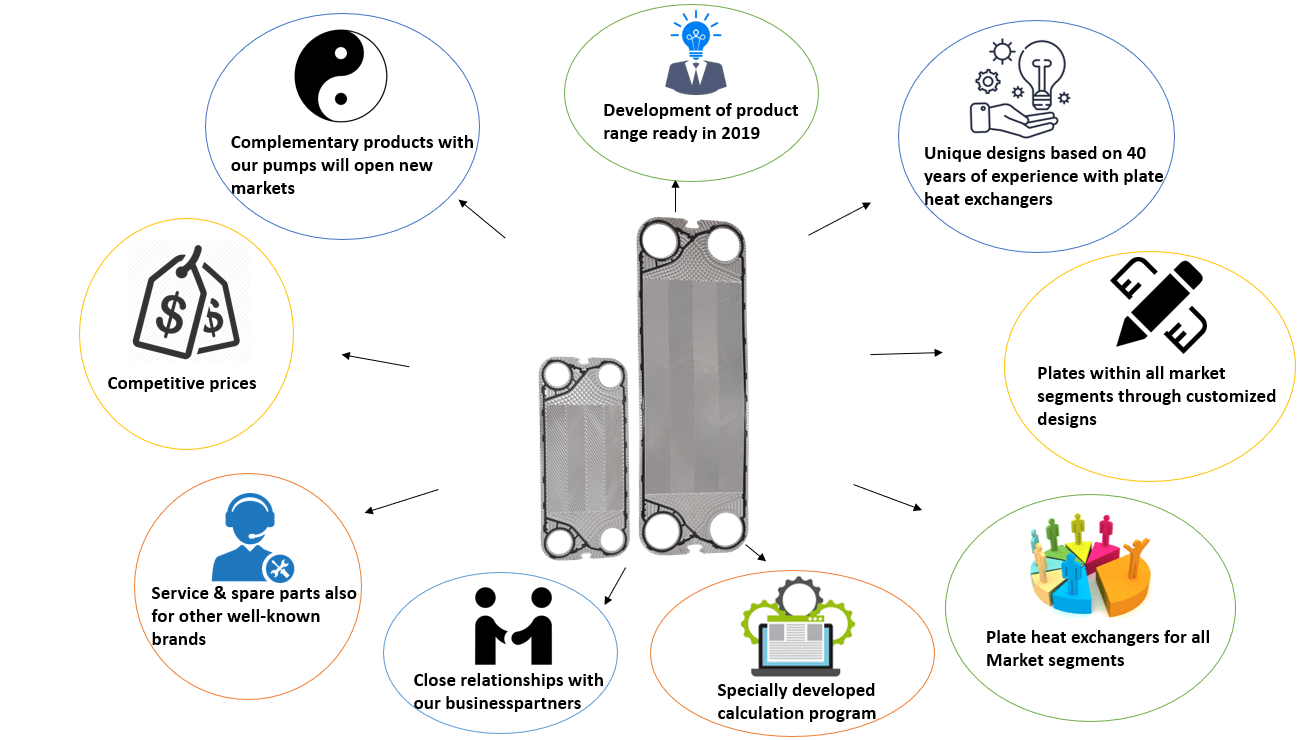
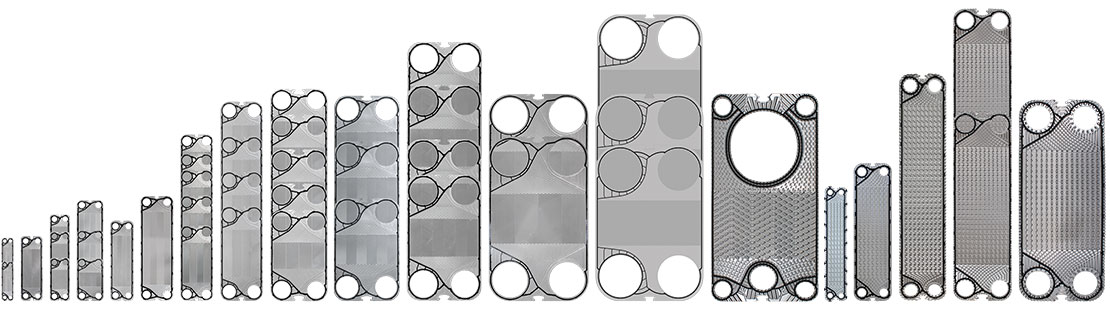





SonFlow plates are the core thermal transfer component in gasketed plate heat exchangers. Their geometry is selected based on thermal load, flow rate, allowable pressure drop, viscosity, fouling risk, and cleaning requirements.
The surface is pressed into a herringbone wave pattern. Different chevron angles, pressing depths, and groove profiles allow for turbulence and pressure drop adjustments per application.
For applications with limited pressure drop, a lower resistance geometry is chosen. In clean fluids and high thermal duty, a more aggressive profile may be selected for increased heat transfer coefficient.
Available plate materials include AISI 304, AISI 316, titanium, SMO, and nickel, depending on chlorides, pH, temperature, and chemical compatibility. Gaskets are available in EPDM, NBR, and Viton.
Channel sealing and internal drainage zones are critical to prevent mixing of the two fluids and for timely leak detection to the environment. The company profile mentions dual internal seals and reinforced guiding areas for proper plate pack alignment.
SonFlow documentation specifies frames designed according to PED 2014/68/EU, EN 13445, and ASME Section VIII Div. 1, with operating pressure up to 25 bar, depending on series and configuration.
When are plates replaced?
When there is corrosion, deformation, unacceptable performance drop after cleaning, or a change in duty point.
Is only the plate replaced or also the gasket?
During refurbishment, the gasket is usually checked as compression, thermal aging, and chemical environment affect sealing integrity.