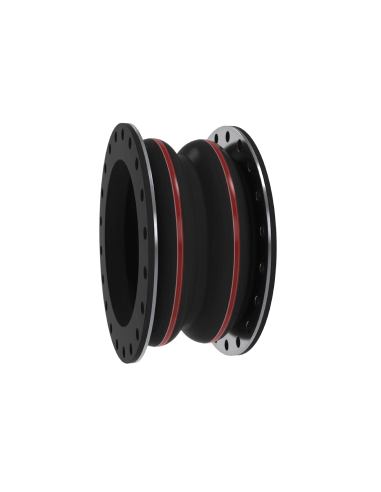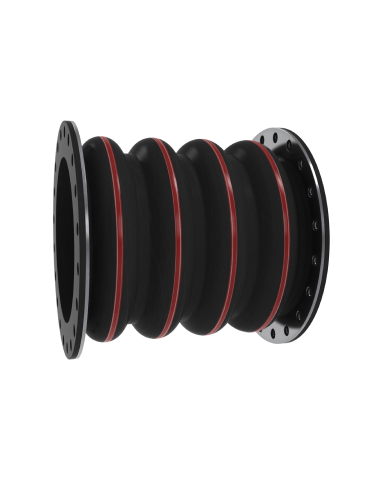
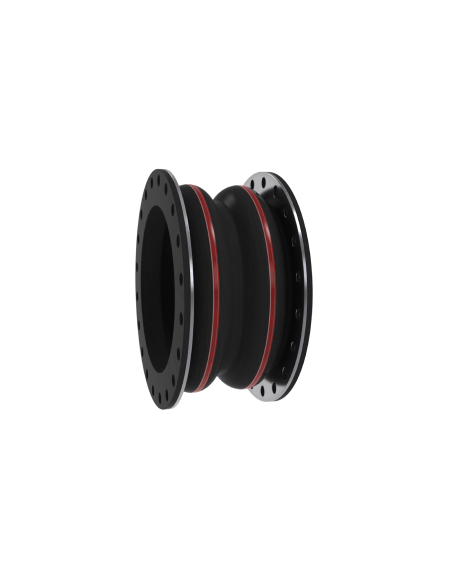
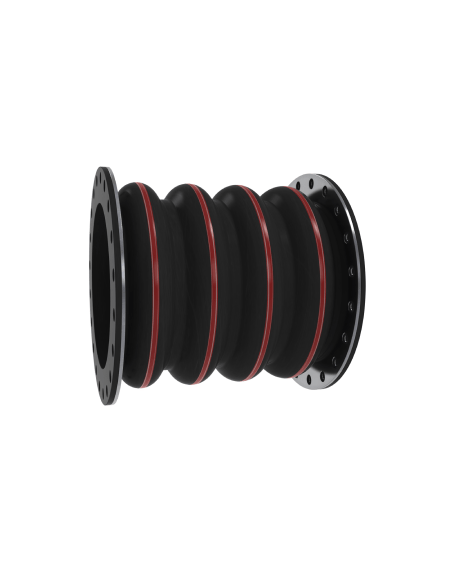

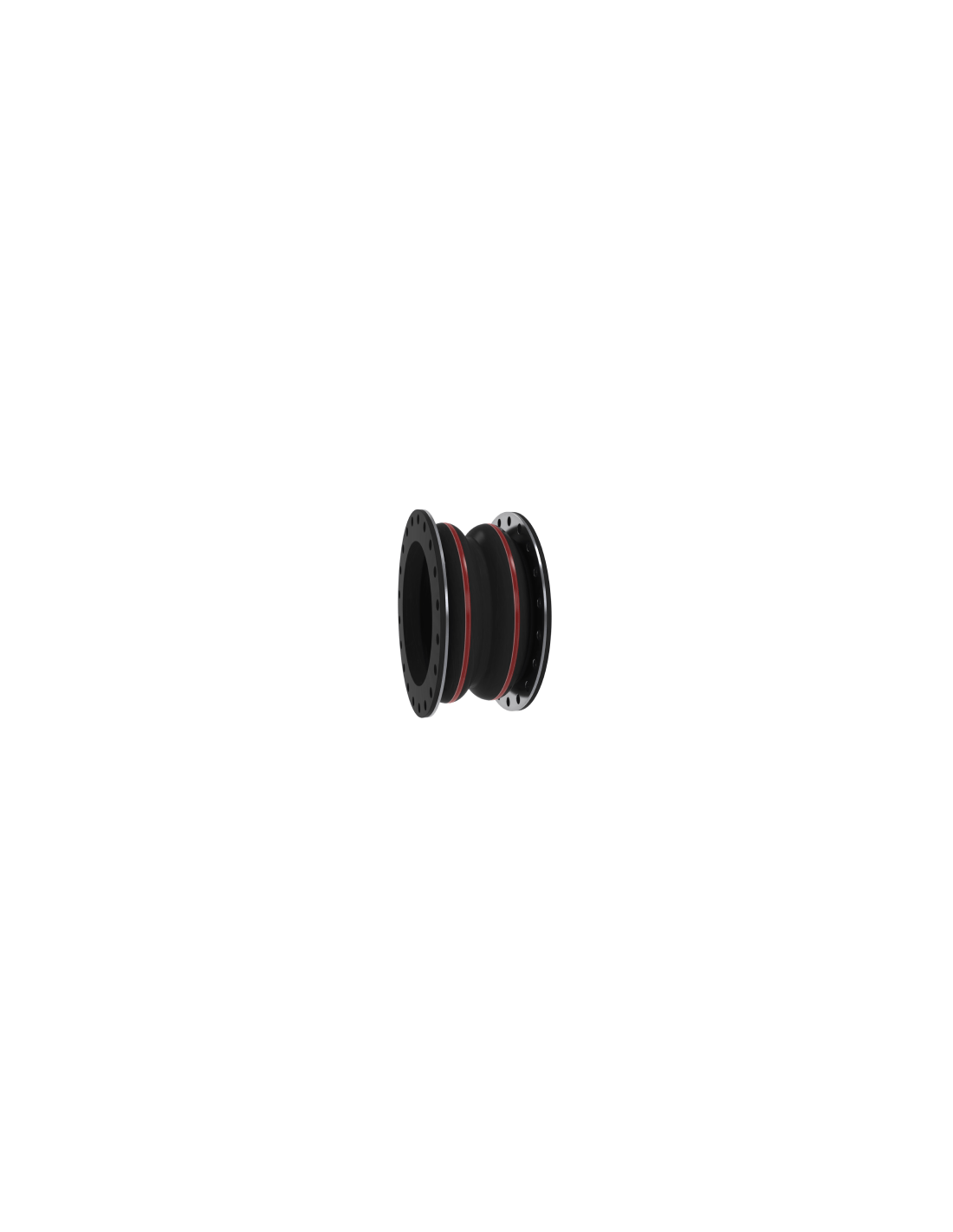
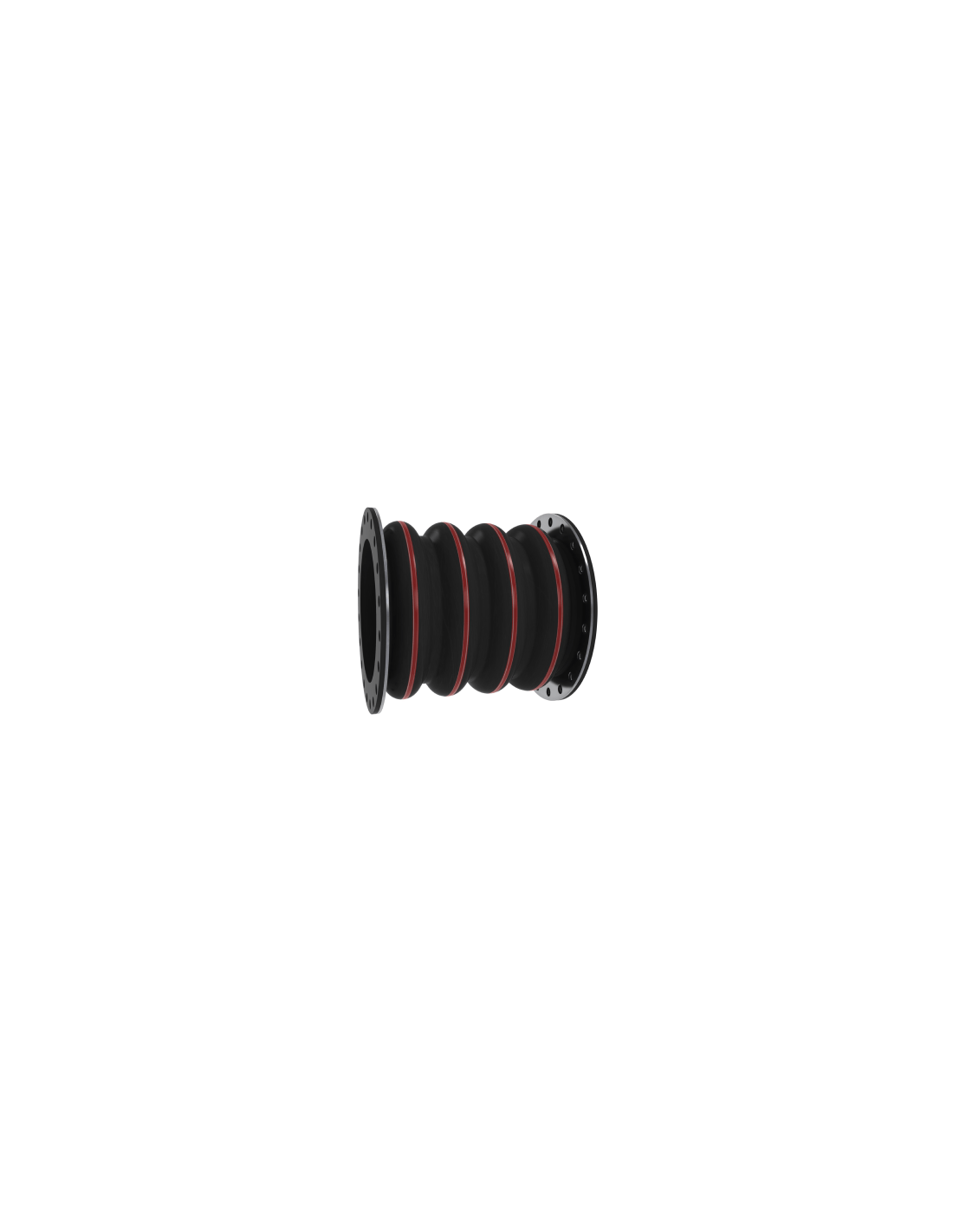
Expansion joints with two or more arches (convolutions) may be manufactured to accommodate movements greater than those of which a single arch type joint is capable of.Length of the joint is dependent on the number of arches.


Variations and optional devices for rubber expansion joints - Multiple convolution design | Macoga

MACOGA Multiple Convolution Design – Elastomeric Expansion Joint, Multiple Arch
The multiple convolution configuration refers to elastomeric expansion joints with two or more arches, selected when required movements exceed the capacity of a single-arch element. The overall installation length is determined by the number of convolutions and the specified movement schedule.
Selection Criteria
Applied in piping systems with increased axial, lateral, or angular movements, such as:
- pumping stations and cooling water lines,
- large-diameter HVAC systems,
- desalination units,
- chemical and industrial low/medium pressure lines,
- networks with thermal expansion not accommodated by single-arch joints.
Not intended as a field solution for misalignment. Installation length and movement requirements must be defined during initial design.
Technical Selection
Selection requires the following data:
- DN, PN, or pressure class.
- Flange standard: EN, ANSI, AWWA, JIS, or custom drilling per main series.
- Pressure, temperature, and conveyed medium.
- Axial compression/elongation, lateral offset, and angular movement.
- Vacuum requirement, if applicable.
- Elastomer material: EPDM, NBR, SBR, CSM, Neoprene, FKM/Viton, per media compatibility.
- Tie rods, inner sleeve, PTFE/FEP lining, or protective cover requirements.
Installation and Sealing
The elastomeric face seals directly against the pipe flange; no additional gasket is used. Flanges must be flat, clean, burr-free, and with aligned bolt holes. Bolting is performed in a cross-pattern, using a torque wrench and in stages.
Comparison with Single Arch
Single-arch joints are used for limited movement and short installation lengths. Multiple convolution designs increase movement capability but require greater installation length. Pressure thrust must still be managed by anchors, tie rods, or other restraint systems, depending on joint type.
No actuator is present. Inspection should include leak checks, deformation, external wear, and condition of metallic parts after commissioning and periodically during operation.
Datasheet and documents
Description
CERTIFICATES
MACOGA holds numerous industry approvals, including:
Ministry of Defense and NATO Member Countries
Tap to zoom