
MACOGA holds numerous industry approvals, including:
Ministry of Defense and NATO Member Countries


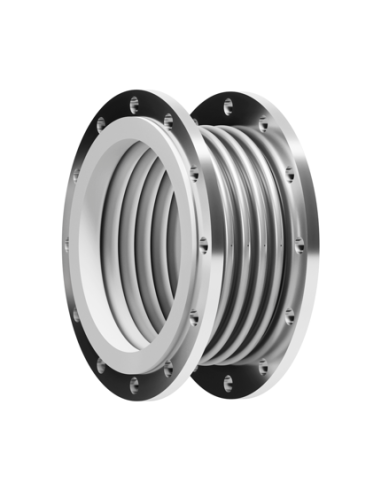
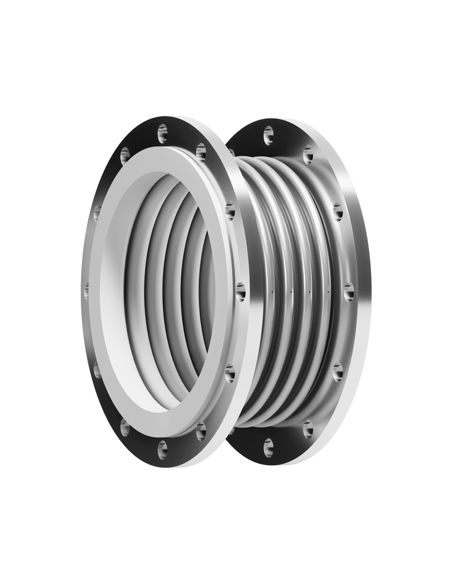
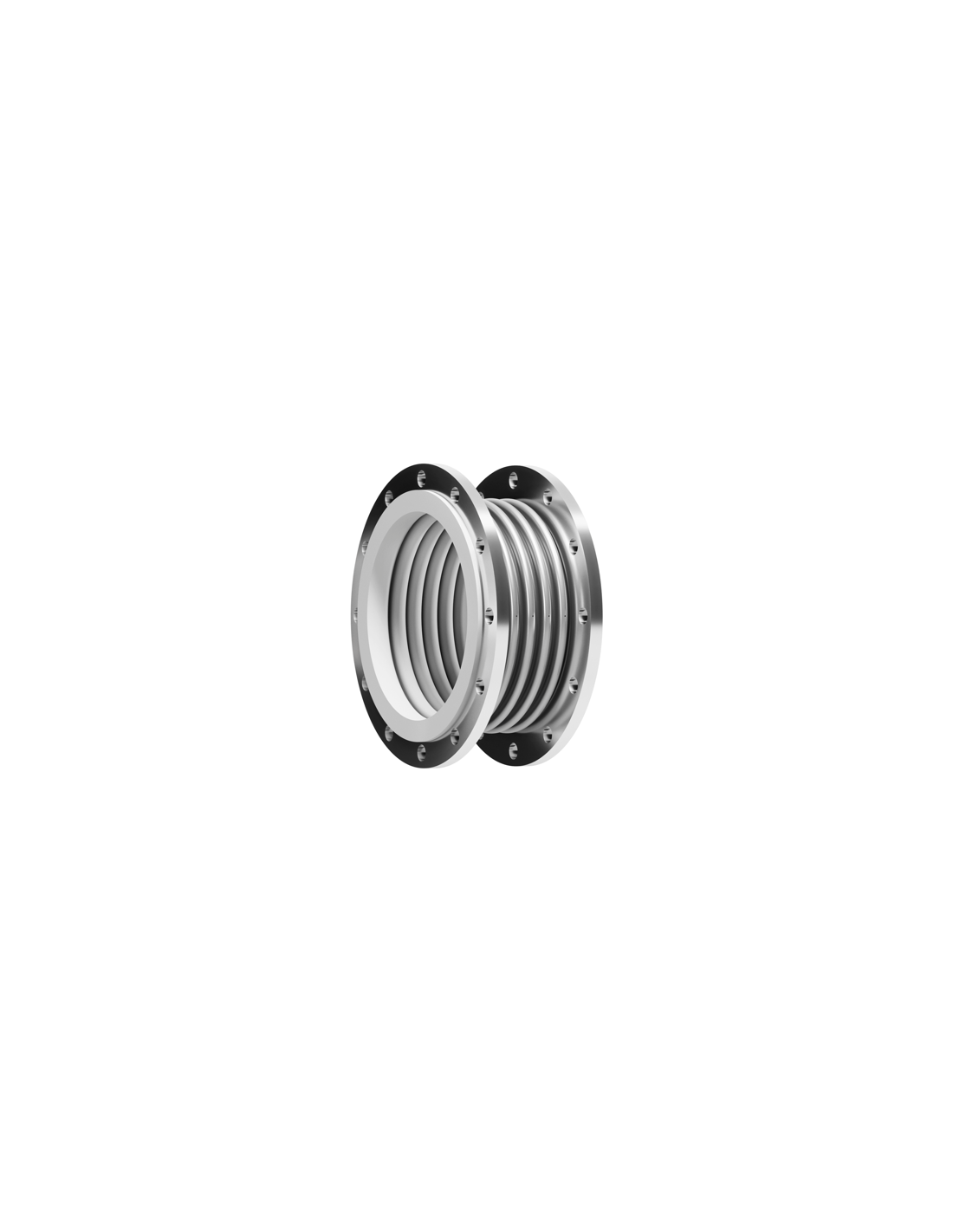
Macoga PTFE expansion joints are designed with PTFE (polytetrafluoroethylene) lining on all wetted surfaces. These assemblies are specified for piping systems conveying chemically aggressive media where direct contact between the process fluid and metallic components must be avoided. Macoga offers PTFE lining for both metallic and elastomeric expansion joints, targeting applications involving chemicals, strong acids, corrosive, or hazardous fluids.
The PTFE lining isolates wetted areas of the bellows and flanges, minimizing corrosion risk to metallic parts. PTFE is selected for its chemical inertness, low friction coefficient, and non-stick surface properties, making it suitable for aggressive process environments.
Typical applications include:
Selection should be based on pressure rating, temperature range, chemical concentration, flow velocity, operational cycles, and allowable movement per EN or ASME standards.
Do not use the joint to compensate for misalignment. Remove yellow transport bars before pressure testing. For hydrostatic tests, use chloride-free water to prevent stress corrosion cracking of metallic parts.
Inspection should include leak checks, pressure loss, vibration, external corrosion, anchor/guide condition, and accumulation of solids in convolutions.
Are these suitable for steam?
Only if the data sheet confirms temperature, pressure, and PTFE suitability.
What does the PTFE lining provide?
Chemical barrier between process fluid and metallic construction, primarily for corrosive media.
MACOGA holds numerous industry approvals, including:
Ministry of Defense and NATO Member Countries