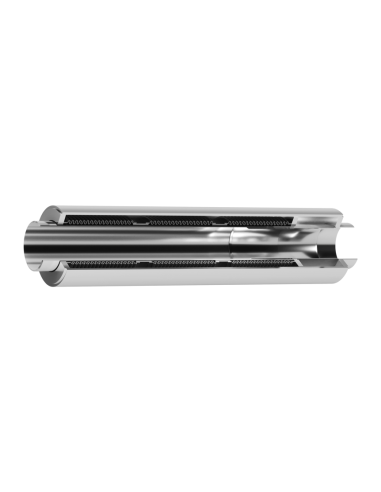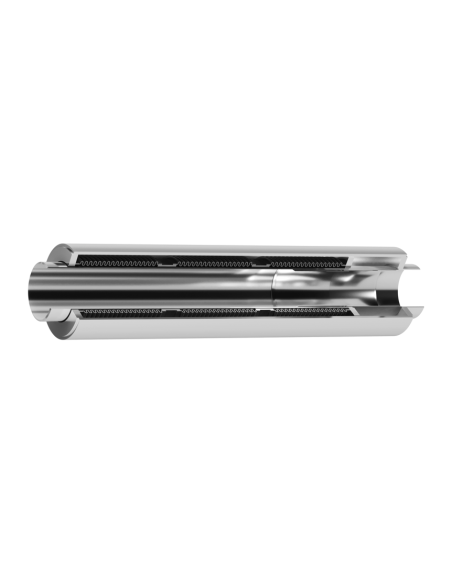

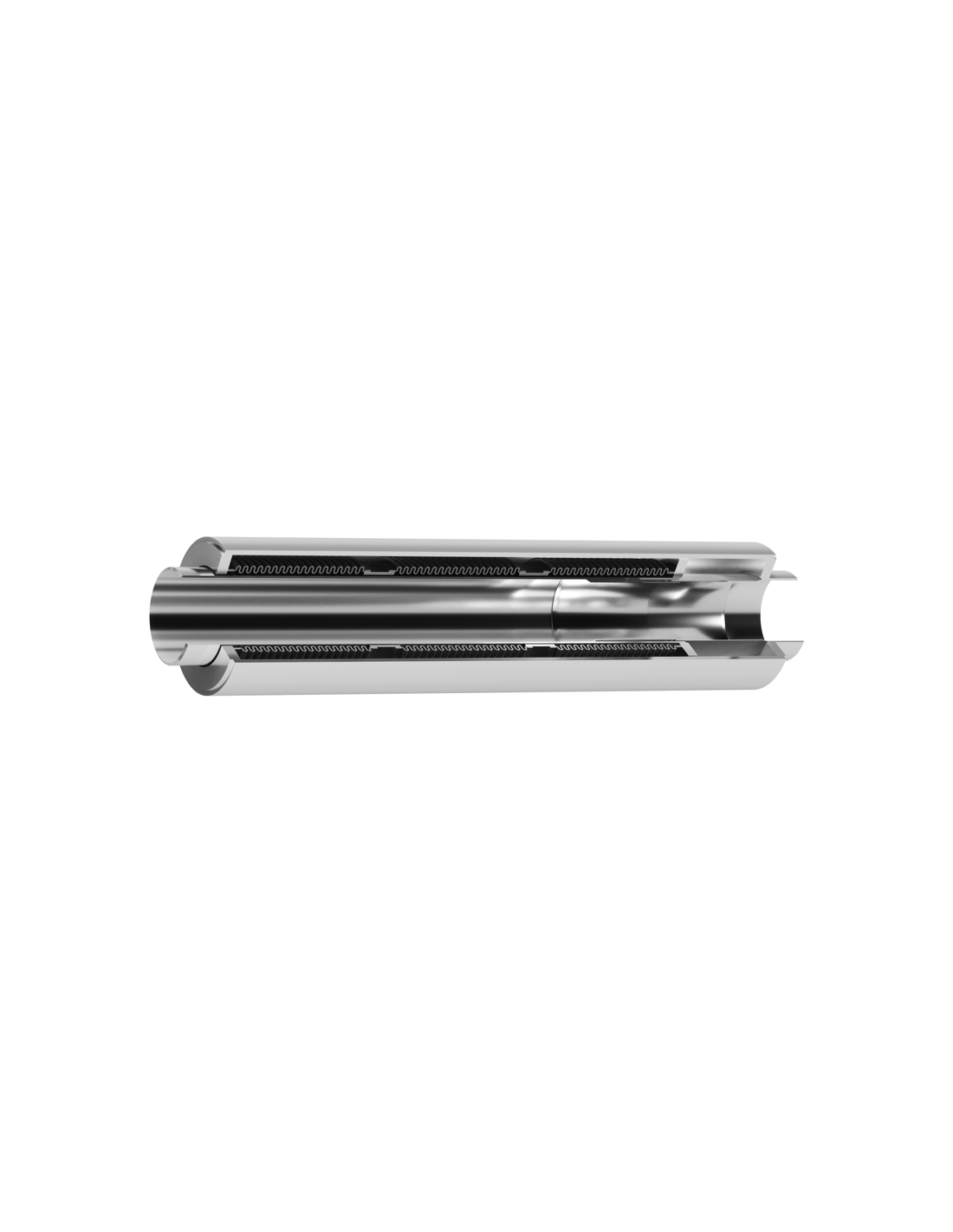
Axial non-pressure balanced externally pressurized.


Expansion Joints - Type MEP | Macoga
Macoga MEP Externally Pressurized Expansion Joints
Macoga MEP are metallic expansion joints of the externally pressurized type, classified as axial non-pressure balanced. The process fluid pressure acts on the outside of the bellows, a configuration that increases stability for long axial movements.
Operation
MEP type is primarily used in piping systems with high pressure and significant axial compression or extension. For large movements, internally pressurized axial expansion joints may require line segmentation due to buckling risk; with MEP, the external pressure stabilizes the bellows, allowing for longer axial travel.
Movements and Anchoring
- Axial movement: primary function.
- Lateral / angular movement: limited, only if specified in design.
- Pressure thrust restraint: not provided.
- Required: main anchors and directional guides.
Typical Applications
Used in straight pipe runs for steam, hot water, thermal oil, process gases, or other compatible fluids where axial expansion is significant and standard internally pressurized joints are insufficient for stability. Selection is based on pressure, temperature, axial travel, fatigue cycles, effective area, bellows material, and anchor strength.
Standards and Documentation
Product literature references EJMA, CE, ISO 9001, and inspection bodies. Final compliance must be confirmed via the data sheet, nameplate, and unit-specific certificates.
Installation and Inspection
MEP joints are not intended for misalignment correction. Prior to installation, verify nameplate data, flow direction (with internal sleeve), guides, anchors, and bellows cleanliness. Protect bellows from impact, scratches, arc strikes, and weld spatter. Remove yellow transport bars before pressure testing; for hydrostatic tests, use chloride-free water.
FAQ
Is an actuator required?
No. Operates passively, responding to pipe movement.
When is it selected?
When large axial travel is required in a pressurized line, with bellows stability and full anchor calculation.
Datasheet and documents
Description
CERTIFICATES
MACOGA holds numerous industry approvals, including:
Ministry of Defense and NATO Member Countries
Tap to zoom