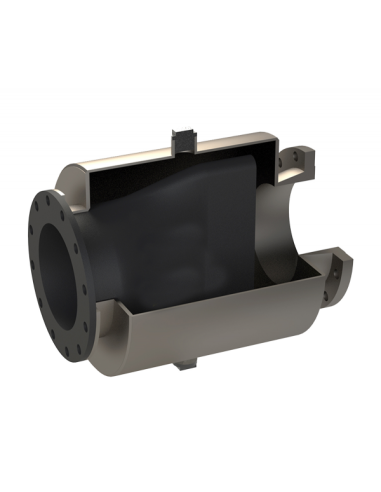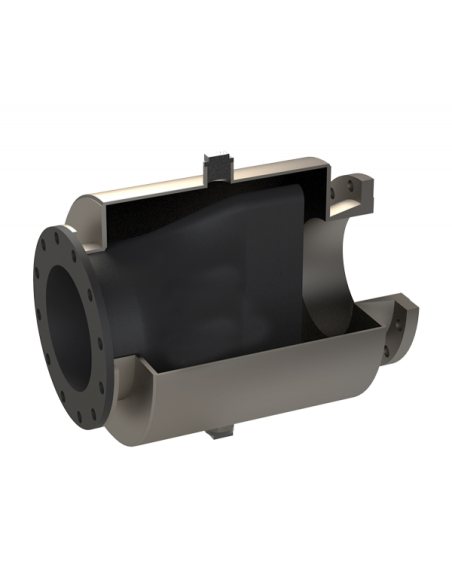

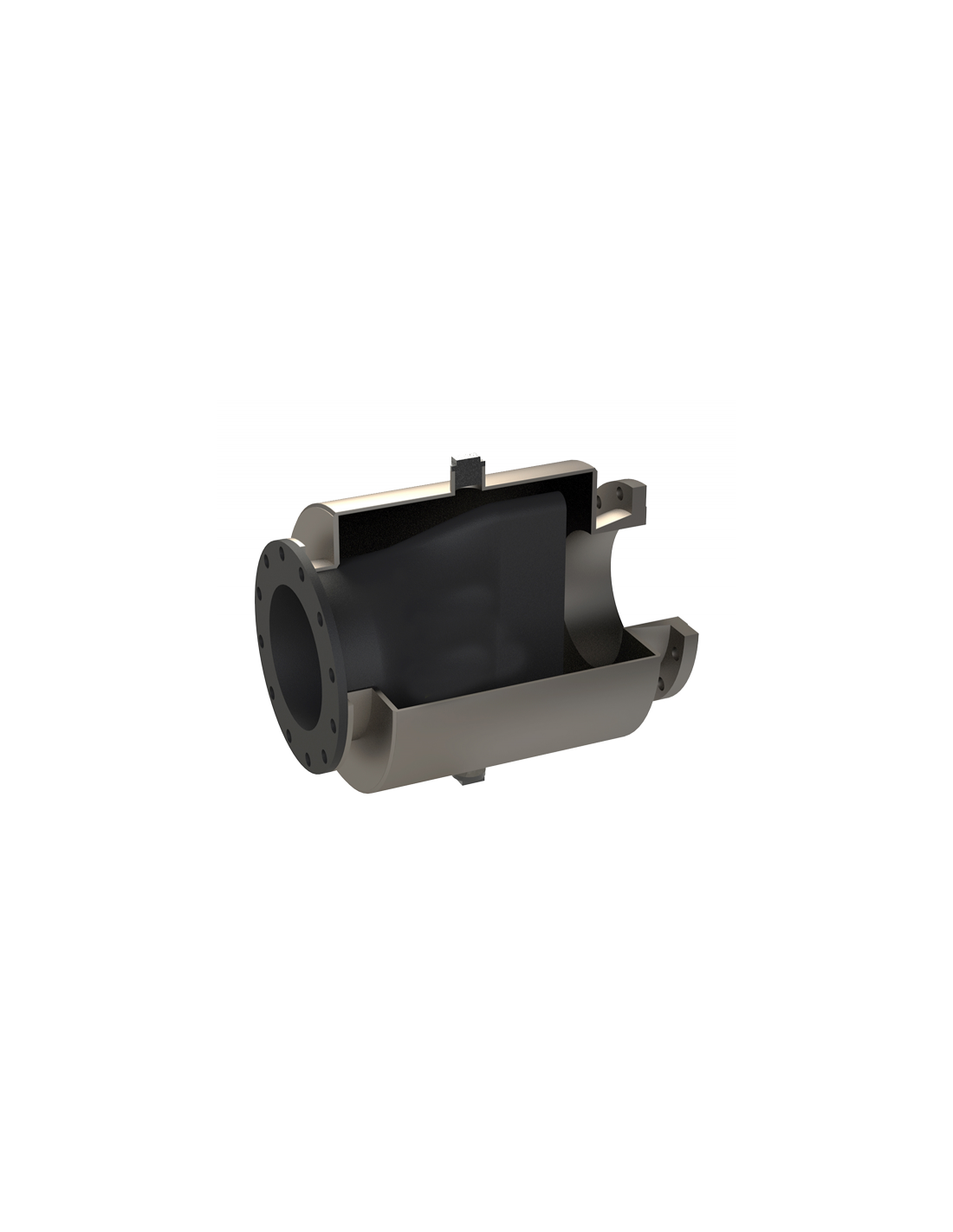
Cla-Val Series RF-DBJ Duckbill Jacket Style Check Valves feature all-metal enclosures for installation in pipelines as a whisper-quiet, non-slamming, low-maintenance, low pressure-drop check valve. A variety of elastomers allow DBJ valves to be used with many different fluids. When ordering, specify Model DBJ, nominal pipe, flange drilling, and add the first letter of elastomer material i.e.: 4″-DBJ-N (N for Neoprene)


Rubber-Flex Duckbill Check Valves - RF-DBJ Jacket | Cla-Val
Cla-Val RF-DBJ Jacket Style Duckbill Check Valve
The RF-DBJ is an elastomeric duckbill check valve housed within a full metal jacket for in-line pipeline installation. This passive check valve operates via differential pressure: it opens under forward pressure and closes under backpressure, with no actuator, shafts, or hinges required.
Construction and Connection
- Metal jacket designed for in-line mounting between flanges.
- Internal elastomeric valve element, RF-DBF type.
- Standard ANSI 125/150# flange drilling; other patterns available on request.
- Body materials: epoxy coated carbon steel, stainless steel, or special alloys per process fluid.
- Standard sizes: 2"–36"; larger diameters subject to technical review.
Suitable Media and Applications
RF-DBJ is specified for heavy-duty service where the elastomeric check element requires mechanical protection within a metal housing:
- sludge, slurries, and abrasive suspended solids
- wastewater and biological treatment lines
- industrial water, effluent, and pump stations
- pipelines requiring low pressure drop and non-slam closure
Elastomer Selection
Material compatibility is determined by process fluid, temperature, chemical composition, and solids content. Options include EPDM for water or dilute acids, Buna-N for oils/hydrocarbons, Natural Rubber for abrasion, Neoprene for moderate chemicals and marine service, Viton, Butyl, and Hypalon for specific chemical environments.
Installation and Sealing
Align the unit with flow direction and the TOP mark on the metal jacket. For horizontal installation, the duckbill opening must be vertical. Use gaskets as required by flange standards. Tighten bolts in a cross-pattern and incrementally; typical torque for RF-DBJ is 20–500 ft·lbs for 1"–72" sizes.
RF-DBJ vs. RF-DBI / RF-DBF
RF-DBI is installed inside the pipeline without a metal body. RF-DBF bolts to a flange or outlet. RF-DBJ uses a metal jacket and is selected when an in-line flanged unit with mechanical protection of the elastomeric valve is required.
FAQ
Is an actuator required?
No. Operation is based solely on differential pressure.
What data is needed for selection?
Model DBJ, nominal diameter, flange drilling, elastomer type, flow rate, line pressure, and backpressure.
Datasheet and documents
Description
Tap to zoom