


Ball Valves Compact Design Double Block and Bleed | Fluitek | Philippopoulos s.a.

Ball Valves Compact Design Double Block and Bleed | Fluitek

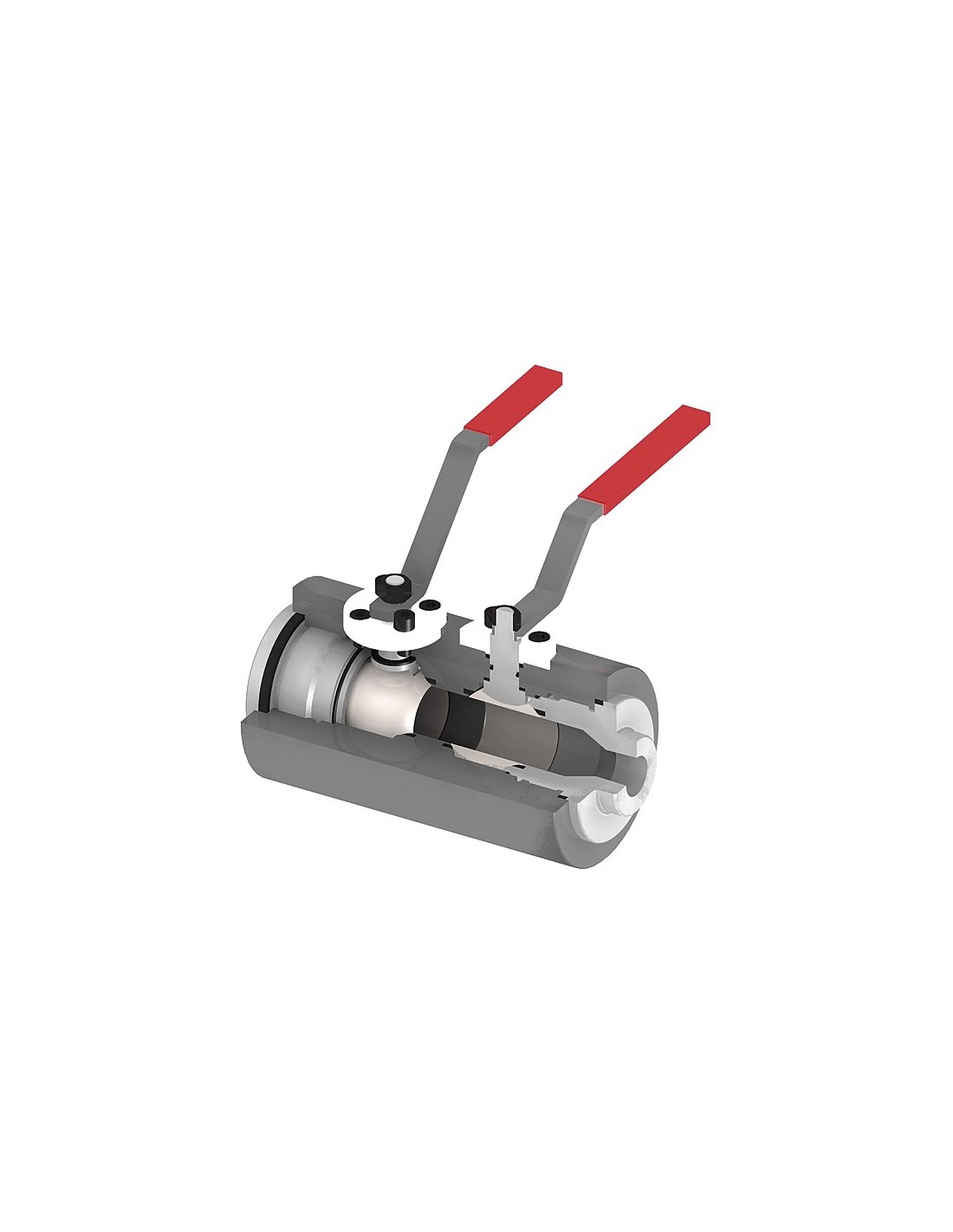
Fluitek Compact Double Block & Bleed Ball Valve

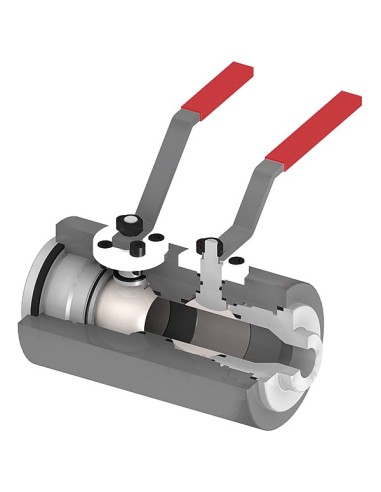
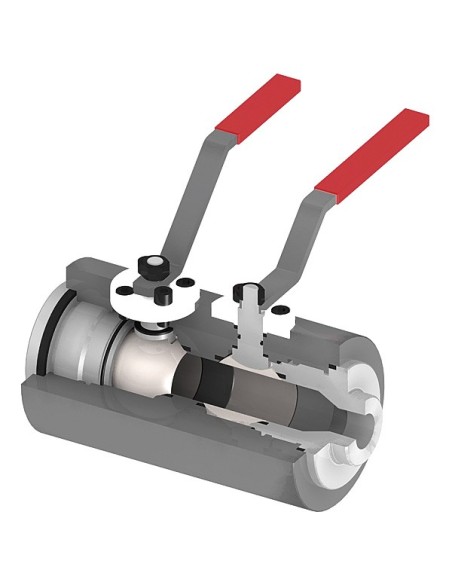
Two-way compact DBB ball valve for line isolation where two independent sealing barriers and controlled depressurization of the body cavity are required before maintenance, sampling, instrument removal, or downstream work.

Design

The compact body eliminates conventional valve flanges and reduces face-to-face length. Pipeline bolts are screwed into blind threaded holes in the valve body, making the valve suitable for installations with limited spool length.

  • Floating ball or trunnion-mounted execution
  • Single compact body with two isolation seats and an intermediate bleed connection
  • Manual lever, gearbox, pneumatic, hydraulic, or electric actuator options
  • Soft-seated or metal-seated configurations depending on medium, temperature, leakage class, and solids content

DBB Function

  • Two separate sealing points isolate the upstream and downstream sides
  • The intermediate cavity can be vented or drained through the bleed port
  • Seat tightness can be checked before maintenance intervention
  • Reduces the need for two separate valves and an intermediate spool piece

Floating vs Trunnion-Mounted Variant

  • Floating ball: typically selected for smaller sizes and moderate pressure classes where operating torque remains acceptable.
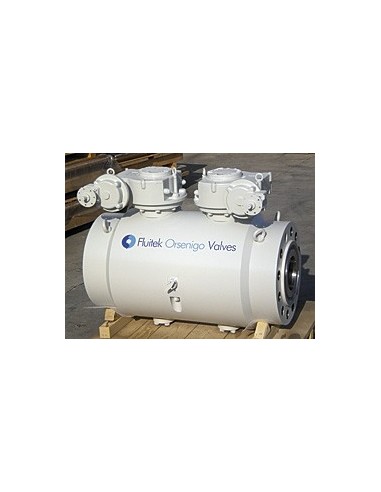
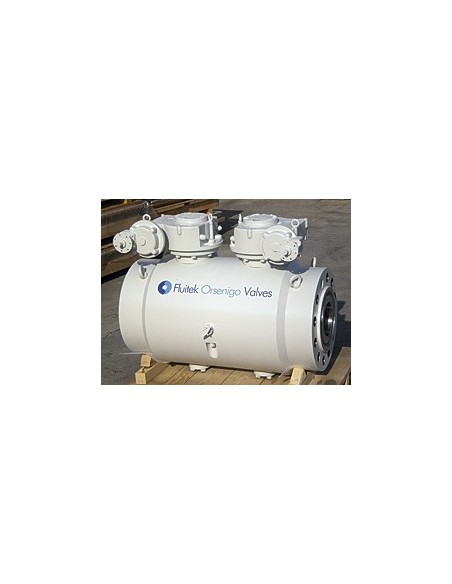
  • Trunnion-mounted: used for larger diameters, higher pressure classes, frequent operation, or actuator sizing constraints.
  • Selection criteria: DN/NPS size, pressure rating, differential pressure, torque, seat design, leakage requirement, automation philosophy, and maintenance access.

Operating Conditions and Media

Pressure class and temperature range are specified according to body material, seat material, end connection, and applicable design code. Typical configurations are selected for ASME Class 150 to 2500 or API service where required. Temperature limits depend on PTFE, RPTFE, PEEK, elastomer, or metal-seat selection.

  • Natural gas, fuel gas, LPG, condensate, crude oil, refined hydrocarbons
  • Chemical and petrochemical process fluids compatible with selected trim
  • Utility fluids, inert gases, and non-corrosive industrial liquids
  • Fire-safe and anti-static execution where specified by plant standards

Standards and Certifications

Available certifications may include ISO 9001:2015, PED 2014/68/EU, ATEX 2014/34/EU, IEC 61508 SIL, API 6A / ISO 10423, API 6D, API 6DSS, and TR-CU. Final compliance depends on valve size, pressure class, material, and project documentation requirements.

Typical Applications

  • Oil and gas isolation lines
  • Metering skids, analyzer take-off points, and sampling systems
  • Chemical and petrochemical units
  • Fuel, gas, and process-fluid manifolds
  • Maintenance isolation points requiring safe depressurization before intervention

FAQ

Is DBB the same as two valves in series?
Functionally it provides two isolation barriers with a bleedable cavity, but in a compact single-body arrangement. The required leakage classification must still be verified against the project specification.

When is trunnion design preferred?
For larger bore sizes, higher pressure classes, high differential pressure, lower actuator torque, or automated shutdown service.

What must be checked before ordering?
Line rating, design code, material compatibility, seat leakage class, fire-safe requirement, bleed connection size, actuator type, fail position, and certification package.

Description

For Double Block and Bleed design, Trunnion or Floating Type, special body design without flanges results in a very short end-to-end dimension. Pipeline bolts shall be screwed into threaded blind holes machined into valve body.

This customization of the product is possible, indeed, on all Fluitek Orsenigo Ball Valves production: all the dimensions coming from international codes (valve bore, valve end to end) of coming from Fluitek Orsenigo standard production range (valve weight, height from ground, operator height form line axis) can be modified trying to meet the requirements of the Customer for the specific project.

Certifications