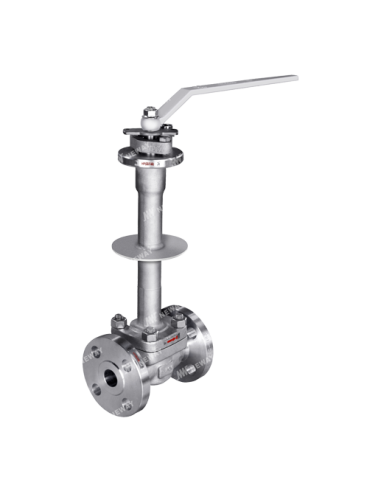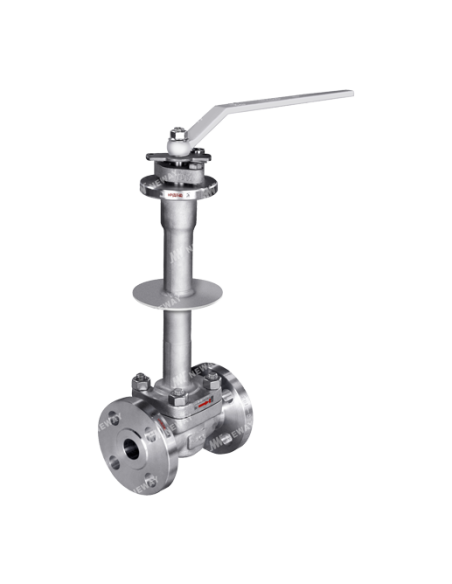

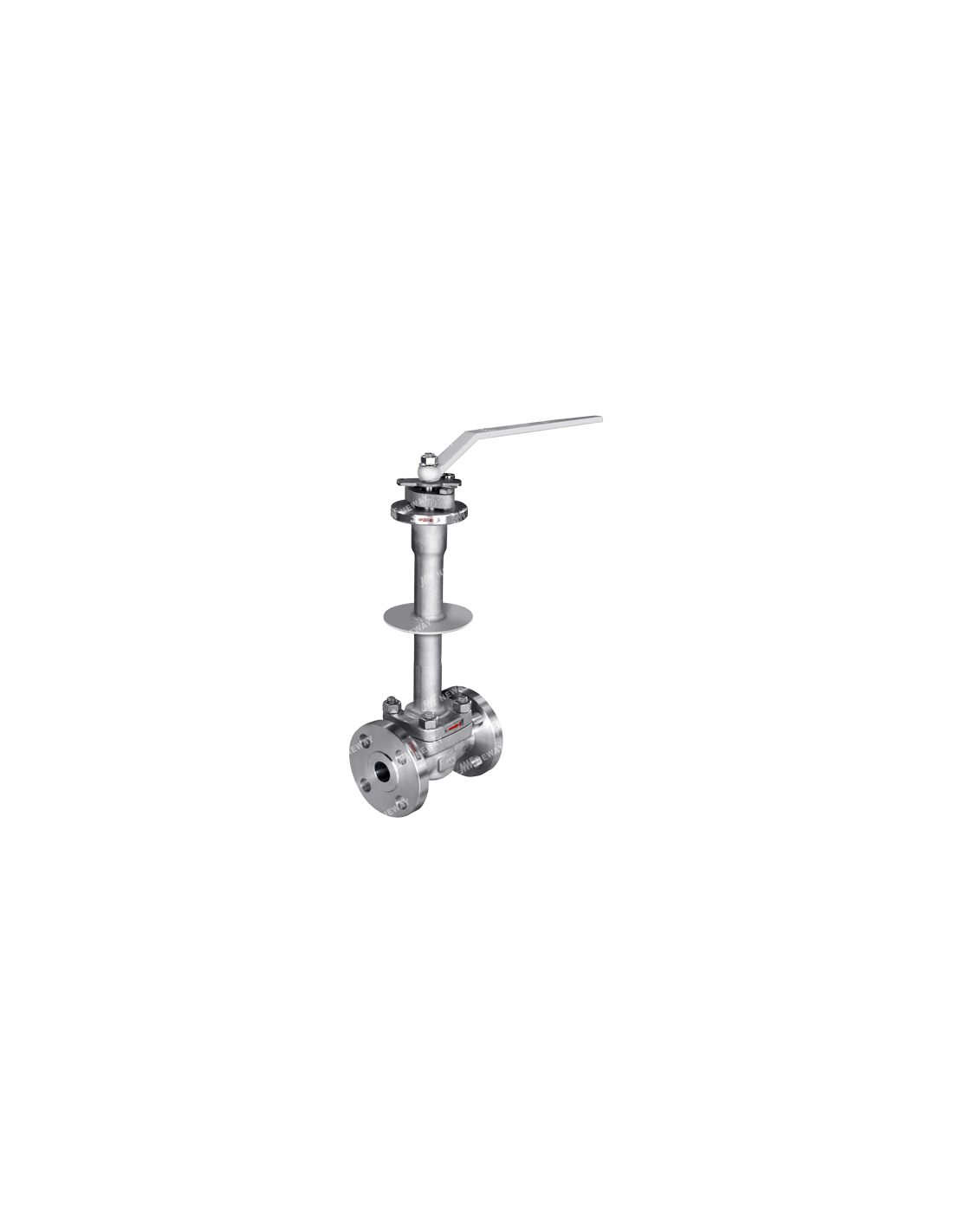
Size:1/2"~3"(DN15~DN40)
Pressure Rating: ASME CLASS 150~1500(PN16~PN250)
Body material:Stainless steel
End connection:RF, BW
Operation:Manual, Pneumatic, Electric, Hydraulic



Top-entry floating ball valve for isolation of cryogenic liquids and gases. Available in NPS 1/2"–3", ASME Class 150–1500 / PN16–PN250, stainless steel body, RF or BW ends, with manual, pneumatic, electric, or hydraulic actuation.
Top-entry construction allows internal access from above, minimizing downtime and re-isolation work in cryogenic lines. Floating ball design is primarily used for smaller diameters where operating torque and seat loads remain within acceptable limits.
Applied in LNG, air separation, liquid nitrogen, liquid oxygen, cryogenic gases, and emergency shut-off lines. Product documentation references LNG service and compliance with BS6364, SHELL 77/200, and GB/T24925 standards.
When is BW preferred over RF?
For permanent cryogenic lines, BW is selected to minimize flanged leakage points.
What data is required for specification?
Process media, minimum temperature, design pressure, ASME class, NPS/DN, RF or BW, seat material, actuator type, and fail-close or fail-open requirement.
Size:1/2"~3"(DN15~DN40)
Pressure Rating: ASME CLASS 150~1500(PN16~PN250)
Body material:Stainless steel
End connection:RF, BW
Operation:Manual, Pneumatic, Electric, Hydraulic