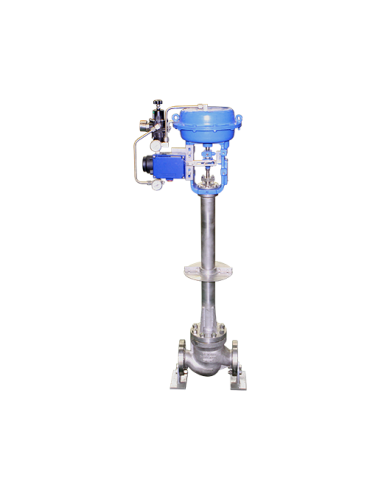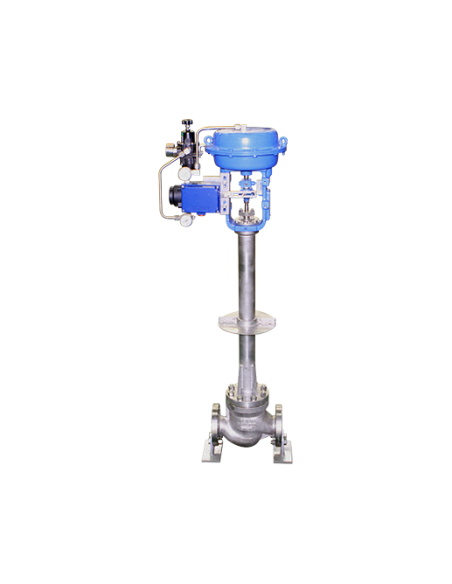

Size:3/4"~12"(DN20~DN300)
Pressure Rating: ASME CLASS 150~2500(PN16~PN420)
Body Materials: Stainless Steel
End connection: RF. BW. RTJ
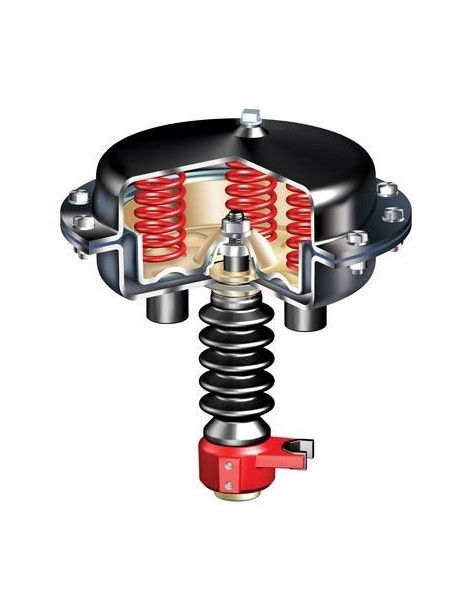
Operation: PDL series pneumatic diaphram actuator, PCL series cylinder actuator, Electric actuator



The Neway cryogenic control valve is designed for controlling LNG, industrial gases, and low-temperature fluids, considering material contraction, stem icing, fluid expansion, and trim stability at low temperatures. Product specifications include a range of 3/4"–12" / DN20–DN300, ASME Class 150–2500 / PN16–PN420, with a stainless steel body and RF, BW, RTJ connections.
For cryogenic service, the valve is selected with an extension or low-temperature bonnet to keep the packing outside the cold zone, minimizing condensation/icing around the stem. The Neway technical brochure lists straight-travel control valves with standard, extension, and low-temperature bonnets, suitable for temperatures down to -196°C and designed according to IEC 60534.
Typical uses include:
The brochure mentions LNG applications at -160°C with an inlet pressure of 2–3 MPa.
Trim selection is based on Cv/Kv, P1/P2, flashing risk, and allowable leakage. Neway control valves feature equal percentage, linear, quick open characteristics, a rangeability of 50:1, and leakage classes FCI 70-2 Class IV, V, VI with soft seats where temperature and media permit.
Actuation options include PDL pneumatic diaphragm actuator, PCL cylinder actuator, or electric actuator. The fail-safe position should be determined by process hazard analysis, especially for LNG isolation, vent, or pressure control duties.
What information is needed for selection?
Medium, flow rate, P1/P2, temperature, Cv/Kv, vapor pressure, leakage class, connection, fail position, and low-temperature testing requirements.
When is an extended bonnet required?
When the medium's temperature can freeze or harden the packing in the normal operating position.
Size:3/4"~12"(DN20~DN300)
Pressure Rating: ASME CLASS 150~2500(PN16~PN420)
Body Materials: Stainless Steel
End connection: RF. BW. RTJ
Operation: PDL series pneumatic diaphram actuator, PCL series cylinder actuator, Electric actuator
Accessories & Compatibility