

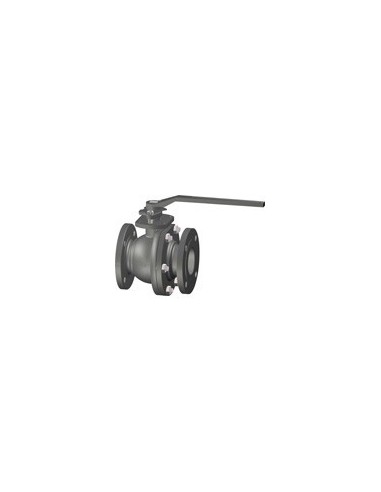

Ball Valve - UNIFLOW Fig. BF | Comeval | Philippopoulos s.a.

Ball Valve - UNIFLOW Fig. BF | Comeval

Comeval UNIFLOW Fig. BF Floating Ball Valve

Floating ball valve with split body construction, bidirectional shut-off and flanged ANSI ends. Used for isolation duties in process piping, industrial utilities and auxiliary plant systems. Available in Class 150, Class 300 and Class 600 versions, subject to size and material configuration.

Body and Trim Materials

  • Carbon steel: ASTM A105, ASTM A216 WCB
  • Stainless steel forged grades: ASTM A182 F304 / F316
  • Stainless steel cast grades: ASTM A351 CF8 / CF8M / CF3 / CF3M
  • Low-temperature carbon steel: ASTM A352 LCB

Typical Applications

  • HVAC and district energy plant isolation
  • Compressed air and industrial gas distribution
  • Lubrication, fuel and utility oil systems
  • General process lines requiring tight shut-off
  • Skid-mounted packages and auxiliary plant equipment

Media and Operating Conditions

Selection depends on compatibility between body material, seats, seals and process fluid. Typical media include water, air, inert gases, hydrocarbons, oils and compatible process fluids. The range covers DN10–DN250 and pressure ratings PN16–100 or ANSI Class 150–600, depending on valve execution.

Temperature limits are governed mainly by seat and seal material, not only by the pressure class. PTFE-based soft seats are used for general shut-off service; fire-safe or alternative sealing arrangements should be checked where hydrocarbon fire risk, high cycling or elevated temperature is present.

Operation and Automation

  • Manual operation by lever for smaller sizes and moderate torque duties
  • Gear operator for larger sizes or higher differential pressure
  • Pneumatic actuator for on/off process control or emergency isolation
  • Electric actuator for remote operation where instrument air is not available

Actuator sizing should consider break torque, maximum differential pressure, seat material, fluid condition, operating frequency and required fail position.

Variant Selection

  • Class 150: general utility and lower pressure process isolation
  • Class 300: higher pressure services or increased design margin
  • Class 600: high-pressure isolation where compatible with valve size and material
  • Stainless steel variants: corrosive or hygienically sensitive industrial environments
  • LCB variant: low-temperature service subject to project temperature requirements

Standards and Certifications

Referenced approvals include PED Module H, ATEX, EAC and fire testing according to API 607 / API 6FA. Certification requirements should be confirmed at purchase stage against the exact valve size, material, pressure class and actuator package.

Maintenance Notes

Floating ball valves rely on seat contact pressure for shut-off. Leakage performance can be affected by solids, crystallising media, frequent cycling and incorrect actuator torque. Periodic operation, flange bolt checks and stem packing inspection are recommended in maintenance plans.

FAQ

Is the valve suitable for throttling? It is primarily an isolation valve. Continuous throttling can damage soft seats and reduce shut-off capability.

Can it be automated? Yes. Pneumatic and electric actuators can be fitted after torque verification and interface check.

Is it bidirectional? Yes, the floating ball design is intended for bidirectional isolation, subject to the specific configuration and service conditions.

Standard (Options)
  • ANSI
Connection (Options)
  • Flanged
Material (Options)
  • ASTM A105
  • ASTM A182 F304
  • ASTM A182 F316
  • ASTM A216 WCB
  • ASTM A351 CF8
  • ASTM A351 CF3
  • ASTM A351 CF3M
  • ASTM A351 CF8M
  • ASTM A352 LCB
Pressure Rating (Options)
  • 150 lbs
  • 300 lbs
  • 600 lbs

Description

Floating ball valves, split body, bidirectional, for stopping the flow in process, industry, etc. Operated by hand lever, gear or actuator.

Specification of the range:

Diverse design combinations by end connections (flanged, BW), materials of construction (cast and forged), nominal size range (DN10-DN250 / 3/8-10"), design pressure range (PN16-100 / ANSI Class 150-600), operated by hand lever, gear, pneumatic or electric actuators styles and accessories.

Other typical denominations: Cast steel Cast steel floating ball valves Module H

Applications: HVAC, lubrication, gases, compressed air, process, etc.

Certifications: Fire test api 607 floating ball valve 4 8 inches class 300 600, Fire test api 6fa floating ball valve 2 8 inch class 150 300, Fire test api 6fa floating ball valve 8 16 inch class 150 300, Comeval ped

Certificates