


Ball Valve PN16/40 - Type 154/156 | ICP | Philippopoulos s.a.

Ball Valve PN16/40 - Type 154/156 | ICP

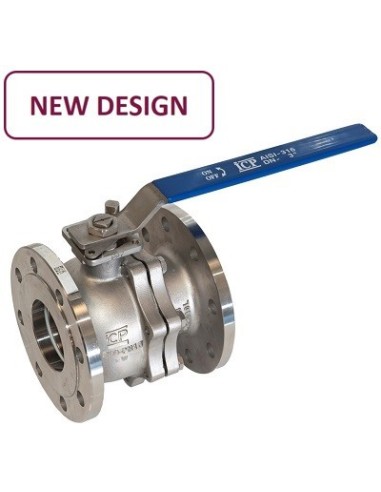
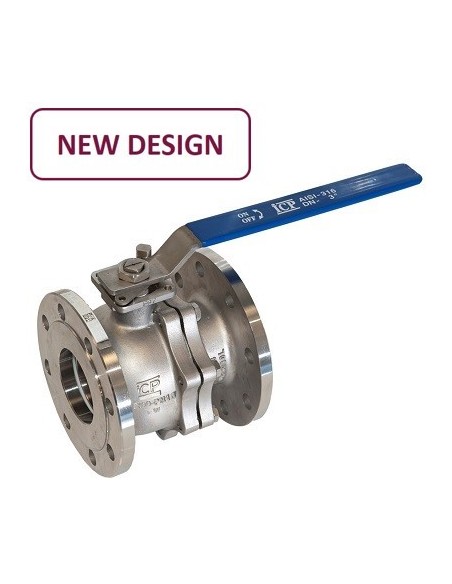
Spherical Ball Valve PN16/40 Type 154/156

Type 154/156 is a two-piece, full-bore flanged ball valve for on/off isolation in industrial piping systems. The full-bore design limits pressure drop and is suitable where line capacity must not be significantly restricted.

The valve is supplied with DIN flanged connections. Pressure classes are PN40 for DN15–DN50 and PN16 for DN50–DN200, depending on valve size and variant.

Construction and Materials

  • Body: stainless cast steel 1.4408
  • Ball: AISI 316 stainless steel
  • Seats: PTFE
  • Antistatic device
  • Locking device for handle position
  • Two-piece body construction
  • Full-bore flow passage

Standards and Certifications

  • Face-to-face dimensions according to EN 558-1
  • CE marking
  • ATEX certification for installations requiring equipment suitable for explosive atmospheres
  • ISO 5211 mounting interface for actuator installation

Suitable Media and Operating Conditions

The stainless steel body and AISI 316 ball allow use with industrial water, steam, condensate, compressed air, utilities and selected chemical services. Final valve selection shall consider pressure, temperature, flow regime, corrosion allowance and chemical compatibility of PTFE seats with the process medium.

For steam service, frequent cycling or elevated temperature operation, the PTFE seat rating and manufacturer pressure-temperature chart should be checked before installation.

PN16 and PN40 Variants

  • PN40: used on smaller nominal sizes, DN15–DN50, where higher design pressure is required.
  • PN16: used on larger nominal sizes, DN50–DN200, for standard industrial pressure classes.
  • Selection is based on pipe class, design pressure, design temperature and flange compatibility.

Actuation and Process Control

The ISO 5211 top mounting pad allows direct installation of automation equipment without field modifications.

  • Pneumatic actuators for open/close service
  • Electric actuators for remote operation
  • Limit switch boxes for valve position feedback
  • Solenoid valves for pneumatic control circuits
  • Integration into PLC, DCS or local control panels

Typical Industrial Applications

  • Steam and condensate lines
  • HVAC plant rooms and distribution networks
  • Food and beverage utilities
  • Chemical and petrochemical process lines
  • Compressed air distribution
  • Water treatment systems
  • Industrial utility headers

Engineering Notes

PTFE seats provide low operating torque and tight shut-off for isolation duty. The valve is not intended for continuous throttling, as partial opening can increase seat wear and localized velocity. For automated valves, actuator torque should include service factor, differential pressure and expected seat friction over the maintenance interval.

FAQ

Is the valve suitable for steam?

Yes, provided that pressure and temperature remain within the manufacturer’s allowable limits for the valve body, seats and seals.

Can it be automated?

Yes. The ISO 5211 mounting interface supports pneumatic or electric actuators and position feedback accessories.

What is the main difference between PN16 and PN40?

The pressure rating. PN40 is rated for higher pressure than PN16, subject to temperature derating and applicable flange standards.

Standard (Options)
  • DIN
Connection (Options)
  • Flanged
Material (Options)
  • 1.4408
Pressure Rating (Options)
  • PN 16
  • PN 40
Seat (Options)
  • PTFE

Description

Two pieces Ball Valves, Full Bore, Flanges PN40 (from DN15 to DN50) and PN16 (from DN50 to DN200).

Stainless Steel (1.4408) Body, AISI-316 Ball and PTFE seats. Antistatic Device. Locking Device.

The valve is equipped with ISO 5211 connection to mount pneumatic or electrical actuators.

The face-to-face of the valve is according with En 558-1.

The valves are certified CE and ATEX.