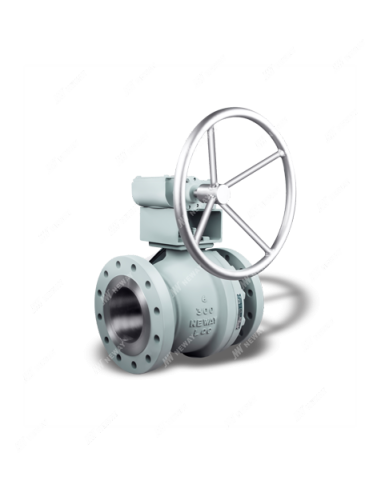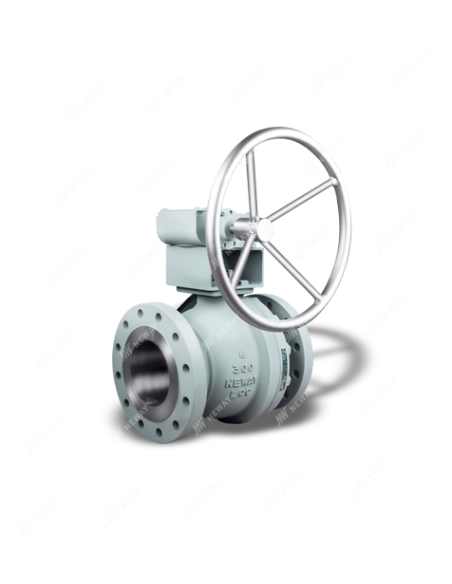

Size:1/2"~10"(DN15~DN250)
Pressure Rating: ASME CLASS 150~300(PN16~PN40)
Body material:Carbon steel, Stainless steel, Alloy steel, Duplex stainless steel,exotic alloy etc.
End connection:FLNG, BW
Operation:Manual, Pneumatic, Electric, Hydraulic,ect.



The Neway Floating soft-seated ball valve is a cast, end-entry or side-entry isolation valve for on/off service in industrial process lines. The floating ball design is typically applied in small and medium bore sizes where bidirectional tight shut-off is required and the process conditions are compatible with resilient seats.
Body materials are selected according to pressure class, corrosion allowance, fluid compatibility and plant specification. Common options include carbon steel, stainless steel, alloy steel, duplex stainless steel and special alloys.
Flanged ends are used where removal from the line is expected during maintenance. Butt-weld ends are selected for permanent pipework, reduced external leakage paths and higher piping integrity requirements.
Soft seats may include PTFE, reinforced PTFE or higher-temperature polymers such as PEEK, depending on the valve design. Seat selection shall consider temperature, differential pressure, chemical resistance, cycling frequency and risk of solids in the media.
Soft-seated floating ball valves are not normally selected for abrasive slurry service or continuous throttling. For high-temperature, dirty or erosive duties, a metal-seated or trunnion-mounted design may be more appropriate.
End-entry designs are compact and suitable for general isolation duties. Side-entry designs provide improved maintainability because the body can be disassembled for internal inspection and seat replacement, depending on piping arrangement.
Can it be used for throttling?
It is primarily an on/off isolation valve. Frequent throttling can damage soft seats and increase leakage.
What defines the temperature limit?
The limiting component is usually the seat and seal material, not only the body material.
When is actuator selection required?
Actuator sizing is required for remote operation, interlocks, ESD functions, high cycling duty or high differential pressure service.
Size:1/2"~10"(DN15~DN250)
Pressure Rating: ASME CLASS 150~300(PN16~PN40)
Body material:Carbon steel, Stainless steel, Alloy steel, Duplex stainless steel,exotic alloy etc.
End connection:FLNG, BW
Operation:Manual, Pneumatic, Electric, Hydraulic,ect.