


Ball Valve - Type 32001 | Ibor Valves | Philippopoulos s.a.

Ball Valve - Type 32001 | Ibor Valves

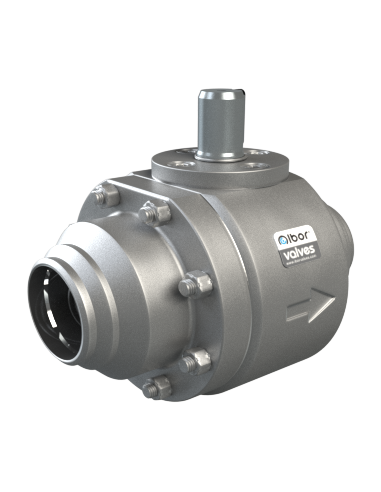
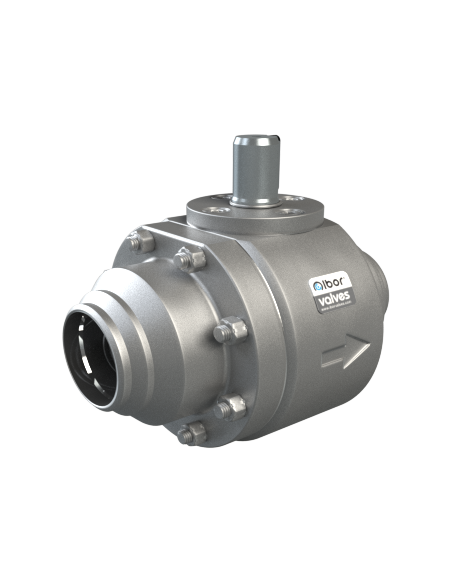
Ibor Type 32001 Ball Valve

The Ibor 32001 is a 2-way ball valve used for flow isolation in industrial liquid and gas services. It is specified where tight shut-off, cavity pressure relief, and defined end-connection standards are required in process or utility pipework.

Sealing and Operating Features

  • Self-relieving seat for cavity pressure relief caused by trapped fluid expansion.
  • Bidirectional shut-off capability, subject to the selected seat arrangement and pressure direction.
  • Secondary soft seat for improved sealing in clean services.
  • Stem extension or bonnet extension for insulated lines, elevated-temperature service, or limited access areas.
  • Fugitive-emission-oriented stem sealing arrangement for volatile or hazardous media.
  • Locking device for isolation control and maintenance safety.
  • Drain plug for cavity draining, depressurization, or flushing.
  • Overlay on the seat area or all wetted parts for corrosive, erosive, or severe-service duties.
  • Heating jacket for media requiring temperature maintenance.

End Connections and Standards

  • Flanged ends: ASME B16.5, GOST 12815-80, EN 1092-1.
  • Socket weld ends: ASME B16.11.
  • Butt weld ends: ASME B16.25.
  • NPT threaded ends: ASME B1.20.1.
  • BSPP or BSPT threaded ends: BS 21.

Typical Applications and Media

Typical services include steam lines, hot water circuits, thermal oil, process gases, hydrocarbons, and industrial utility systems. The valve may be used in isolation duties upstream or downstream of equipment, branch take-offs, drain points, and process skid packages.

The heating jacket variant is used for high-viscosity fluids, waxy hydrocarbons, resins, bitumen-like media, or products that may solidify when local temperature falls below the required process range.

Variant Selection

  • Standard soft-seat configuration: suitable for clean liquids and gases where low seat leakage is required.
  • Self-relieving seat: selected when trapped cavity pressure may rise due to thermal expansion.
  • Overlayed wetted parts: considered for corrosive media, flashing service, or abrasive contamination.
  • Stem or bonnet extension: used on insulated pipework, hot service, or installations requiring handwheel or actuator clearance.
  • Heating jacket: specified when process temperature must be maintained around the valve body.

Actuation and Operation

The valve may be supplied for manual operation with lever, gear operator, or locking device. Pneumatic, electric, or hydraulic actuators can be selected based on valve size, differential pressure, operating frequency, fail position, available utilities, and required control system interface.

Engineering Notes

Pressure class, temperature range, body material, seat material, and leakage class should be verified against the project datasheet and the applicable piping class. Media compatibility must be checked for the body, trim, soft seat, stem packing, gaskets, and any overlay material.

FAQ

  • Why use a self-relieving seat? To limit overpressure in the valve cavity when trapped fluid expands thermally.
  • When is a secondary soft seat useful? In clean services requiring improved shut-off compared with metal-to-metal contact alone.
  • When is overlay specified? For corrosion, erosion, or wear conditions at the seat area or across all wetted surfaces.

Description

Seat design

  • Self-relieving seat (cavity relief)
  • Bidirecctional
  • Secondary Soft Seat

Stem

  • Thermic extension, stem or bonnet extension
  • Design according to fugitive emissions
  • Locking device

Others

  • Drain plug
  • Overlay on seat area or on all wetted parts
  • Heating jacket

Connections

Flanged End: ASME B16.5 / GOST 12815-80 / EN 1092.1

Socket Weld End: ASME B16.11

**integral nipples and available

Butt Weld End: ASME B16.25

**integral nipples and available

Threaded NPT End: ASME B1.20.1

Threaded BSPP OR BSPT: BS21

Others

Design & Certification

Normative: ANSI / DIN

Design: API 6D / ISO 17292

Face to Face: ASME B16.10 / EN 558.1 Serie 27

Top Flange: ISO 5211

Press-Temp Ratings & Thickness: ASME B16.34

Test: API 6D / API 598 / EN 12266-1

Pressure Equipment Directive: PED 2014/68/EU Mod. H1

Equipment Directive: ATEX 94/9/EC

Fire Safe: API 6FA / API 607 / ISO 10497-2

Fugitive Emissions: Class”A” acc.to ISO 15484-2

Safety integrity level: Sil 2 acc.to IEC 61508

Material: NACE MR0175 Lastest Edition

Certification:EN 10204 type 3.1, (3.2 upon request)