

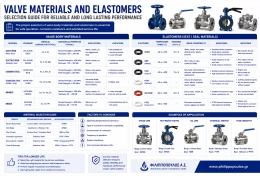
Valve material selection should not be based only on nominal pressure or valve size. Operating pressure, temperature,...
What is API 598?
API 598 establishes minimum inspection requirements, pressure testing procedures, seat leakage testing requirements and acceptance criteria for industrial valves.
The objective of the standard is to verify that each valve meets specified quality, strength and sealing requirements before shipment and commissioning.
Valve Types Covered by API 598
- Gate Valves
- Globe Valves
- Check Valves
- Ball Valves
- Butterfly Valves
- Plug Valves
- Pressure Seal Valves
Main API 598 Tests
Shell Test
The shell test verifies the integrity of the valve body, bonnet and pressure-retaining components.
No visible external leakage is permitted during the test.
Backseat Test
Where applicable, the backseat arrangement is tested to verify sealing capability and packing isolation.
High Pressure Closure Test
This test verifies seat tightness under specified pressure conditions.
Low Pressure Closure Test
This test verifies seat tightness using air or inert gas at low pressure.
Test Media
- Water
- Air
- Nitrogen
- Approved inert gases
Inspection Requirements
- Visual inspection
- Casting inspection
- Marking verification
- Dimensional inspection
- Assembly inspection
- Leakage testing
Leakage Acceptance Criteria
Acceptable leakage rates depend on:
- Valve type
- Valve size
- Pressure class
- Seat design
- Test medium
Relationship with Other Standards
| Standard | Scope |
|---|---|
| API 598 | Valve Inspection and Testing |
| EN 12266 | Valve Testing |
| ISO 5208 | Pressure Testing |
| API 600 | Steel Gate Valves |
| ASME B16.34 | Valve Design Requirements |
Typical Industrial Applications
Refineries
High-pressure gate, globe and check valves.
Petrochemical Plants
Isolation and process valves.
Steam Systems
Steam isolation and pressure seal valves.
Natural Gas Facilities
Valves used in transmission and distribution systems.
Benefits of API 598 Compliance
- Standardized testing procedures
- Verified sealing performance
- Improved operational reliability
- Compatibility with API and ASME specifications
- Support for project quality assurance
Frequently Asked Questions
What is the difference between API 598 and EN 12266?
API 598 is primarily used for American-standard valve projects, while EN 12266 is the main European valve testing standard.
Which valves are tested according to API 598?
Most industrial isolation valves and check valves.
Does API 598 cover valve design?
No. API 598 covers inspection and testing requirements. Valve design is typically covered by ASME B16.34 or product-specific standards.