
Actuators
Marine actuators are used to operate isolation and control valves in seawater, ballast, bilge, cooling water, fuel, instrument air, and fire-fighting systems. Selection should be based on the valve operating torque, differential pressure across the valve, required opening and closing time, fail position, available air supply or electrical power, installation environment, and the need for local or remote operation.
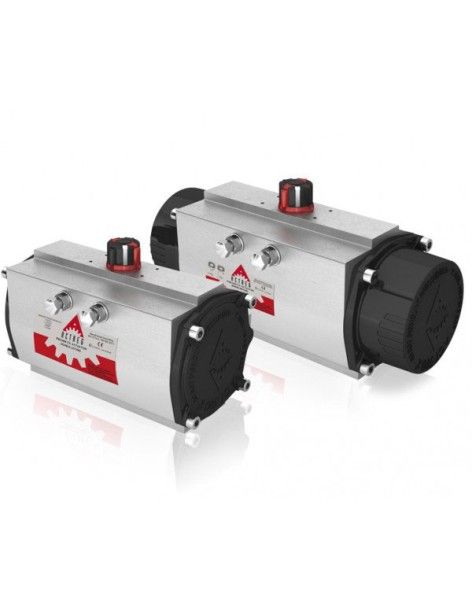
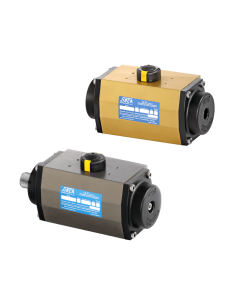
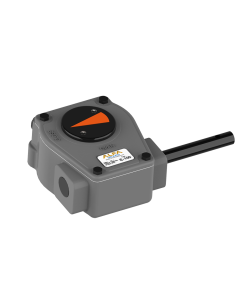
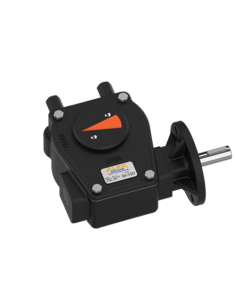
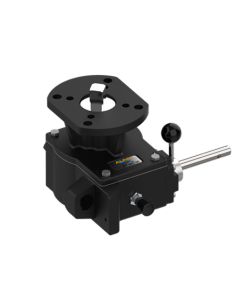
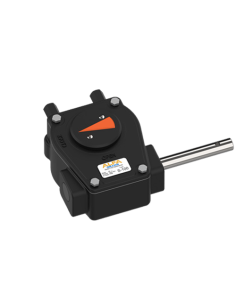
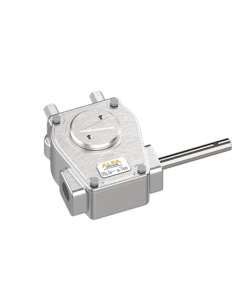
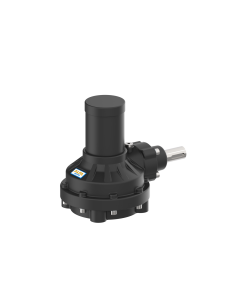
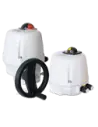
This category includes Valpes electric actuators in marine version, Actreg ADA/ASR and SIRCA AP/APM pneumatic rotary actuators, and Alfa Gear gearboxes in E, M, MO, S, VA, and XK series for manual operation or torque reduction. Valpes marine actuators are intended for corrosive atmospheres and offshore service, with marine coating available for V-range versions with aluminium cover.
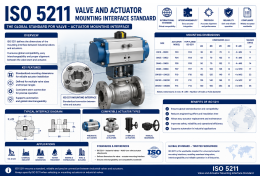
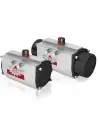
Double-acting pneumatic actuators are used where air pressure is available for both opening and closing strokes. Spring-return actuators are specified where a defined fail-open or fail-closed position is required on loss of air supply. Actreg ADA/ASR actuators use a rack-and-pinion mechanism, provide 90° rotation ±5°, operate at pressures up to 8 bar, and allow NAMUR solenoid mounting with interfaces to ISO 5211 and DIN 3337. SIRCA AP/APM actuators cover torque outputs from 2.4 to 7500 Nm, with operating pressure ranges of 2-8 bar or 3-8 bar depending on configuration, and conform to ISO 5211, VDI/VDE 3845, and UNI EN 15714-3. ATEX and SIL versions are available where hazardous area classification or functional safety requirements apply.
Alfa Gear gear operators are used on ball, butterfly, plug, gate, and globe valves where manual operation, torque multiplication, or adaptation to quarter-turn and multi-turn valve duty is required. E and M series are used for quarter-turn valves, with torque ratings up to 4,500 Nm and 32,000 Nm respectively. XK series is intended for multi-turn valves, with ductile cast iron housing and torque capacity up to 4,000 Nm.
During installation, verify ISO flange alignment, square drive dimensions, travel stop setting, visual position indication, enclosure IP rating, housing material, corrosion exposure, accessibility for manual override, and functional testing under actual line pressure. Actuator sizing should also consider seating and unseating torque, friction increase over service life, and leakage risk under shut-off duty.