
Pneumatic
Pneumatic marine actuators are used for automated operation of quarter-turn valves in seawater, ballast, bilge, cooling water, instrument air, fuel and fire-fighting systems. Actuator selection should be based on the valve operating torque under differential pressure, available air supply pressure, required opening and closing time, fail position, and compatibility with the vessel’s automation and control system.
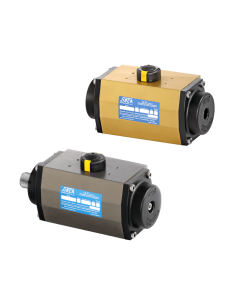
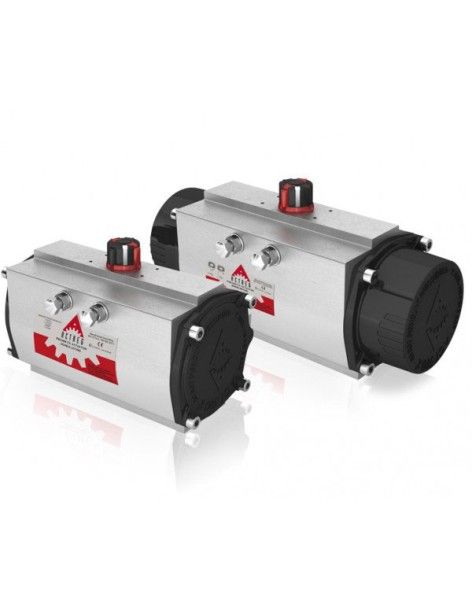
This category includes Actreg ADA double-acting / ASR spring-return actuators and SIRCA AP double-acting / APM spring-return actuators. Double-acting units use compressed air for both directions of travel. Spring-return units use an internal spring pack to drive the actuator to a predefined fail-open or fail-close position, according to the line safety philosophy and shutdown logic.
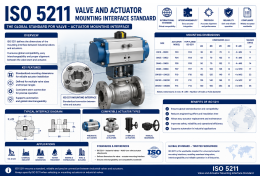
Actreg ADA/ASR actuators use a rack-and-pinion mechanism, with 90° rotation and adjustment of ±5° by external travel stops. Maximum operating pressure is 8 bar. They support NAMUR solenoid mounting and ISO 5211 / DIN 3337 valve interfaces. Available temperature configurations include -30 to +100 °C, -15 to +150 °C with FKM O-rings, and -60 to +80 °C for low-temperature service.
SIRCA AP/APM actuators cover torque outputs from 2.4 to 7500 Nm. Operating pressure is 2 to 8 bar for double-acting versions and 3 to 8 bar for spring-return versions. Standard operating temperature is -20 to +80 °C. They are supplied with ISO 5211 flange interface and NAMUR pilot valve interface, and are designed in accordance with UNI EN 15714-3, ISO 5211 and VDI/VDE 3845. ATEX and SIL certification options to IEC 61508 / IEC 61511 are available where hazardous area classification or safety instrumented functions apply.
During installation, torque sizing factor, air quality, moisture content, travel stop setting, position indication, limit switch feedback, valve stem alignment and access for manual override should be checked. In marine service, corrosion, vibration and elastomer ageing directly affect response time, sealing performance and long-term actuator maintenance requirements.