



Vacuum relief valve - D 9 N | KITO Armaturen | Philippopoulos s.a.

Vacuum relief valve - D 9 N | KITO Armaturen

KITO D9N Vacuum Relief Valve

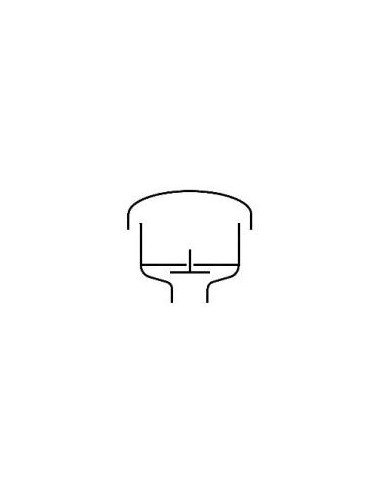
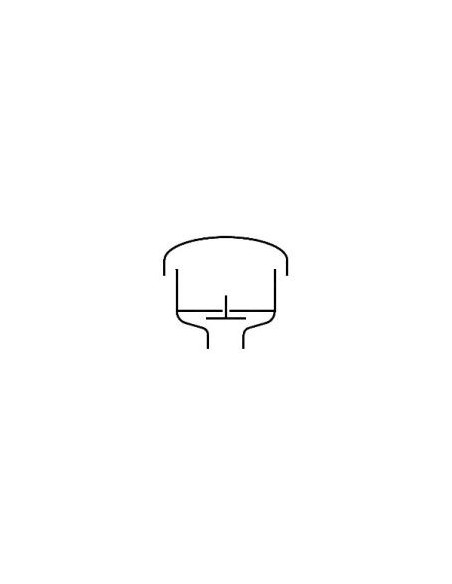
The KITO VS/o cont. D9N is a self-actuated vacuum relief valve designed for installation as a terminal venting device on tanks and vessels. The valve opens when the internal vacuum exceeds the spring setpoint, allowing air ingress to limit unacceptable negative pressure within the tank.

Industrial Applications

Typically installed on tank roofs. Can be combined with a pressure relief valve on a common nozzle when both overpressure and vacuum protection are required. This model is not explosion-proof and is not suitable for flammable media or ATEX zones.

Technical Specifications

  • Connections: G 1”, G 1¼”, G 1½”, G 2” (threaded)
  • Vacuum setpoint range: 5–210 mbar
  • Body: Stainless steel 1.4571
  • Compression spring: Stainless steel 1.4571
  • Connection type: Threaded
  • Supplied without EC certificate or CE marking

Variant Differences by Size

For G 1”, seat and disc are PTFE, FEP seal, weather cover in stainless 1.4301. For G 1¼”, G 1½”, and G 2”, seat and disc are stainless 1.4571, PTFE seal, weather cover in 1.4571.

Valve Sizing Criteria

Selection is based on:

  • Permissible tank vacuum
  • Required air inflow rate
  • Gas density
  • Pressure losses at nozzle or vent line

Flow curves refer to air at 1.29 kg/m³; correction factors apply for other gas densities.

FAQ

Is an actuator required?
No. Operation is mechanical, driven by differential pressure.

Can it be used for flammable gases or vapors?
No. For flammable media, use a certified device with explosion protection.

Datasheet and documents

Description

KITO® VS/o cont. …

  • As end-of-line device for venting of tank installations for ventilation and to prevent inadmissible vacuum.
  • Usually installed on top of a tank, if applicable in conjunction with a pressure relief valve on a common connecting pipe.
  • Valve is not explosion-proof, thus cannot be used for flammable media.