



Ball Valve Trunnion Mounted Top Entry | Fluitek | Philippopoulos s.a.

Ball Valve Trunnion Mounted Top Entry | Fluitek

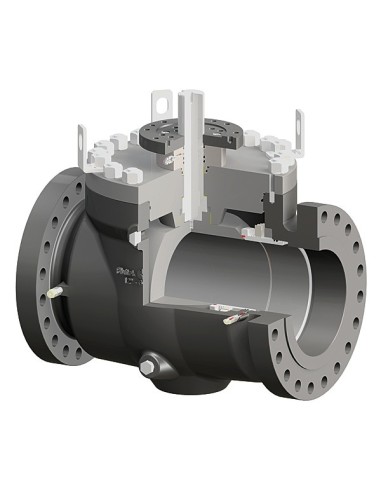
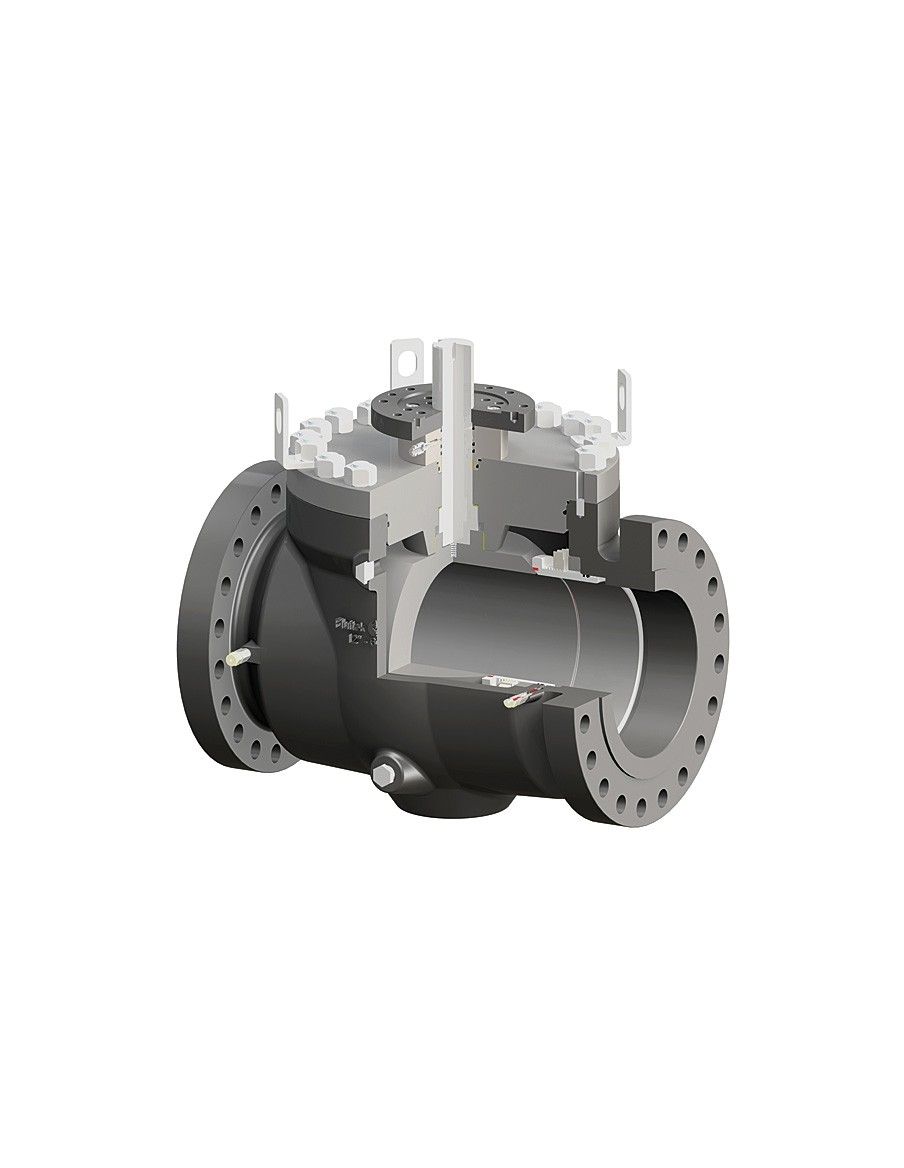
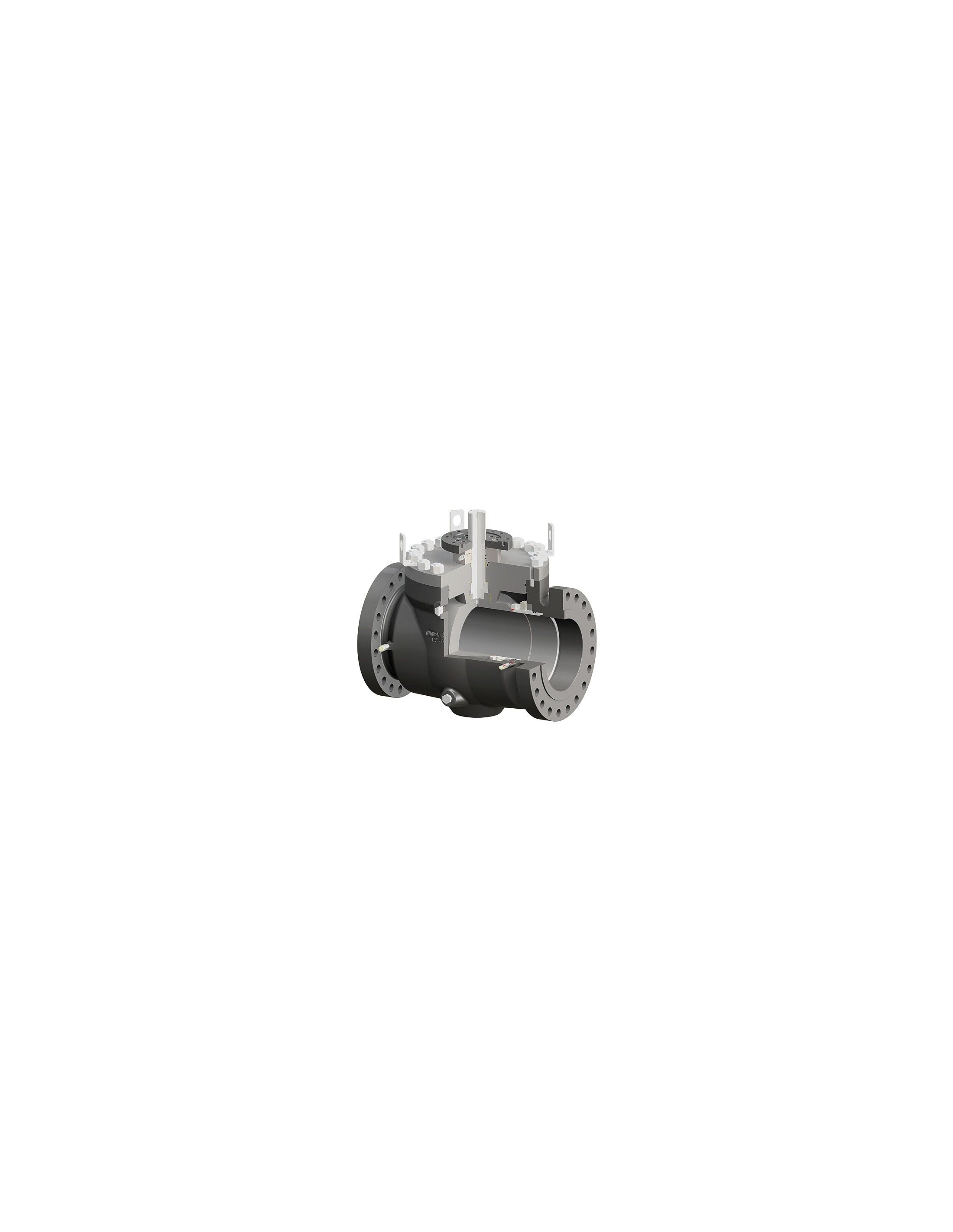
Fluitek Trunnion Mounted Top Entry Ball Valve

Trunnion mounted top-entry ball valve designed for primary isolation in high-pressure liquid or gas pipelines. The top-entry construction allows access to internal components from above, without removing the valve from the line. This is particularly relevant for buried, insulated, or otherwise inaccessible piping where in-line maintenance is required.

Design and Standards

  • Design in accordance with API 6D, ASME B16.34, or API 6A
  • Antistatic device per API 6D and ISO 17292
  • Ends: RF, FF, MF, or RTJ per ASME B16.5 up to 24", ASME B16.47 26" and above
  • Welded ends per ASME B16.25
  • Fire-safe per BS 6755, API 6FA, or API 607
  • Operation: lever, gearbox, electric, pneumatic, hydraulic, or gas-over-oil actuator.

Seat Design

Available with three seat configurations:

  • SPE: seat energized by upstream pressure only.
  • DPE: seat energized by upstream pressure or body cavity pressure.
  • DUAL: SPE upstream and DPE downstream for double barrier in case of seat sealing failure.

Selection of SPE/DPE/DUAL should consider DBB requirements, cavity pressure relief, thermal expansion of trapped media, and vent/drain philosophy.

Special Versions

Standard version is soft seated, typically gear operated. Metal-to-metal seats are available for temperatures above 250°C or for dirty/slurry service, with hard facing on ball and seats. Subsea design per API 6D SS and ISO 14723, stem extension, emergency stem/seat seal injection, weld overlay (316 or Inconel 625), and seal-welded fittings are also offered.

Applications

Suitable for oil & gas, petrochemical, pipeline, chemical process, high-pressure units, and locations requiring on/off isolation with top-entry maintenance. Not intended for continuous throttling service.

FAQ

When is top-entry preferred over side-entry?
When valve removal from the line is impractical or would significantly increase maintenance time.

What data is required for specification?
NPS/DN, pressure class, full or reduced bore, end connections, body material, SPE/DPE/DUAL, soft or metal seat, fire-safe, NACE, ATEX, SIL, and actuator type.

Description

Valve main technical features include anti blow-out stem and valve seats design available in three different versions:

  • SPE (Single Piston Effect): the seat is energized by upstream pressure only .
  • DPE (Double Piston Effect): the seat can be energized by upstream pressure or by body cavity pressure .
  • DUAL (SPE upstream and DPE downstream): combining the two seat designs explained above, a double barrier can be assured in case of seat sealing failure.

Main reference codes:

  • Standard design can be in accordance with API 6D / ASME B16.34 / API 6A.
  • Antistatic design as per API 6D and ISO 17292.
  • Valve ends can be flanged (RF, FF, MF or FF, RTJ), according to ASME B16.5 (up to 24”) or ASME B16.47 (26” and above), Butt-Welding according to ASME B16.25.
  • Fire Safe according to BS6755 / API 6FA / API 607, since each sealing point is provided by a secondary fire-safe seal in graphite. Valve soft seats also are provided with secondary metal-to-metal seal in case of fire.

Trunnion ball valves can be manual operated (lever or gearbox depending on valve size), but also equipped with an actuator (electric, pneumatic, hydraulic, gas-over-oil etc.).

Standard design is soft seated and gear operated, the following special designs are also available:

  • METAL-TO-METAL SEAT: for high temperatures (larger than 250°C) or dirt/slurry service, hard facing on seat and ball contact surfaces (Tungsten or Chromium Carbide).
  • SUBSEA DESIGN: for subsea applications, Top Entry Ball valves are provided with additional seals, blind nuts, subsea actuators etc. Valve design according to API 6D SS and ISO 14723.
  • STEM EXTENSION. For special applications the operator (lever/gear/actuator) can be lifted by an extension fixed to valve body, and a joint coupled to the stem.

The following optional features are also available:

  • Locking device.
  • Floating ball valves for drain and vent connections (if prescribed by Customer requirements)
  • Emergency stem seal injection;
  • Emergency seats sealant injection;
  • Weld overlay (316 or Inconel 625) on dynamic sealing areas or in all wetted parts.
  • Certified lifting devices;
  • Seal welded fittings.

Certifications