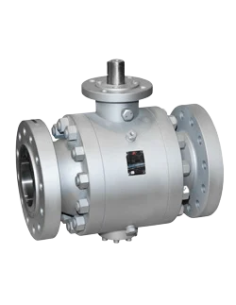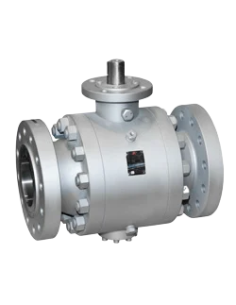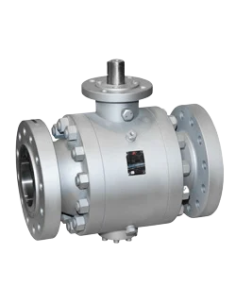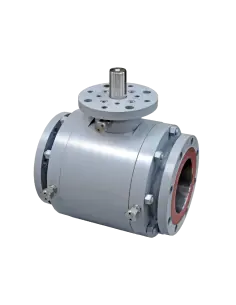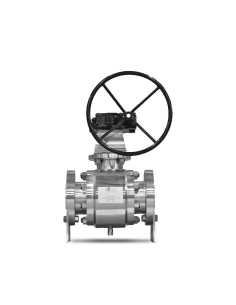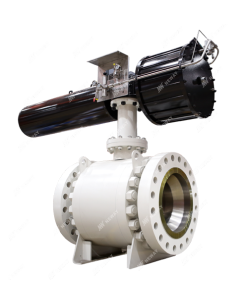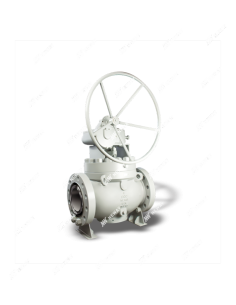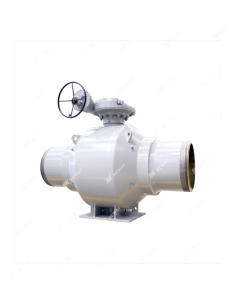

Trunnion Mounted
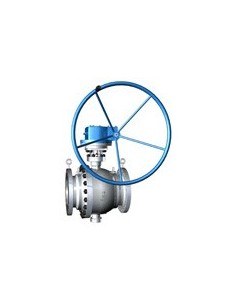
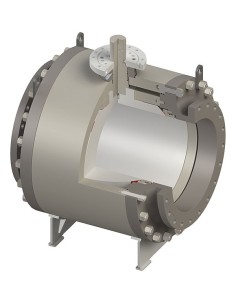
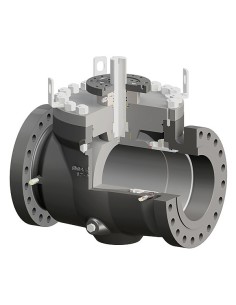
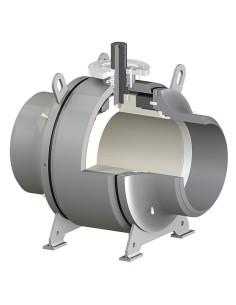
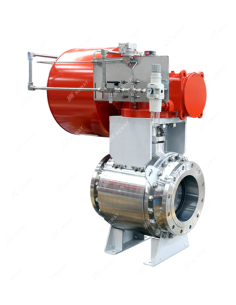
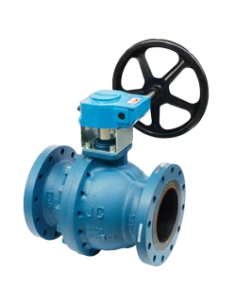
Trunnion mounted ball valves are used for isolation duty in large-bore pipelines or services with high differential pressure, where a floating ball design would impose higher seat loading and increased operating torque. The ball is mechanically supported by upper and lower trunnions, so hydraulic loads are transferred into the body rather than being carried primarily by the seat rings. This arrangement provides more stable shut-off behaviour in oil and gas, chemical, petrochemical, power, marine, tank terminal, mining, waste treatment, and specialty fluid handling systems.
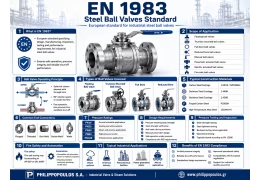
This category includes full bore and reduced bore configurations, with split body, 3-piece, side entry, top entry, and welded body construction. Flanged end connections are commonly supplied to ANSI standards. Available pressure ratings typically include ASME Class 150, 300, 600, 900, 1500, and 2500, while some series also cover DN50-DN900 / 2"-36" and PN16-PN420. Body materials include ASTM A105N, A216 WCB, A350 LF2, A352 LCB, A182 F316, and stainless cast grades such as ASTM A351 CF8, CF3, CF3M, and CF8M. Seat materials may include PTFE, RPTFE, Devlon, or PEEK, selected according to pressure, temperature, process media, and shut-off requirements.
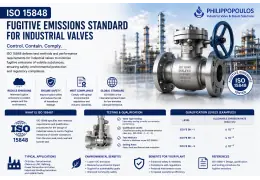
Valve selection should consider bore requirement, piggability, maximum differential pressure, actuator torque margin, seat and seal temperature limits, compatibility with hydrocarbons or corrosive fluids, and any requirement for double block and bleed or cavity pressure relief. For regulated installations, applicable compliance may include API 6D, PED, MSS SP-55, NACE MR0175 / ISO 15156, NACE MR0103 / ISO 17945, fire-safe certification to API 607, ISO 10497, or API 6FA, fugitive emissions to ISO 15848 or TA-LUFT, and ATEX where relevant. In automated service, actuator sizing should be verified against break torque, running torque, and the maximum differential pressure at the closed position, with attention to seat wear, stem sealing, and long-term leakage control.