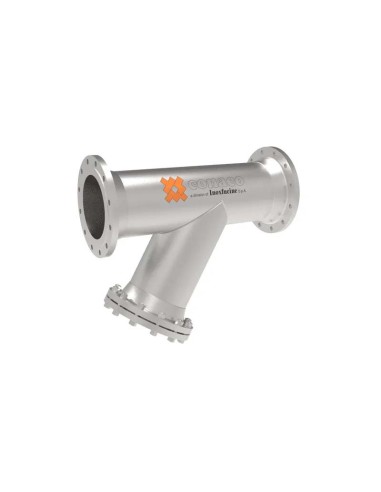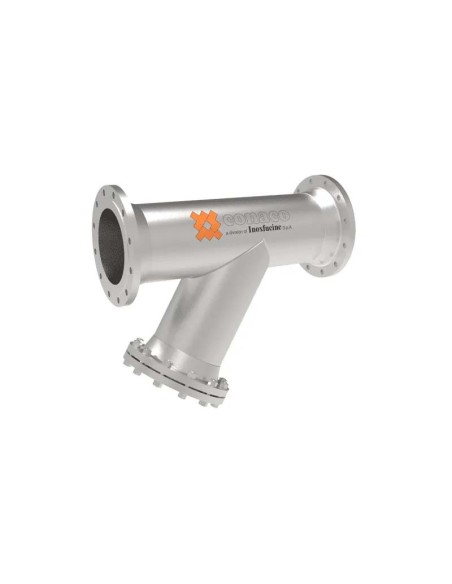
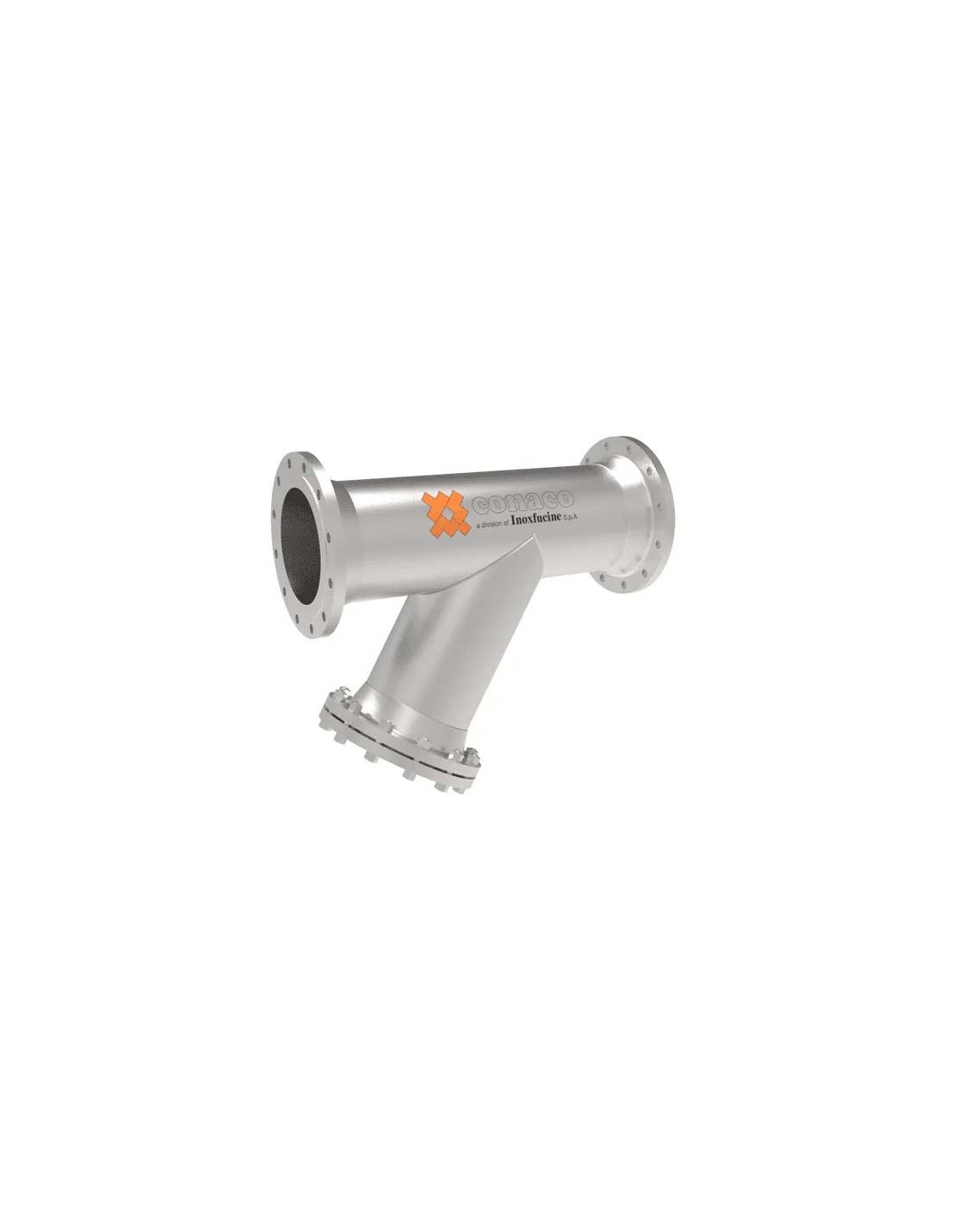
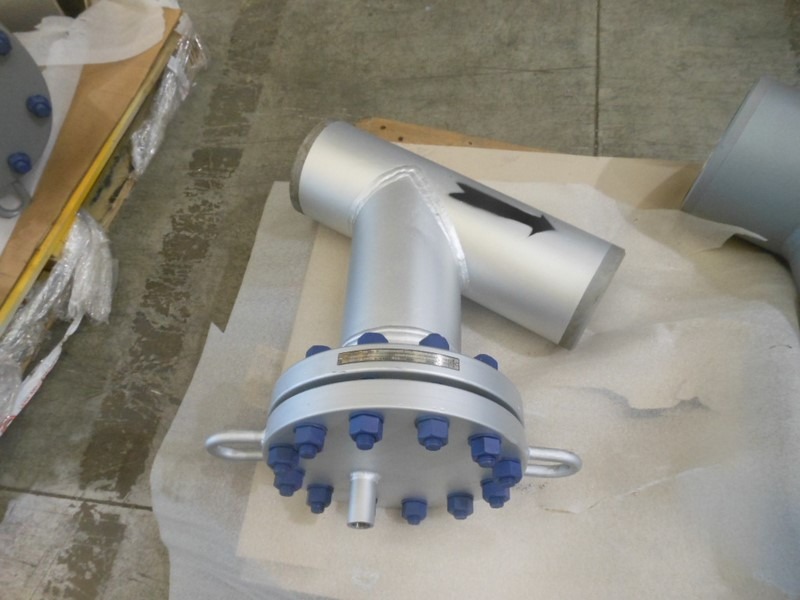
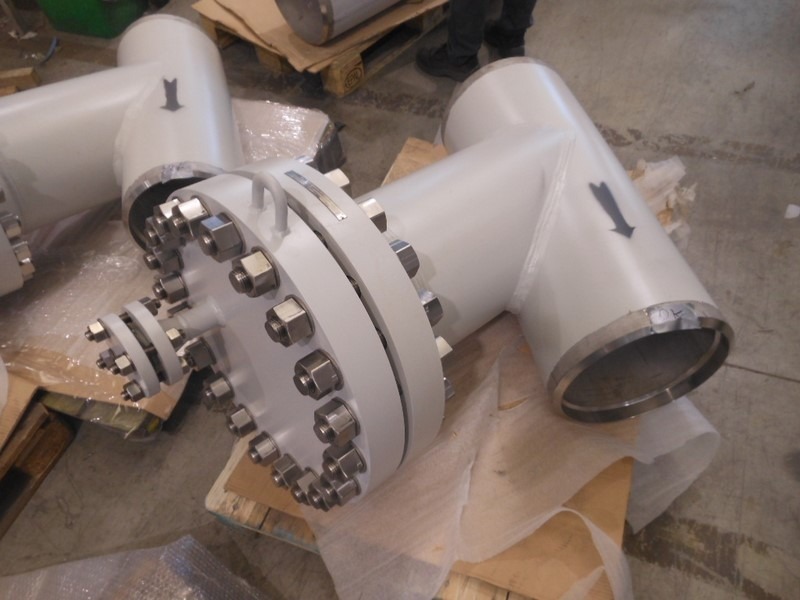
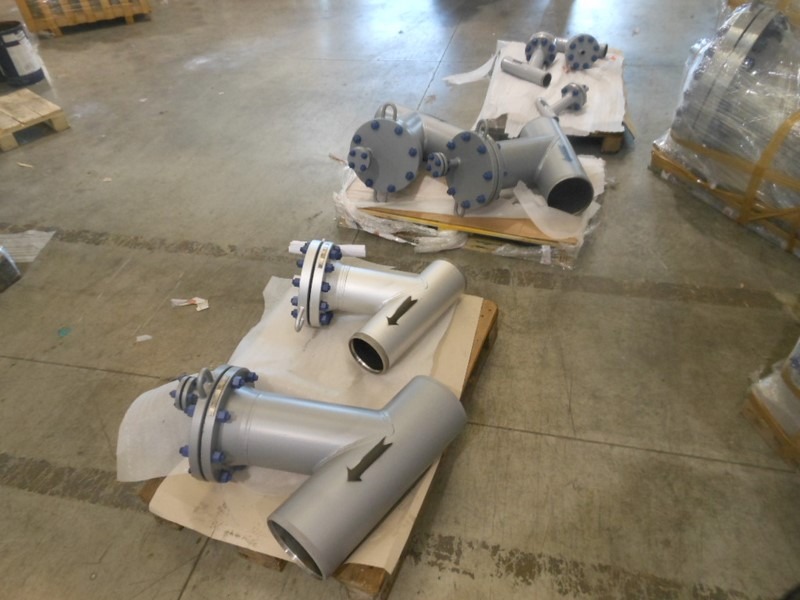

Conaco Type 797 are fabricated Y-type strainers designed for industrial pipelines with large diameters or special piping specifications. Typical installation points include upstream of pumps, control valves, turbines, flow meters, and process equipment where retention of rust, weld slag, debris, or other solids is required.
Available in carbon steel, low carbon steel, alloy steel, high alloy steel, and special alloys. Material selection should be based on piping class, operating temperature, media corrosivity, weldability, and any NACE or certification requirements.
Screens can be supplied in double or triple layer, mesh on perforated plate, or mesh-on-mesh. Magnetic assemblies are available for ferrous particle retention. Drain connections with nipples, flanges, valves, or plugs, as well as vent and DP gauge ports, can be specified.
For aggressive service, options include epoxy lining, cladding, rubberizing, and project-specific coating systems. These are considered for corrosive media, marine environments, water treatment, chemical processes, or where additional body protection is required.
Selection is not based solely on diameter. ANSI class, flow rate, clean/dirty pressure drop, screen open area, cover accessibility, and isolation procedures must be evaluated. For pump suction, increased Δp due to clogging must be checked against available NPSH.
When is a fabricated Y-strainer selected over cast?
For large diameters, special materials, non-standard flanges, or constructions not covered by standard cast bodies.
Can it be fitted with an actuator?
No. It is a passive in-line filter.
When is a DP gauge required?
When cleaning is based on measured differential pressure rather than fixed maintenance intervals.